























































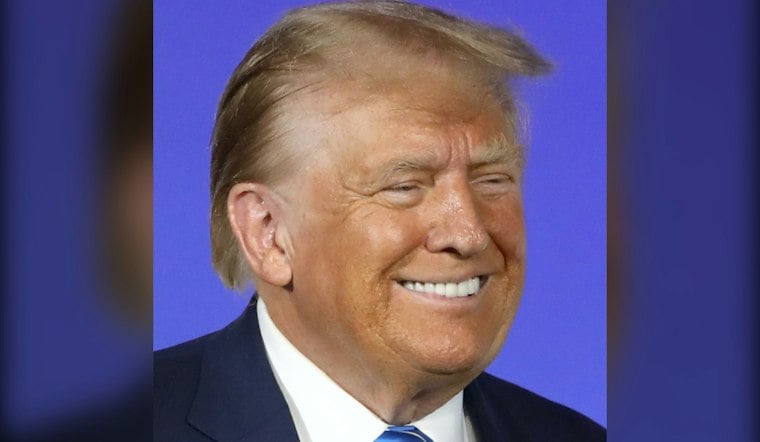
A security flaw in the link-shortening service Bitly has turned a batch of decade-old social media posts into something far stranger than their authors ever intended. At least a dozen of Donald Trump's posts on X now direct to unrelated and inappropriate websites, including one 2013 post about his golf course in Scotland that now routes to a Wikipedia page about the Epstein files, as reported by CNN. A 2011 Burger King post meant to help customers find a nearby restaurant now sends them to a Wikipedia list of Nazi concentration camps instead.
The culprit is a flaw in Bitly's own system that allowed expired short links to be re-registered by anyone, effectively letting a new owner choose where an old link points. As CNN reported, the affected Bitly links date as far back as 2009, with impacted posts spanning roughly 2009 to 2014. The Burger King restaurant-locator link was reportedly reclaimed by a new user on November 15, with the hijacked link then rerouting to the Wikipedia camps list rather than restaurant information, according to the seed reporting from The Independent.
A Wider List of Hijacked Accounts
Trump and Burger King were far from alone. CNN's reporting states that posts tied to Microsoft co-founder Bill Gates, former Canadian Prime Minister Justin Trudeau, and former Vice President Mike Pence were also hit, along with posts from McDonald's. The pattern suggests the vulnerability was not targeted at any single account but rather exploited expired links wherever they could be found across prominent users and brands.
The timing of the Trump redirect lands amid continued scrutiny of his past relationship with Jeffrey Epstein. According to the seed reporting, Trump has faced widespread criticism over his friendship with the convicted sex offender, and his name reportedly appears thousands of times in documents related to Epstein after the US Department of Justice released a heavily redacted version of the files. Lawmakers and survivors have been calling for the complete files to be published without what they describe as improper redactions, per the same reporting.
How a Decade-Old Shortcut Became a Liability
The flaw itself traces back to a known weakness in how link-shortening services handle abandoned URLs. The Independent reported that the vulnerability enabled third parties to re-register expired Bitly links and redirect users to unrelated or offensive websites. Security researchers have long described this category of exploit as broken link hijacking, which, as Invicti notes, becomes possible whenever organizations rely on third-party services like file hosting or link shortening for content shared on social media. Attackers exploiting the gap can use hijacked links for defacement, impersonation, phishing or even malware distribution, according to Invicti.
This is not the first time shortened links tied to famous social accounts have drawn scrutiny. In 2017, a vulnerability researcher identified 109 accessible domains while examining hijackable links connected to tweets from pop stars including Katy Perry, Shakira, Jennifer Lopez and Maroon 5, per Invicti's research. A separate academic study that monitored 622 distinct URL-shortening services between March 2010 and April 2012, collecting nearly 25 million distinct short URLs, examined the lifetimes of malicious short URLs, according to researchers at the UC Santa Barbara security lab. That same research found that shortening services generally failed to detect when a previously benign destination page was altered to redirect to something malicious, and in one test, Bitly accepted every malicious URL researchers submitted for shortening.
Bitly's Response, and the Open Questions
Bitly has acknowledged the incidents and said measures have been taken to prevent further occurrences, according to the seed reporting. The company's account of its own response, however, differs slightly depending on the outlet. CNN reported that Bitly said it suspended the accounts that altered the links and was working to disable the affected URLs, while The Independent reported that Bitly confirmed it had already suspended the responsible accounts, was disabling the affected links, and had taken steps to strengthen protections against future misuse. Bitly's Trust and Safety team said, according to CNN, that it is working to address the issue and strengthen protections against similar misuse in the future.
As of CNN's report, neither Bitly nor X had responded to the outlet's request for comment. It remains unclear exactly how many links beyond the dozen identified by CNN may still be affected, or who was responsible for re-registering them in the first place.