

























































Omaha's public access TV channel, KPAO, could lose both its studio lease and its longtime studio manager's contract as its governing board grapples with a shrinking bank account and no clear plan to refill it. The Cable Television Access Corporation board discussed two resolutions this week — one to terminate KPAO's lease and another to end the studio manager's contract — but ultimately took no action, pushing the decision to its next meeting.
According to KMTV 3 News Now Omaha, board members discussed the two resolutions but did not vote, instead deciding to take up both items again at their next meeting on December 14. The station reports that the board's attorney said the organization's bank account balance has been steadily declining without new funds coming in, a trend that has pushed the lease and staffing questions to the forefront.
A $15,000-a-Month Operation Looking for Revenue
Board member Margie Sturgeon laid out the stakes in blunt financial terms, the station's report notes. “If you look at our financials you will see that we spend 15 thousand a month on operating, from staff to amenities in the facilities, so if we can make that much, we can keep going,” she said. Sturgeon pointed to a possible PEG fee — short for public, educational and governmental fee — that would appear on cable subscribers' bills as one option the board is weighing to close that gap.
KPAO describes itself as Omaha's public access community television channel, existing through a partnership between the City of Omaha and local cable companies, according to KPAO's own website. The channel says it gives people a platform to share ideas and stories at no cost. The nonprofit that oversees it, the Cable Television Access Corporation, is organized and operated exclusively for public civic purposes — including administering public, educational and governmental cable programming — and is not organized for profit and has no capital stock, per the City of Omaha City Council's cable television page.
Studio Manager Reflects on Nine Years, Hundreds of Local Voices
Mike Wallace has served as KPAO's studio manager for nine years, and the station's report notes that between about 20 to 25 shows regularly use the studio. Wallace reflected on what the platform has meant to the people who use it: “It was nice to be a part of the community and be an accessible part. Nobody's idea was ever turned away,” he said, per the same account.
A Possible Move to the New Central Library
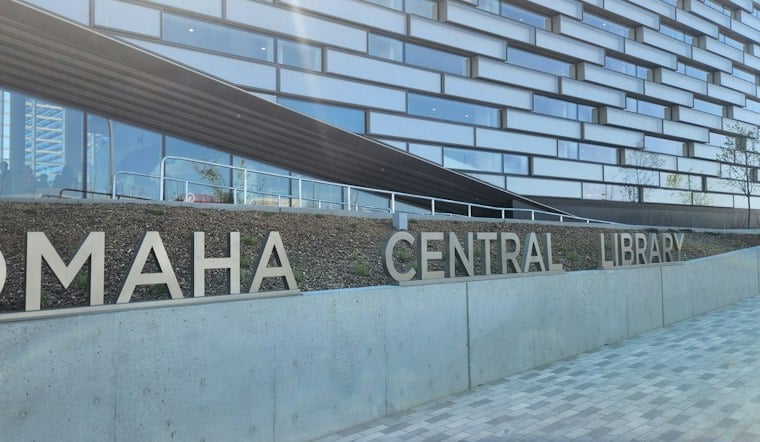
Amid the uncertainty over its current lease, KPAO is also in talks about possibly moving its operations to the media studio at the new Central Library, the station's report states. That library's Central Library Podcast Studio is equipped with a four-microphone setup suitable for interviews, small-group conversations and basic panel recordings, according to the Omaha Public Library, which allows reservations of up to four hours per week. Nebraska Public Media has reported that the Central Library also includes a textile lab and 3D printers alongside its podcast studio.
Funding Pressures Facing Public Access Stations Nationally
KPAO's money troubles echo a broader challenge facing public access channels elsewhere. A Congressional Research Service product notes that declining revenue collected by state and local governments from cable and telco providers subject to franchise fees also reduces the amount those providers can be required to spend supporting PEG channels. A 2024 opinion piece in CommonWealth Beacon made a similar point about Massachusetts, where PEG stations rely heavily on cable franchise fees and funding shrinks as cable subscriptions drop. That piece noted a proposed Massachusetts bill would have imposed a 5 percent fee on streaming services to help fund PEG stations and community media centers, though as of the article's publication the legislation had been referred to committee with no further action taken.
For now, KPAO's immediate future rests on the Cable Television Access Corporation board's next meeting. Both the lease termination and studio manager contract resolutions are set to return to the table on December 14, leaving the roughly two dozen local shows that rely on the studio in a holding pattern until then.





