

























































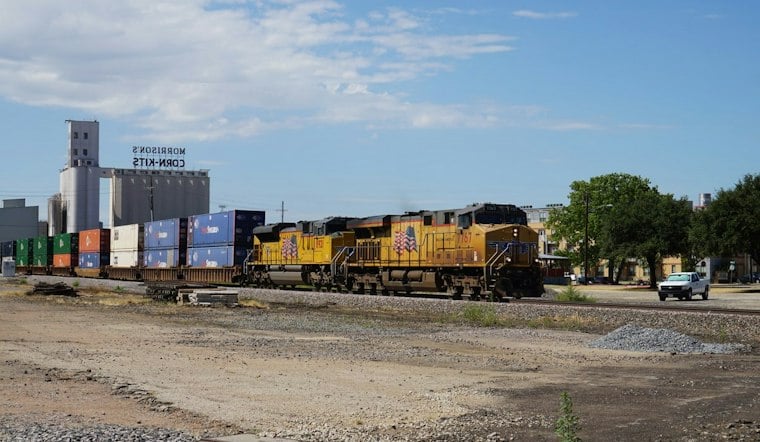
Diesel prices have climbed to record territory this year, and Union Pacific has managed to collect more in fuel surcharges from shippers than it spent on fuel — a feat its rivals have not consistently matched. From January through September, the railroad collected $2.81 billion in fuel levies, outpacing its fuel costs by $188.1 million, even as the broader freight-rail industry grapples with surging diesel bills tied to tightened global energy markets.
Union Pacific's third-quarter results show the surcharge math in sharp relief. According to a Union Pacific investor filing, freight revenues from fuel surcharge programs jumped to $1.2 billion in the third quarter of 2026, compared with $602 million in the same period a year earlier, a change the company attributed to higher fuel prices and increased volume. The same filing shows the railroad's average locomotive diesel price climbing to $4.21 per gallon in the quarter, up from $2.56 a year prior. As reported by Reuters, Union Pacific collected $131.8 million more in fuel surcharges than it spent on fuel during the third quarter of 2026, marking a second straight period of surplus after a $91.1 million excess in the prior quarter that added 14 cents per share to earnings; the third-quarter surplus added 15 cents per share.
Surcharges Still Squeezed the Bottom Line
Despite the surplus collected over fuel costs, Union Pacific's own disclosures complicate any simple profit narrative. The railroad reported third-quarter operating revenue of $7.2 billion, up 15%, with higher fuel surcharges among the drivers, the company said in a Union Pacific earnings release. But that same release notes that higher fuel prices unfavorably impacted the operating ratio by 140 basis points — meaning the surcharge collections did not simply flow through as profit once the full cost of fuel is factored in. Union Pacific has said its year-over-year percentage increase in surcharge revenue was in line with the rest of the industry, and that fuel surcharge revenues across the rail industry increased substantially due to high fuel prices, per the Reuters report.
Union Pacific's surcharge structure is built into its mileage-based tariff. The carload mileage-based standard HDF fuel surcharge kicks in once the average monthly DOE diesel price hits $2.30 per gallon, starting at five cents per mile, according to Union Pacific. From there, the surcharge rises by one cent per mile for every five-cent increase in diesel price above that threshold. Reuters reported, citing a USDA analysis, that Union Pacific's November surcharge rate stood at 84 cents per mile, while BNSF's stood at 61 cents per mile under a higher $3.25-per-gallon threshold before surcharges apply.
Rivals Report Mixed Results
Not every railroad has fared the same. Reuters reported that BNSF collected $922.4 million less in surcharges than it spent on fuel during the first three quarters of 2026, and that the railroad may be facing a fuel-related deficit exceeding $1 billion for the year. CSX and Norfolk Southern, by contrast, both reported quarterly surcharge surpluses during 2026, with CSX posting the largest quarterly excess collection of $61.4 million in the third quarter, per the same Reuters account. Executives from CSX and Norfolk Southern said surcharge revenues helped blunt rising fuel costs in the second and third quarters.
Norfolk Southern's own disclosures back that up. The railroad said fuel-surcharge revenue contributed six percentage points to its total revenue growth in the second quarter, according to a Norfolk Southern earnings call transcript published by The Motley Fool. Yet the same call captured a note of caution from CEO Mark George, who warned that sustained higher fuel prices could eventually hurt consumers and diminish demand. Norfolk Southern separately estimated that higher fuel costs would add $400 million to $500 million to its full-year fuel expense compared with original projections. By the third quarter, fuel surcharges accounted for eight percentage points of Norfolk Southern's 14% revenue growth, according to a report from Railway Supply.
Why Diesel Costs Spiked
The backdrop to all this is a diesel market that Reuters says has been pushed to record transportation-cost levels, with wars in Iran and Ukraine tightening global fuel supplies. Fuel surcharges themselves are a broadly accepted tool across the transportation industry for covering unexpected fuel price spikes, and federal rules require Class I railroads to file quarterly reports on fuel cost, consumption and surcharge revenue, according to the Electronic Code of Federal Regulations. Union Pacific's network spans the western two-thirds of the United States with links into Mexico, and Reuters reports its surcharge-paying customers include retailers, construction companies, manufacturers, and food and energy producers.
Merger Scrutiny Adds Pressure
The surcharge debate is unfolding as Union Pacific pursues an $85 billion proposed acquisition of Norfolk Southern that would create the first U.S. continental railroad operation, a deal currently being weighed by the Surface Transportation Board, with a decision expected in the coming months, per Reuters. Opposition has coalesced around the Stop the Rail Merger Coalition, which Reuters reports counts the Freight Rail Customer Alliance among its members and opposes the potential combination. Ann Warner said utility company members raise concerns when surcharges become excessive and function as revenue generators rather than cost recovery, though she also said the proposed merger has brought additional scrutiny to Union Pacific's conduct while cautioning against overreacting, according to the Reuters report.
That scrutiny has extended into the merger fight itself. BNSF has said the merger would undermine competition and has opposed Union Pacific's attempts to subpoena testimony from Warren Buffett, the 96-year-old chairman emeritus of Berkshire Hathaway, whose CEO is Greg Abel. Reuters reports that Union Pacific is seeking more information about a meeting between Buffett, Abel and the CSX chief executive that took place in August 2026, though Union Pacific did not immediately comment on that information-seeking action. Separately, Union Pacific chief executive Jim Vena was reported to have said the railroad would raise rates on merger opponents by 3% to 4%, remarks the company has previously described as a joke. Union Pacific also did not immediately comment on the USDA analysis cited in the Reuters report.





