

























































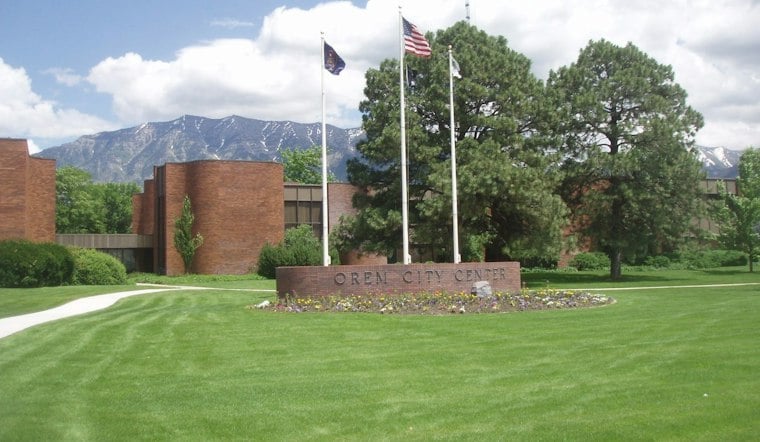
Orem dropped the drug charges against Eric Layton months after his arrest, and Layton is now seeking an apology and $1 million from the city and the officers involved. Layton alleges that officers handcuffed him for up to five hours and mocked his faith after a roommate reported him and a friend drinking mushroom tea in what Layton describes as a religious ceremony.
A Roommate's Call Sparks a Police Response
The incident began Jan. 9, when the roommate of Layton's friend called police to report that the two men were consuming psilocybin mushrooms in an apartment, according to The Salt Lake Tribune. The roommate let officers into the apartment and recorded the men preparing and drinking mushroom tea in a common area, the Tribune reported. After Layton's friend declined officers' request to search his room, police obtained a warrant, according to the same account.
A police report cited by the Tribune said officers found a grinder with powdery residue and 78 grams of THC gummies. Both men were charged with misdemeanor possession of drug paraphernalia and possession of a controlled substance. Layton alleged that officers kept them handcuffed for up to five hours and mocked their religion before booking them into jail.
A Membership Card and a Religious Claim
Layton belongs to The Divine Assembly, a Utah-based church that uses magic mushrooms as a sacrament. He had a membership card when he was arrested; according to the Tribune, the card asserted a legal right to grow, possess and partake of the church's sacrament in worship. The church teaches that psilocybin mushrooms allow people to commune with the divine and claims a religious exemption from laws restricting their use, though psilocybin remains illegal under state law for recreational use.
Orem dismissed the charges against Layton's friend on a Monday and dropped Layton's charges in September. Layton's attorney, Steve Urquhart — a former state senator who co-founded The Divine Assembly — attributed Layton's dismissal to his religious exercise, the Tribune reported.
Layton Demands an Apology and $1 Million
Layton alleges that Orem officers violated his religious rights and is seeking an apology and $1 million in damages from the city and the officers involved. Utah law requires notice of a claim before a person can sue a government entity, so Urquhart sent Orem a notice ahead of the threatened lawsuit. Orem did not respond to the Tribune's request for comment on the allegations.
Utah's Free Exercise of Religion Act specifies that a government entity may not substantially burden a person's free exercise of religion. Under the statute, a substantial burden includes government action that directly or indirectly constrains, limits, or denies a person's free exercise of religion, or that compels someone to act or refrain from acting contrary to that exercise, according to Utah Code, Title 63G, Chapter 33.
The legal test for religious burdens
The act allows a government to impose a substantial burden on religious exercise only if the burden is essential to furthering a compelling governmental interest and is the least restrictive means of furthering that interest, according to Utah Code, Title 63G, Chapter 33, Section 201.
Part of a Broader Legal Pattern in Utah
Layton's case isn't the first time a Utah psychedelic church has clashed with local police. In a separate Utah County case, Provo police carried out a search warrant on the Singularism Spiritual Center in November 2024, seizing the group's psilocybin and records related to personal spiritual experiences, according to Utah News Dispatch. A federal judge, Jill Parrish, later rejected Utah County's motion to dismiss a lawsuit from Singularism founder Bridger Jensen, and ordered the county to stop all criminal proceedings against Jensen and his faith group until that lawsuit is settled, the outlet reported.
A Yale Journal on Regulation article published in September suggested that case law on religious exemptions for psychedelics is evolving, and that groups may have avenues to challenge state and federal restrictions. University of Texas law professor Elizabeth Sepper noted that combining big business and spirituality may give courts and regulators pause. VICE has reported identifying at least 19 psychedelic churches operating across the United States, and a photograph has shown psilocybin grow kits sold by The Divine Assembly as far back as 2024.




