

























































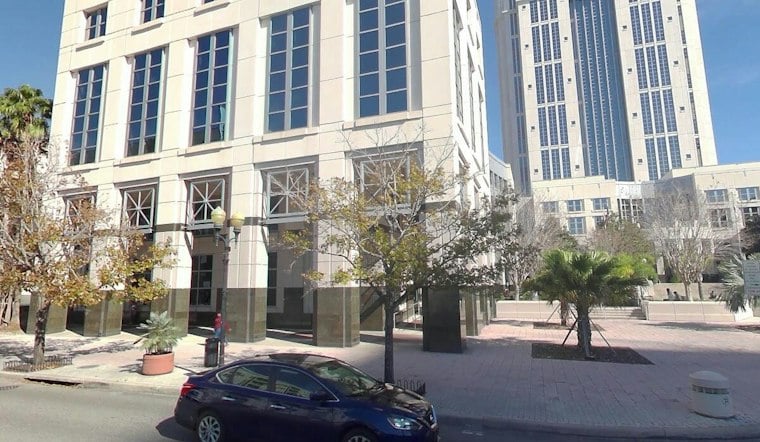
Florida investigators say an eight-year scheme to siphon millions of dollars in foreclosure surplus funds from the Orange County Clerk of Court has ended with two arrests, one of them involving the alleged theft of a dead man's identity. Douglas Lorenzo Murphy Jr., 33, and Ericka Elsa Sarita, 49, were taken into custody on October 4 and now face a lineup of felony charges tied to what investigators describe as a years-long fraud and money-laundering operation.
According to FDLE, the Florida Department of Law Enforcement's investigation began on August 7, 2025, after the Attorney General's Office of Statewide Prosecution notified agents about a suspected scheme to illegally acquire foreclosure surplus funds through fraudulent court filings. Investigators allege Murphy and Sarita used several attorneys and law firms to electronically submit forged documents to the Orange County Clerk of Court, reassigning legal rights to surplus funds left over after foreclosure sales. As reported by West Orlando News, the pair were arrested by FDLE Orlando agents and transported to the Orange County Jail in Orlando.
Investigators allege the scheme stretched from 2018 to 2026, with Murphy and Sarita using forged legal instruments, stolen identities, falsified corporate structures and money laundering to steal foreclosure surplus funds from the Clerk of Court. The two attempted to illegally acquire over $5.5 million in mortgage foreclosure surplus and estate funds during that span, per the FDLE account, and received about $2.6 million for their own personal benefit.
A Stolen Identity and a Dead Man's Remains
Among the most disturbing allegations is that Murphy stole and used the identity of a deceased individual, claiming to be a relative in order to open financial accounts in that person's name, FDLE alleges. The agency's account goes further: Murphy is accused of authorizing the individual's cremation and taking possession of the remains, apparently to maintain the fiction of a family relationship central to the fraud.
Florida law spells out who actually has a right to foreclosure surplus money. Under Florida Statutes, surplus funds are whatever remains after all disbursements required by the final foreclosure judgment are paid, and the law presumes the owner of record on the date the lis pendens was filed is entitled to that money once any subordinate lienholders' timely claims are resolved. Anyone claiming the funds as an assignee instead of the original owner must prove that entitlement in court — a legal hurdle investigators say Murphy and Sarita tried to clear with forged paperwork rather than real documentation.
Charges Filed and Case Status
FDLE agents obtained arrest warrants for Murphy and Sarita on October 4, and both were arrested the same day. Each defendant faces one count of aggravated white-collar crime, one count of organized fraud, one count of criminal use of personal identification information involving 10 or more victims, and two counts each of money laundering $100,000 or more, according to FDLE. The Attorney General's Office of Statewide Prosecution is handling the prosecution, and law enforcement says the investigation remains active.
The statute also makes clear that an owner does not need a lawyer or any representation to claim money that may be owed to them, and is not required to assign those rights to anyone else — a detail that underscores how a legitimate claimant could bypass the very apparatus investigators say was exploited here. If surplus funds go unclaimed for a year after a foreclosure sale, they're presumed unclaimed and generally must be reported and remitted to the state unless an entitlement proceeding is still pending, per the same statute.
Part of a Broader Pattern in Florida
The Orange County case lands amid wider scrutiny of Florida's foreclosure surplus recovery industry. A blog maintained by law firm Fight For Your Home reports that fraud has been extensive in surplus recovery company cases across the state, including companies approaching people who simply share a name with the actual former owner or heir. A Pasco County judge quoted in that same account said that, starting July 1, 2025, foreclosure surplus assignments would require an evidentiary hearing attended by the former owner, the surplus recovery company's president and an attorney.
Florida has seen comparable cases before. In a 2020 South Florida matter reported by the Sun-Sentinel, investigators accused two Broward County attorneys of participating in a scheme to lay claim to nearly $750,000 in foreclosure surplus funds, allegedly beginning around November 2017. That case, like the current Orange County allegations, centered on manipulating the legal process meant to return leftover sale proceeds to rightful owners rather than opportunists.




