

























































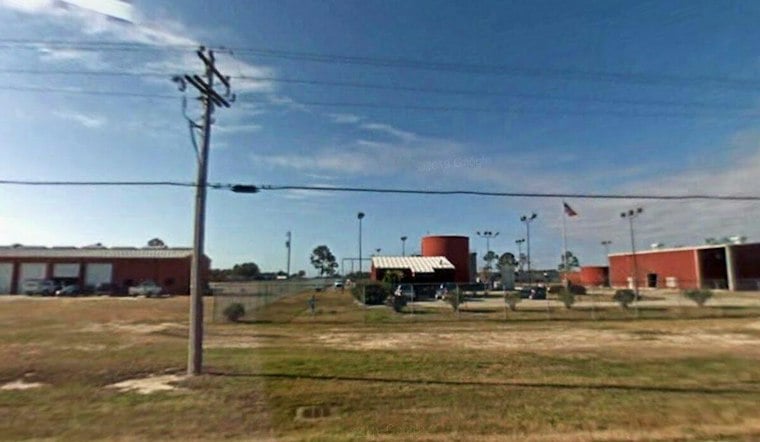
A federal workplace safety investigation found that an employee worked on a deenergized circuit without a lock, tag, or effective isolation from hazardous electrical energy at the site where apprentice electrician Justin Davis died on a scaffold in Bay St. Louis on May 12. The finding concerns electrical safety at the worksite, while the official narrative of what happened to him has shifted more than once. Davis's family has long believed he was electrocuted.
Calgon Carbon Corporation operated the worksite where Davis died, and the company confirmed his identity after the incident, according to the Mississippi Independent. Hancock County Coroner Jeff Hair and Sheriff Johnny Alison also identified Davis as the worker who died, but their account of how he died has changed. Hair and Alison initially said Davis fell about 20 feet from scaffolding, striking additional scaffolding without reaching the ground. Alison later corrected that account, saying Davis had not fallen at all and was instead found slumped over on the scaffolding he had been working on, a version he gave to the Sun Herald, telling the paper, “Apparently, he just slumped over on the scaffolding he was on.”
Family Attorney Says Fixture Was Still Energized
Davis's family attorney, Chip Herrington, has offered a third version, saying another electrician who checked the fixture Davis had been working on found it was still energized even though the breaker had been turned off. Herrington also said scene witnesses believed Davis had been electrocuted. Those accounts have not been independently confirmed in the evidence reviewed for this story, and the Sun Herald reported that an autopsy was pending to determine Davis's cause of death.
The OSHA investigation into the May 12 incident at Port Bienville Industrial Park found that an employee worked on a deenergized circuit without a lock, tag, or effective isolation from hazardous electrical energy, according to the OSHA report cited by the Mississippi Independent. Federal workplace-safety rules require that circuits and equipment to be worked on be disconnected from all electric energy sources, according to the Occupational Safety and Health Administration's own standard. OSHA investigators assigned the violation a gravity rating of 10, the highest on the agency's gravity-based penalty scale, reflecting high hazard severity and a greater probability of occurrence, including potential death or extremely serious injury or illness.
Doleac Electric Fined, Calgon Cleared
OSHA found Doleac Electrical Company, Davis's employer, liable for violations leading to his death. The agency initially fined Doleac $11,585, classified the violation as serious on July 28, and the company contested the citation in mid-August. As part of a formal settlement, OSHA later reclassified the violation as other rather than serious. OSHA's maximum penalty for a serious violation is $16,550, while penalties for willful or repeated violations can exceed $165,000. Doleac did not respond to questions about the findings or its citation challenge, the Mississippi Independent reported.
Calgon, which operated the plant, was not cited. Kay Kissman said OSHA completed an inspection at Calgon Carbon's Pearl River facility related to the incident and issued no citations to the company, and OSHA's investigation into Calgon ended in July without citations or penalties, according to OSHA records and the company. OSHA did not respond to questions about Davis's death or a request to review the investigative file. OSHA fatality records are expected to include further details about Davis's death later in 2026.
Coroner's Ties to Calgon Raise Independence Questions
As county coroner, Hair was responsible for investigating Davis's unexpected death and helping determine its cause and manner. But Hair is also a former Calgon employee and a full-time Waveland police officer, and Hancock County Chancery Court records showed he had previously worked for Calgon and held a 401(k) retirement account through the company. Meeting minutes indicated Hair had returned to full-time patrol duties with the Waveland Police Department less than a week before Davis's death.
Herrington has accused Hair of attempting to intimidate Davis's family into silence about their belief that Davis had been electrocuted. Herrington alleged that Hair scolded Davis's father and widow, defended Calgon's safety record, and threatened to intervene if the family posted about electrocution on social media. Davis's family raised concerns about Hair's independence in investigating the death given that confrontation and his former employment at Calgon, and Herrington said he questioned whether Calgon controlled the county coroner's office or medical examiner, adding that corruption erodes public confidence. Hair declined to comment to the Sun Herald about the phone call to Davis's family and the worker's death, and did not respond to questions about the broader allegations at the time.
A Dangerous Trade, By the Numbers
Davis's death fits into a grim pattern for his profession. The Electrical Safety Foundation International reported an electrical fatality rate of 2.89 per 100,000 workers for electricians, compared with 0.11 per 100,000 workers across all occupations, and found that construction had the highest number of electrical fatalities among industries from 2011 through 2024, with 907 deaths. ESFI also reported 2,070 occupational fatalities caused by contact with electricity out of 70,276 occupational fatalities overall during that span. The U.S. Bureau of Labor Statistics reported that fatal work injuries totaled 94 in Mississippi in 2024.
Davis died in Hancock County, Mississippi, leaving behind a family still pressing for answers about exactly what happened to him on that scaffold. The conflicting accounts from county officials, paired with a coroner whose past ties to Calgon have drawn scrutiny, have left the case in an unusual position: OSHA found an electrical-safety violation at the worksite, while county officials gave differing accounts of Davis's death.





