

























































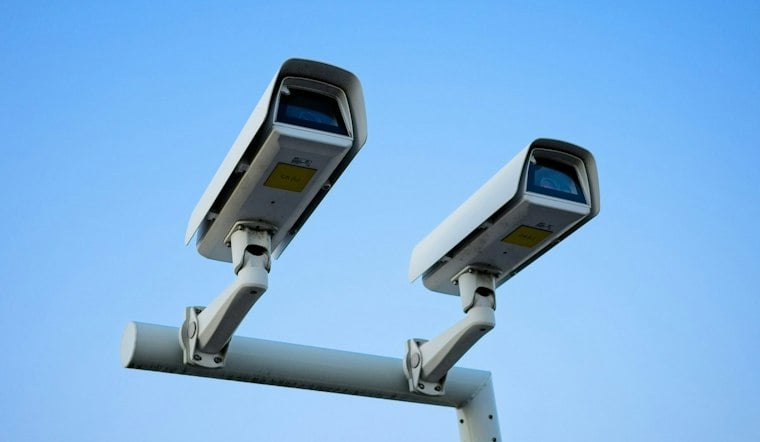
Ottawa County commissioners voted 6-5 on Tuesday to approve a 10-year contract with Axon worth roughly $14.6 million, overhauling the sheriff's office records system and equipment while putting a pause on 20 new pole-mounted license-plate cameras that were originally part of the deal.
The package, reported at a value of $14,624,663.93 by Ottawa News Network, replaces nine existing Axon contracts that together cost the county about $940,000 a year, according to MLive.com. The new agreement consolidates those contracts into a single records management system and includes hardware replacements for body cameras, fleet in-car cameras, drones, Tasers and other equipment, per the same report.
Sheriff Eric DeBoer said the county's current records management software, run through Ottawa County Central Dispatch, is nearing the end of its life. The new Axon system is expected to integrate records-sharing with police departments in Holland, Zeeland, Grand Haven and Grand Valley State University, the outlet reported.
Plate Readers Put on Ice Amid Privacy Pushback
The original proposal called for 20 fixed, pole-based automatic license plate recognition cameras, but county administration and DeBoer worked out an arrangement to delay their delivery pending a possible future vote by the Ottawa County Board. If commissioners ultimately decide not to take delivery of those 20 cameras, the money set aside for them could instead be swapped for other Axon camera products, the report states.
The debate reflects a broader surge of public concern. Every speaker during the public comment period at a recent meeting focused on the Axon proposal, Ottawa News Network reported, and residents at both an earlier work session and an October committee meeting voiced unease over continuous tracking and automated contract renewals tied to the county's camera programs. That anxiety has taken a physical form too: in July and August, vandals began targeting license-plate cameras around the county, blinding lenses or destroying units outright, according to the outlet.
Ottawa County already operates 31 Flock cameras, 15 of them county-owned, with the rest funded through local township contracts for police coverage. The county currently pays $45,000 a year for its existing ALPR cameras, a figure that would have grown substantially had the 20 new pole cameras been delivered as originally planned.
Commissioners Clash Over Surveillance and the Fourth Amendment
The 6-5 vote exposed a sharp divide on the board. Commissioner Allison Miedema said she backs the sheriff and his office but could not sign off on a measure that risked further damaging public confidence. “I've heard from the public over and over again, and I can't approve something that continues to erode trust,” she said, according to MLive.com.
Commissioner Joe Moss pushed to exclude the ALPR cameras from the contract entirely, saying he wanted to “err on the side of protecting the Fourth Amendment.” Moss suggested the county could always pay for the cameras later, outside the contract, if the board later chose to approve them. Commissioner Sylvia Rhodea wanted separate votes on the overall Axon contract and the plate-reader cameras, but county legal counsel warned that splitting the question would likely void the entire agreement. Commissioners who ultimately voted in favor said they wanted to preserve the option of swapping the camera funding for other Axon products down the line.
Other Communities Are Taking Divergent Paths
Ottawa County's hesitation over plate readers echoes a wider national reckoning with automated license-plate surveillance. In California, Santa Ana's City Council voted 6-0 to terminate its contracts with Flock Group and Motorola Solutions for license-plate readers, while nearby Fullerton opted to temporarily switch off its Flock system for six months, according to the Los Angeles Times.
Fairfax County, Virginia, took a middle path: supervisors voted 6-4 to reform rather than eliminate their use of Flock cameras, adopting a resolution that limits data retention to seven days and continues a ban on expanding the public camera network, per FFXnow. Meanwhile, Cedar Rapids, Iowa, approved a nearly half-million-dollar Axon contract amendment to swap out Flock readers altogether, with city officials telling KCRG the move would not add cameras and would save the city nearly $127,000 a year.
Ottawa County's new Axon agreement follows an earlier, unanimous 9-0 body-camera contract the county approved with Axon in August 2024, which covered roughly 225 body-worn cameras, 120 in-car cameras, supporting hardware and software, and new Tasers, according to the Holland Sentinel. This week's split vote suggests that while commissioners remain willing to modernize the sheriff's equipment and records systems, the question of expanding automated license-plate surveillance remains far from settled.





