

























































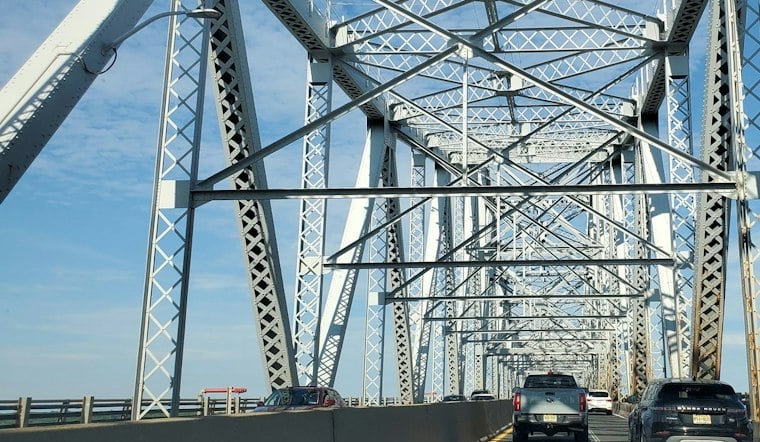
The Outerbridge Crossing, the 1928-built span connecting Staten Island to New Jersey across the Arthur Kill, will not be widened after all — the Port Authority says its engineering study found the aging bridge must instead be replaced entirely. The agency's current 10-year capital plan already sets aside $336 million for rehabilitating the existing structure and doing preliminary work on its eventual successor.
The finding ends years of speculation that New York and New Jersey might simply expand the traffic-choked crossing rather than build new. According to a Port Authority spokesperson quoted by SILive.com, “expanding the current bridge is not feasible; it must be replaced.” The outlet reports the study found widening would take and cost almost twice as much as building an entirely new bridge.
That cost-and-time gap isn't the only strike against widening. The same report notes a widened Outerbridge Crossing would only last about 30 more years, compared with at least a century of service expected from a brand-new span. Widening would also require strengthening more than half of the bridge's steel frames, work that could force lane closures lasting up to eight years and significantly affect motorists and surrounding communities, per the outlet's reporting.
No Cost Figure Yet for a New Bridge
Despite ruling out widening, the study did not provide an estimated price tag for either the widening option it rejected or the replacement project it recommends. The timeline, though, is laid out in detail: the Port Authority will spend 2026 through 2032 on planning, initial design and its federal environmental impact statement process, the same report states. Final design, acquisitions and agreements are scheduled to stretch from 2033 to 2036, with construction predicted to begin at the start of that year as part of the following capital plan.
In the meantime, a separate, already-funded $336 million rehabilitation of the current bridge — covering roadway and deck work — is scheduled to begin in the third quarter of 2027 and is expected to last three years, the station's report notes. The Outerbridge Crossing still has the same lane widths it did when it opened in 1928, and it has no shoulders, limitations that have long made it a chokepoint. In 2024 it was the Port Authority's sixth-busiest crossing, carrying more than 14.9 million vehicles.
A Study Years in the Making
Pressure to look at widening dates back to a 2021 New York law directing the Port Authority to assess whether the bridge could be physically widened and traffic flow increased, according to a press release from the New York State Senate. Critics at the time questioned the premise of the whole exercise. As Streetsblog pointed out when the Port Authority committed millions to study widening, decades of prior research have found that building out car infrastructure only encourages more driving — the phenomenon known as induced demand.
Whether that broader debate shaped the study's outcome isn't addressed in the Port Authority's findings, but the practical case against widening, as laid out by officials, centers on durability and disruption rather than traffic philosophy. The $336 million rehabilitation of the existing bridge is intended to maintain its safety while plans for a replacement advance.
What Comes Next for Commuters
For now, the Outerbridge Crossing remains routinely affected by gridlock, with no quick fix on the horizon. The Port Authority's long runway — six more years of planning and environmental review before construction even starts — means Staten Island and New Jersey drivers should expect the current bottleneck, plus an eventual rehabilitation-driven disruption beginning in 2027, before anything resembling relief arrives. The feasibility report was first reported by the Staten Island Advance; the New York Post later noted that the bridge is nearing its 100th year in service, with its future now pinned to a project that won't break ground for roughly another decade.





