

























































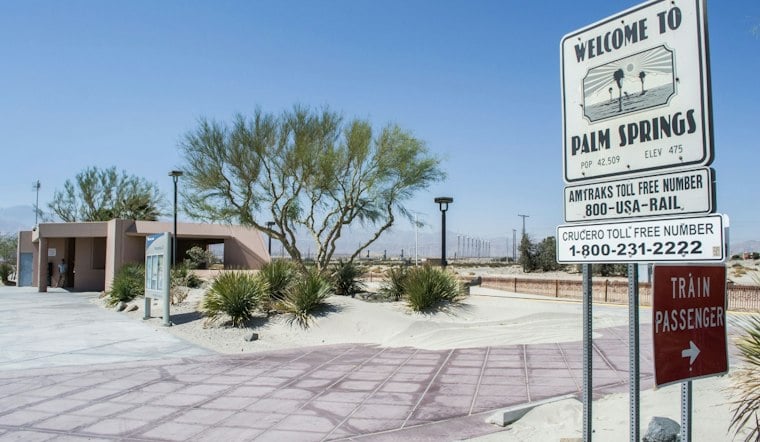
A Union Pacific freight train barreling west through Palm Springs struck a boom lift platform at a bridge-construction site on October 23, killing one worker and seriously injuring another. The lift, towering over the tracks on Indian Canyon Drive right next to the Palm Springs Amtrak station, had two workers positioned in its platform when the train approached, according to a preliminary report from the National Transportation Safety Board.
Engineer Hit the Brakes, But Too Late
The train was moving at roughly 38 mph when its engineer spotted equipment fouling the track ahead and slammed the emergency brake, according to the NTSB’s preliminary findings reported by Yahoo News. Despite the emergency stop, the train still struck the aerial lift. Both occupants on the platform were ejected and seriously hurt; one of them later died from the injuries, the same report states. The timing of the crash is not entirely settled across accounts — the preliminary-report coverage places it at about 2:26 p.m., while Equipment World lists the incident time as 2:30 p.m.
The two workers on the lift were employees of Steve P. Rados Inc., a California-based heavy engineering construction company, per the same account. The train’s engineer suffered minor cuts from broken glass and was treated at a hospital, while the conductor was not injured.
Who Cleared the Train to Enter the Work Zone
Before the collision, an employee of RailPros — the firm overseeing flagging and track protection for the bridge project — had authorized the train to enter the work limits, according to the NTSB's preliminary account relayed by Yahoo News. The report describes the workers as fouling the track, meaning they could be struck by a passing train, though it stops short of explaining why the lift remained on the main track or detailing the worksite's protection procedures at the moment the train was cleared through.
The lift involved was a JLG 860SJ, a model with a maximum platform height of 86 feet and horizontal outreach of 75 feet. The equipment's reach underscores how exposed workers can be when operating near active rail lines, even when positioned well off the ground.
NTSB Investigation Still Underway
The NTSB has said its investigation into the collision remains underway, and the agency will work to determine the probable cause and identify ways to prevent similar accidents, according to Equipment World’s report on the incident. Parties involved in the ongoing probe include Union Pacific, the Federal Railroad Administration, the California Public Utilities Commission, Steve P. Rados Inc., RailPros, and Harris and Associates, along with several rail labor organizations — the Brotherhood of Locomotive Engineers and Trainmen, the Brotherhood of Maintenance of Way Employes, and the International Association of Sheet Metal, Air, Rail and Transportation Workers – Transportation Division, per the Yahoo News account of the preliminary report.
Federal investigations of this kind typically take time to resolve. The NTSB generally aims to complete investigations within 12 to 24 months, though complexity and investigator workload can push that timeline, according to a report from railway.supply. That same outlet notes a separate Union Pacific derailment near Mecca this past March, when 12 articulated intermodal railcars, totaling 40 platforms, derailed on an eastbound train without injuring the crew — a reminder that Union Pacific's Coachella Valley corridor has seen more than one serious incident this year.
For now, the exact sequence that put the lift and its occupants in the path of an oncoming train, and the specifics of the track-protection procedures in place that afternoon, remain open questions for investigators to sort out as the NTSB's review continues.





