

























































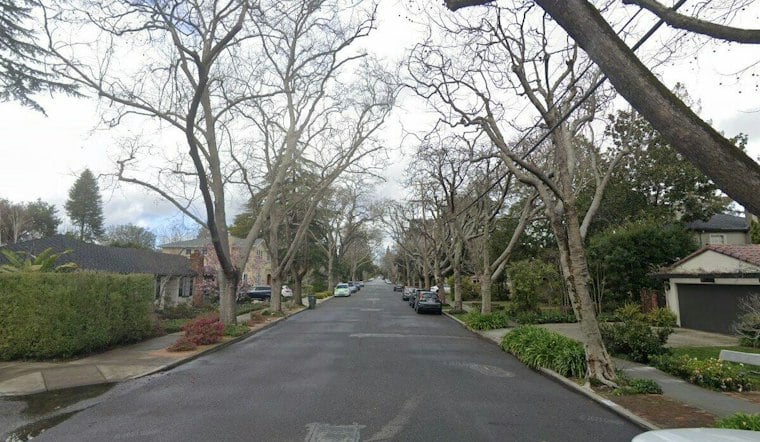
Palo Alto's City Council voted unanimously Monday to approve a package of upgrades for Bryant Street, the roadway that made history in 1982 as the nation's first bike boulevard. The plan adds new traffic circles at the street's intersections with Lincoln and Kingsley avenues, upgrades the existing circle at Addison Avenue, and installs high-visibility crosswalks between Homer Avenue and Embarcadero Road.
The route’s bicycle focus dates to more than its 1982 designation: longtime resident and advocate Ellen Fletcher helped champion the boulevard, later named in her honor. A city FAQ has cited more than 200,000 annual bicycle trips on Bryant Street. The city’s 2026 bicycle and pedestrian plan places neighborhood boulevards at the center of its near-term low-stress network.
The council directed city staff to proceed with engineering design and a phasing plan following the vote, according to Palo Alto Online. City officials have said the goal is to enhance the corridor as it approaches downtown while discouraging drivers from using it as a cut-through route. The city plans to complete design work and solicit a construction contract next year.
Safety data helped drive the push for change. California Highway Patrol figures showed four collisions at Bryant and Lincoln between 2016 and 2024, a number cited during the discussion over how to slow traffic along the corridor.
Residents Describe Near-Misses and Speeding Drivers
Public comment during the meeting included testimony from Barbara Hazlett, who has lived on Emerson Street for four decades. She said she had seen a child on a bike struck by a car during her time in the neighborhood and had heard of a neighbor's cat being killed by a vehicle. Hazlett told the council that speed enforcement on Embarcadero Road was the top need, reporting that cars travel 50 to 60 mph or more in 25-mph zones near three schools.
Despite those concerns, Hazlett argued the city should prioritize reducing speeds rather than closing streets to cars, and she opposed cutting off access to Bryant Street entirely. Her comments reflected a broader tension in the discussion between slowing traffic and limiting how residents get around the neighborhood.
Diverter Dropped Amid Resident Pushback
City staff had considered installing a traffic diverter at Bryant and Lincoln, but the proposal was abandoned after opposition from area residents worried about losing road access. Councilmember Pat Burt criticized transportation staff for removing the diverter from consideration, saying the city should still assess whether it would redirect too much traffic elsewhere.
The traffic-calming debate echoes the boulevard’s original design. A Federal Highway Administration account of Bryant Street’s early evaluation says barriers restricted through-driving while allowing bicycle traffic, and some stop signs were removed. After six months, motor-vehicle traffic had fallen and bicycle traffic had nearly doubled; the street still provided residential access, parking and local travel. That history shows how the city’s original approach sought to favor bikes without closing the street to neighborhood trips.
“It is a valid question of: Would it over-divert traffic, and it is therefore not what we want to do. And that's a valid question,” Burt said, per the same account from the meeting. He also raised concerns about using two-way stop signs for traffic crossing Bryant Street while leaving no stops for traffic moving along the boulevard itself.
Debate Over Circles Versus Speed Tables
The approved plan relies on traffic circles as its primary speed-reduction mechanism, but not every councilmember was convinced that was the right tool. Keith Reckdahl questioned the need for additional circles and suggested the city instead explore speed tables or elevated crosswalks, arguing that speed tables would cut vehicle speeds more effectively than circles. The council ultimately directed staff to explore speed tables and a possible speed-limit reduction on Bryant Street alongside the circle-based plan.
The Bryant work also sits within a broader city effort to make walking and biking routes more connected. Palo Alto’s 2026 Bicycle and Pedestrian Transportation Plan identifies 25 near-term bicycle projects spanning about 19 miles, along with 24 intersection and crossing projects. It describes neighborhood bicycle boulevards as a familiar, lower-stress option, while calling for separated bikeways at selected busy corridors where a safe parallel route is unavailable.
Hugh Louch, a consultant with Fehr & Peers, told the council the Addison Avenue circle — which has been criticized as too small to be useful — would be upgraded to improve its speed-calming effectiveness. He said the new circles planned for Bryant Street would be designed to higher standards than the existing infrastructure.
City Manager Ed Shikada said staff intended to move ahead expeditiously with the project now that the council has given its approval. With design work and a construction contract targeted for 2027, residents along the historic bike route will be watching to see how the final engineering balances the competing priorities raised at the meeting.





