

























































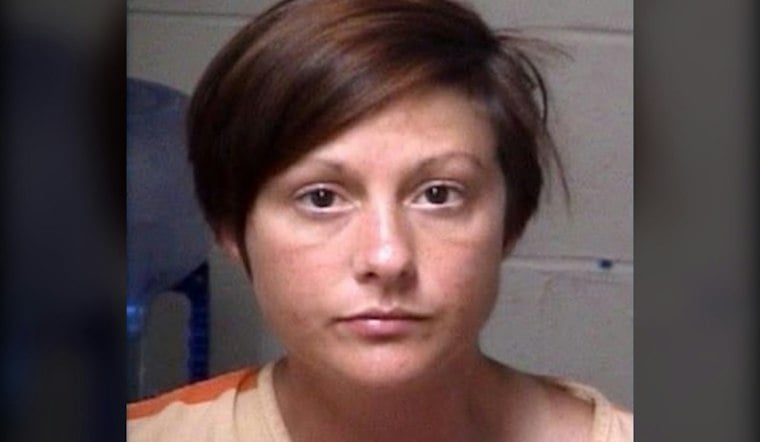
A propped-up Swiffer mop sits at the center of a Georgia murder trial over the 2019 shooting death of Daniel Akers, a 36-year-old sheet metal union worker found dead in his Paulding County home. His wife, Lacy Jolee Boles, is accused of shooting him in the face with a .22-caliber pistol; she says the gun went off during a struggle after he came home that night.
Boles, a stay-at-home mother, has pleaded not guilty to malice murder, felony murder, and aggravated assault, according to Yahoo News. Prosecutor Jason Treadaway told jurors that Boles set the mop against the door as a booby trap meant to alert her the moment Akers returned home, while defense attorney Brian Steel countered that the mop was simply a warning device so Boles would know if her husband came back, the outlet reported.
Akers died on December 22, 2019, after suffering a gunshot wound at the couple's home, according to Court TV. Boles called 911 to report that her husband had shot himself, the same report states. Investigators say Akers returned home just after midnight that night, following a bar visit and a stop at McDonald's after an argument with Boles the day before.
A Fight, a Text, and a Gun From Her Father
Boles told police that the argument on December 21, 2019 turned physical, claiming Akers pushed her against a wall, choked her, and took her phone, per the account relayed by Yahoo News. She later texted Akers instructions not to come home, telling him she planned to file for divorce — a message her attorney says she sent before the mop ever went up against the door.
The pistol involved in the shooting had been given to Boles by her father, according to the seed facts in the case record. Treadaway told jurors the couple's relationship was volatile and that the two frequently argued about money, while also describing Akers as happy and looking forward to baseball season with his young son.
Two Competing Accounts of the Shooting
Prosecutors allege that once Akers came inside with his bag of McDonald's, Boles confronted him and shot him once in the face with the .22-caliber pistol, as detailed by Yahoo News. Treadaway has accused Boles of attempting to stage the scene afterward.
Steel has offered a markedly different version. He said Boles saw Akers go downstairs and followed him to talk, that Akers was broke, facing a work furlough, and worried about a possible return to prison for violating parole, and that he told her, “you can't help me, no one can help me.” According to Steel, Boles then lunged for his arm in a panic, the two struggled over the gun, and it fired — he has called a gunshot entering through the nose “very, very bizarre.”
The bullet entered Akers' left nostril and traveled into his brain. Investigators found the gun on the ground near his right hand, but Boles told police he had been holding it in his left hand, even as she also told investigators he was right-handed — a discrepancy both sides have weighed in competing arguments over how the shooting happened, as Yahoo News reported.
Dueling Experts Take the Stand
The case has also turned into a battle of forensic opinion. The defense brought in two forensic pathologists who directly challenged the state's medical examiner, accusing him of missing critical evidence, failing to conduct important tests, and getting the gunshot wound conclusions wrong, according to East Idaho News. The outlet reported that after a full day of testimony from three experts, the defense rested its case, leaving jurors with a very different explanation for how Akers may have been shot and killed than the one prosecutors presented.
The trial itself almost didn't get this far on schedule. It had initially been set for summer 2026, but jury selection was postponed after a prospective juror researched the case online and shared information with others awaiting voir dire — specifically, the juror had asked ChatGPT about Boles' case and then shared what they found with fellow prospective jurors, Court TV reported at the time.




