

























































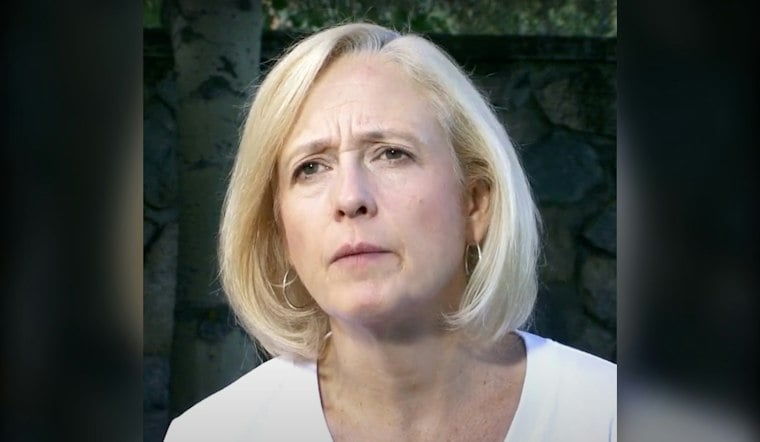
Paula Kerger has run PBS for two decades, and she says the last year and a half has been the toughest stretch of her tenure. After Congress rescinded federal funding for public broadcasting in 2025, PBS laid off staff, trimmed its budget, and watched some stations walk away from the network entirely — even as a wave of new members rushed in to help fill the gap.
Kerger made her remarks during a Commonwealth Club conversation in San Francisco on Monday, shared alongside KQED President and CEO Michael Isip, according to the San Francisco Chronicle. The event, moderated by UC Berkeley Graduate School of Journalism Dean Michael D. Bolden, came after what Kerger described as the worst period of her 20 years leading the network — and she is the longest-serving president and CEO in PBS history, per the Chronicle's reporting.
A Funding Pipeline Cut Overnight
The Corporation for Public Broadcasting had distributed federal funding to PBS and NPR stations for decades, with PBS drawing about 15% of its total budget from that source and generating the rest through grants, corporate sponsors and members, the Chronicle reports. That changed after President Trump signed an executive order in May 2025 titled Ending Taxpayer Subsidization of Biased Media, which, according to the Federal Register, directed the CPB board and federal agencies to cease funding NPR and PBS.
The Trump administration dismantled the Corporation for Public Broadcasting by early 2026, the Chronicle notes. Kerger said Congress had already earmarked two more years of public broadcasting funding before that money was deallocated, and PBS stations received just three months' notice that expected November checks would not arrive, she said.
The fallout was immediate. PBS laid off 20% of its staff, trimmed 15% of its budget, and reduced individual stations' dues by 15%, according to the Chronicle's reporting — though NPR has separately reported that PBS laid off 15% of its workforce, a discrepancy the two outlets have not reconciled. Kerger said PBS had about $72 million less overall since the executive order was signed. The PBS board approved a fiscal 2027 budget projecting break-even at $323.6 million — about $46.3 million less than the prior year's budget — according to Current.
KQED's Local Reckoning
The cuts hit close to home for Bay Area viewers. KQED trimmed about 10% of its $100 million budget and cut 15% of its staff, Isip said, according to the Chronicle. Axios had earlier reported that the Bay Area station faced an $8 million budget gap and planned to lay off 15% of its workforce after Congress voted to pull federal funding, and that CEO Michael Isip said at the time that the loss of funding does not change our public service mission.
Isip told the Commonwealth Club audience that the funding loss was not existential for KQED but represented a clarifying threshold, and he said strong local stations support strong national partners. He also worked with the California state legislature to add a $3 million public media lifeline to the state budget. California is home to 33 PBS member stations, the Chronicle reports.
Despite the cuts, KQED added 30,000 new members and reached an all-time high of 268,000 members, Isip said. Nationally, PBS gained roughly 1 million new members through its fundraising drive — a figure that aligns with TIME's reporting that PBS has seen more than a million new memberships since the July 2025 rescission. The Chronicle notes that many of the new members were millennials concerned about preserving children's programming, and that corporate partnerships and new memberships in conservative areas also helped keep PBS afloat.
Arkansas Almost Walked Away
Not every station stayed in the fold without a fight. Arkansas PBS announced it would leave the network after Trump's executive order and rebranded itself as Arkansas TV, according to the Chronicle. Gay White, a former first lady of an Arkansas governor and a Republican, and Barbara Pryor, a former first lady of an Arkansas governor and a Democrat, helped lead a drive to save PBS in the state and brought a crowd to the state commission's meeting, which Kerger attended in person.
That grassroots effort paid off. The commission voted without dissent to accept more than $2.1 million raised to cover PBS membership dues from July 2026 through June 2027, reversing its earlier push to cut ties with the network, according to the Arkansas Advocate. PBS programs remain available in the state for at least another year as a result.
Arkansas was not alone in facing hard choices. South Dakota Public Broadcasting laid off seven of its 11 journalists and canceled Lori Walsh's public-affairs show, prompting what NPR described as a wave of rage-giving that led to a record $8 million haul — enough for the station to hire Walsh back.
Why Rural Stations Are Most Exposed
The stakes vary widely by geography. Rural public-media stations tend to be more reliant on federal dollars while also serving key roles for local news and emergency broadcasts, according to Axios. Public broadcasting stations in conservative rural areas face heightened risk from funding cuts, the Chronicle reports, and public radio and television infrastructure is part of the nation's emergency alert system — meaning broadcasting can deliver disaster information when cellphone service is unreliable.
In fiscal 2023, CPB grants made up about 10.3% of U.S. public TV stations' overall funding and 4.1% for radio stations, according to Axios. Some university stations ended their PBS affiliation because of budget cuts, though Kerger said PBS has maintained coverage throughout the country despite those departures. The network traces its roots to the Public Broadcasting Act of 1967, initiated by Lyndon B. Johnson, who grew up in a rural Texas media desert, and which created the Corporation for Public Broadcasting.
Trimming the Schedule, Not the Mission
Some of the cuts have reshaped PBS's programming directly. PBS trimmed weekend editions of the PBS NewsHour to preserve and strengthen the weekday program, which is now in its 51st season, replacing weekend news hours with a half-hour show instead. The network says it still provides stations with technical infrastructure, satellite systems, platform distribution and classroom resources.
PBS reports that U.S. television households watch public broadcasting at a rate of 80%, and that Americans view nearly 375 million videos monthly on PBS digital platforms. PBS Passport continues to grow its subscription base each year, the network has successful partnerships with YouTube and YouTube TV, and PBS Kids continues to offer online games for children.
Looking Past the Midterms
Kerger said the Democratic Party's success in the midterm elections may create a path forward for public broadcasting, though she cautioned that the funding situation will not recover overnight. She said she expects public broadcasting to face renewed challenges, and that sustaining PBS services will be difficult without renewed federal funding.
Still, Kerger told the Commonwealth Club audience that she loves her work at PBS and finds it profoundly interesting — even amid the turmoil. Public media more broadly faces ongoing funding battles in an increasingly fragmented landscape, according to KQED, as streaming platforms keep shifting their business models and Washington's appetite for public broadcasting remains unsettled.




