

























































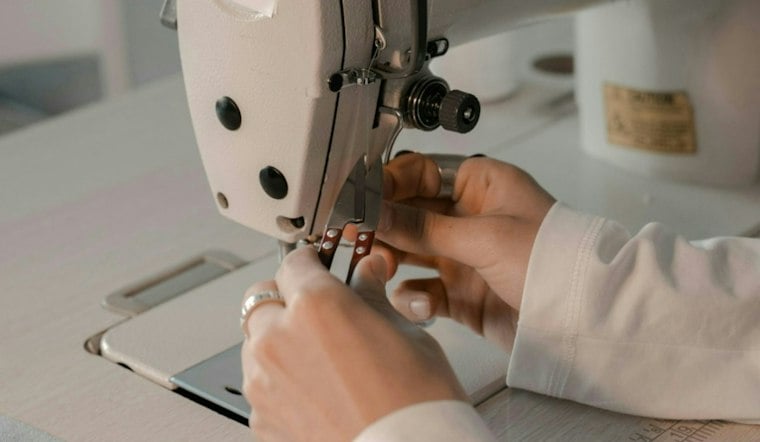
The Defense Logistics Agency Troop Support has handed Federal Prison Industries Inc. an $18.5 million, five-year contract to produce long-sleeve maternity T-shirt physical-fitness uniforms for the U.S. Army. The deal, issued this week, beat out seven other businesses that had shown interest in the work, with contract performance set to take place in Georgia.
The award, dated Nov. 10, came from a Pentagon contract notice and was detailed by Cleveland.com. Funding will be drawn from Defense Working Capital funds spanning fiscal years 2026 through 2031, and the contract's ordering period runs through Nov. 8, 2031.
Federal Prison Industries operates as a self-sustaining government corporation under the trade name UNICOR. The same reporting notes the company derives over 50% of its sales from the Department of Defense, employing and training federal inmates who typically earn between 23 cents and $1.15 per hour for their work, and manufactures clothing and textile products at multiple locations, including Atlanta, Georgia.
A Pattern of Military Textile Work
This isn't FPI's first recent brush with Pentagon business. In March, the company won a $17 million contract for extreme-cold and wet-weather jackets for the Army and Air Force, and in September it picked up a $16 million contract for various types of physical-fitness T-shirts, according to the same Cleveland.com report. FPI offers more than 80 products and services overall, and it functions as an inmate-training program operated by the Bureau of Prisons under the Department of Justice.
The Bureau of Prisons says that only 8% of work-eligible inmates participate in UNICOR nationwide, per the agency's own program description. The low-wage prison labor arrangement has drawn scrutiny before: a 2011 investigation by WIRED detailed a no-bid Army contract worth $19,767,468 for FPI to build bulletproof Outer Tactical Vests at the federal correctional facility in Yazoo City, Mississippi — and reported that the Army had previously recalled 44,000 FPI-made protective helmets after they failed ballistic testing.
Why the Army Needs Maternity Uniforms
According to the Army, about 16,000 female soldiers become pregnant each year and require maternity uniforms. The maternity-uniform effort traces back to a pilot program that, as Stars and Stripes reported in October 2023, had expanded that May to cover all units in the continental United States, providing participating soldiers three operational camouflage-pattern maternity uniforms and five maternity T-shirts, with physical-fitness maternity uniforms available only in limited quantities at that time.
By October 2023, more than 200 soldiers had participated in the pilot, which was slated to run until it reached 1,200 participants or hit fiscal year 2025. Military.com reported around the same time that the program was not available to troops serving overseas, even as an estimated 16,000 soldiers became pregnant yearly. It is not established in current reporting how the program's reach or eligibility rules may have changed since then.
Open Questions on the New Deal
Several basic details of the new contract remain unclear from the available Pentagon notice, including how many shirts will ultimately be produced, unit pricing, the delivery schedule, and whether the full $18.5 million ceiling will be spent. The Georgia performance location has not been tied to a specific facility in the available reporting.
Federal acquisition rules do lay out a general process for buying from FPI. Under Federal Acquisition Regulation Subpart 8.6, agencies are generally expected to prepare a written determination weighing price, quality and delivery time against private-sector alternatives before purchasing a comparable item from Federal Prison Industries under its ordering procedures, unless a waiver is granted. Whether or how that process applied specifically to this award has not been established in the available evidence.



