

























































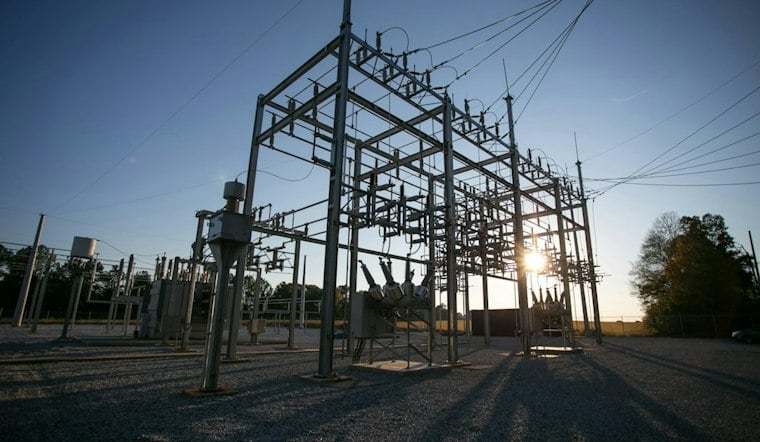
PG&E has stopped working on a long-planned second power line into Palo Alto, according to the city manager, stalling a project meant to shield the city from the kind of prolonged blackout it has narrowly avoided before. The line would link a PG&E substation at NASA Ames in Mountain View to the utility's Palo Alto substation at Colorado Avenue and West Bayshore Road, giving the city a backup route for electricity it currently lacks.
City Manager Pushes for Faster Timeline
City Manager Ed Shikada said PG&E needs to immediately restart its environmental review of the project to keep it on track, according to the Palo Alto Daily Post. That review is expected to take at least 18 months, which would allow design work to begin in 2029 — five years before the line's planned 2034 in-service date. Shikada has pushed for the project to be completed sooner rather than later, the Daily Post reports.
The warning carries a harder edge when it comes to funding. Shikada said that if no work on the project is funded in 2027, design work would be delayed even further, leaving identified reliability problems “without reasonable and proper mitigations,” per the same account. Assistant City Manager Kiely Nose told the commission in May 2025 that the line would cost $40 million to $80 million, funded by utilities across California.
Construction Cuts Tied to Borrowing Costs, Failed Bill
The stoppage comes as PG&E pulls back on construction more broadly. Shikada, in an email to the City Council obtained through a California Public Records Act request, said PG&E is cutting 15% of next year's construction projects, attributing the reduction to high borrowing rates following the failure of a state wildfire-liability bill. That measure, Senate Bill 492, would have lowered wildfire liability for utilities, but Assembly Speaker Robert Rivas declined to bring it to a vote on Sept. 1, the Daily Post reported.
The scale of PG&E's pullback shows up in the company's own numbers. PG&E announced it would defer $2 billion in planned work, about 15% of its planned spending, and CEO Patti Poppe said the deferrals did not touch wildfire mitigation or safety work, according to the Sacramento Bee.
A City That Has Run Out of Backup Before
The stakes of a single-line city became clear on Feb. 17, 2010, when a small plane crashed in East Palo Alto and took out all three transmission lines running along a single corridor into the city. The crash killed the pilot and two passengers, all Tesla engineers, destroyed a home and struck a daycare center with a wing, according to the Daily Post's account. During the resulting 12-hour outage, Stanford Hospital, Lucile Packard Children's Hospital and the VA Hospital were all preparing to evacuate.
PG&E avoided a longer citywide blackout at the time by helicoptering in a previously built tower, the outlet reported. As of a 2020 retrospective from the same paper, Palo Alto was still powered through the sole line that comes from under the Bay — the same vulnerability city officials are now trying to address with the stalled Mountain View connection.
The risk resurfaced in 2021, when a plane became entangled in two inactive wires and narrowly missed the lines serving all of Palo Alto. Such an accident could have caused an outage lasting three to seven days, per the Daily Post's reporting. If the same event recurred today, an outage would likely last two or three days, per the same source.
City officials had also explored a westward option, trying to connect Palo Alto to a Stanford Linear Accelerator Center substation on Sand Hill Road in Menlo Park. Those negotiations with Stanford and the U.S. Department of Energy dragged on for 15 years without success, leaving the Mountain View line as the city's primary path toward a long-sought second connection.



