

























































More than 1,500 educators packed the Philadelphia Marriott Downtown this past weekend for a three-day conference aimed squarely at a stubborn problem in American classrooms: Black men make up just 1.3% of the nation's public school teachers. The Black Men in Education Convening brought together teachers, students, and city officials to talk not just about getting more Black men into the profession, but keeping them there once they arrive.
A Gathering Built Around Recruitment and Staying Power
The three-day conference focused not only on bringing Black men into the profession but also on supporting their long-term growth, according to WHYY. The event was hosted under the banner of the Black Men in Education Convening, and the national statistic driving the conversation — just 1.3% of U.S. public school teachers are Black men — comes from the Center for Black Educator Development, the organization founded by Sharif El-Mekki, who has had a West Philadelphia street co-named in his honor. The center says the convening is one approach it is taking to recruit, support, retain and activate more Black men in education, according to its own description of the Black Male Engagement initiative.
The stakes extend well beyond the conference hall. Research cited by the center and reported by the same WHYY account found that Black children taught by Black teachers earn stronger grades and are more likely to attend college. Philadelphia schools Superintendent Tony Watlington, who began his career as a bus driver and school custodian, told the gathering that qualified, supported and stable teachers make a real difference to students — a message rooted in his own path through the district's ranks.
Students From Beeber's Teacher Academy Weigh In
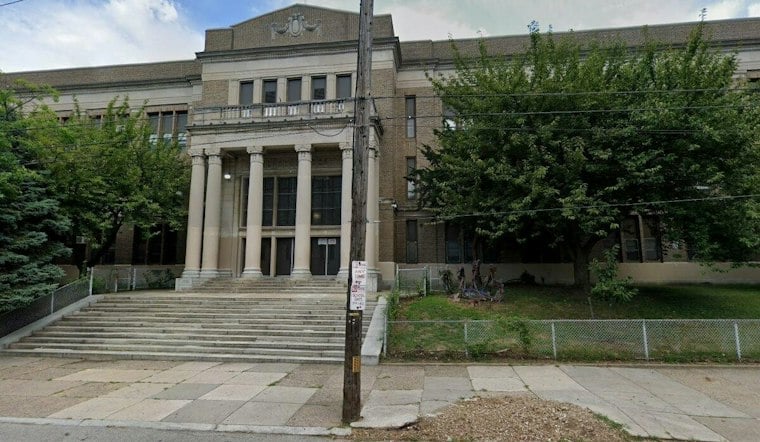
Five students from Science Leadership Academy at Beeber's Teacher Academy program sat on a panel moderated by Tina Dukes, who leads the program, to talk through why they want to teach and what makes an educator effective. Tysaan McLaughlin said strong teachers are warm, demanding, and hold students to a high standard. Fellow student Ekwueme Tweh, whose father is also a teacher, said more Black men would go into the classroom if they understood their impact extends well beyond the four walls of a school.
The Teacher Academy itself is structured as a two-year pipeline: students apprentice in other schools, study curriculum design, and earn college credit along the way, per the same WHYY report. Beeber's own description of its Teaching CTE program calls it a two-year track that empowers students to become future educators, and the school says it currently partners with the Center for Black Educator Development to run it.
Parker Pitches Housing Help and a Rebuilding Plan
Philadelphia Mayor Cherelle Parker used her appearance to urge Black male educators to join the district, telling attendees that educators shape minds and establish the foundations for critical thinking. She pointed to the district's plan to modernize and rebuild 169 schools as part of the pitch, and said the effort could get a boost from recently elected local and national Democrats. Parker also said the city offers rental and mortgage assistance for hard-to-fill jobs, including teachers, paramedics and nurses — framing it as a tool to pull more Black men into classrooms.
Elsewhere at the convening, New York Times journalist Nikole Hannah-Jones spoke with Dr. Christopher Emdin, adding a national voice to a conversation about a gap that researchers have been documenting for years. The scale of underrepresentation is described differently depending on the source: WHYY reports that 92% of Philadelphia public school students are people of color compared with 39% of teachers, while the coalition Elevate 215 puts those figures at 86% of students identifying as BIPOC against 35% of teachers. The two counts do not line up exactly, and neither source's underlying dates or definitions were available to reconcile them.
A Shrinking Pipeline, Even as Enrollment Shifts
The numbers behind the shortage tell a consistent story even when exact figures vary by source. The Philadelphia Tribune reports that Black men make up just 5.3% of teachers in the School District of Philadelphia, totaling 467 educators, and that they leave the profession at a markedly higher rate than their peers. According to the Tribune, teacher attrition in Pennsylvania reached 7.7% in 2022-23, with Black male teachers leaving at 18.1% — while Philadelphia's overall attrition rate exceeded 15% that year. Those figures underscore the challenge of retaining Black teachers.
That turnover has compounded over two decades. The Philadelphia Inquirer has reported that the city employs 1,200 fewer Black teachers than it did 20 years earlier, even though the overall teacher count has held steady at around 12,000. Research for Action similarly found the district employed nearly 1,200 fewer Black teachers in 2020-21 than two decades prior, and a 2025 study published in the Journal of Black Studies put the gap at 1,250 fewer Black teachers in 2022-23 than in 2000-01. That same study pointed to hostile racial climates inside schools as a factor undermining retention. Meanwhile, the Inquirer found that students of color now make up nearly 37% of Pennsylvania's public school enrollment, up from 30.5% eight years earlier, while the share of teachers of color grew by less than a single percentage point over that same span.
The gap has drawn attention beyond Philadelphia proper. The 2026 gathering was the 9th Annual Black Men in Education Convening. The Philadelphia Tribune has described an earlier convening featuring more than 70 speakers and 80 breakout sessions. The current count of 467 underscores the scale of the recruitment challenge. For now, groups like Elevate 215 say their strategy includes expanding teaching academies like the one at Beeber and building a financial incentive fund aimed at retention — pieces of a broader effort that this weekend's convening was designed to accelerate.



