

























































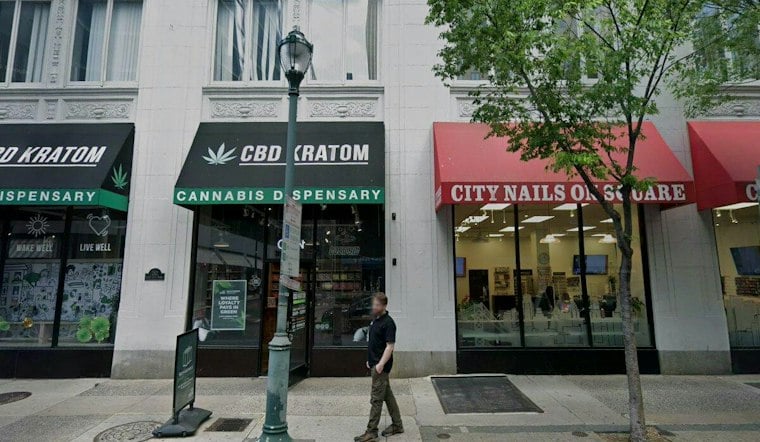
A sweeping new Philadelphia ordinance restricting the sale of kratom and intoxicating hemp products is set to take effect Thursday, Nov. 12, carrying fines of up to $2,000 per day for violations and no grace period for stores to come into compliance. The law adds an entirely new chapter to the city code targeting what it calls intoxicating substances, but it leaves unanswered how the city plans to inspect shops or respond to complaints once the rules are live.
The ordinance, which Philadelphia City Council passed on June 4 and Mayor Cherelle Parker signed on September 15, bans the sale of kratom mixed or packed with harmful non-kratom substances, kratom extract with solvent residue above the national pharmaceutical standard, and kratom containing more than 2 percent 7-hydroxymitragynine of its total alkaloid content, according to FOX 5 New York. It also prohibits synthetic versions of those compounds and bars sales of any substance excluded from the federal definition of hemp under the Agricultural Marketing Act of 1946. Sales to anyone under 21 will be illegal citywide once the ordinance takes effect, and violations are classified as Class III offenses, with each day a violation continues counted as a separate offense.
The law builds on action City Council took earlier this year. As The Philadelphia Inquirer reported, council passed a pair of bills aiming to further tighten rules on smoke shops selling unregulated drugs, with one defining kratom and hemp-based THC as intoxicating substances requiring a special permit for retail sale in much of the city, and a companion measure empowering the city to penalize landlords who rent commercial space to improperly licensed smoke shop operators. A proposed licensing framework would allow future sales of certain FDA-approved products.
Enforcement Questions Remain
The ordinance takes effect Thursday, Nov. 12, but its retailer permit system depends on implementing regulations that the city has not yet announced a timeline for issuing. The permit would cost $300 to apply for and $300 to renew, with a $50 late renewal fee. It would be available only to fixed storefronts at least 500 feet from specified schools and public facilities. Permit holders would also have to test products at a federally registered laboratory licensed in Pennsylvania and label products to show they passed.
The ordinance also limits where permits can be issued. It names roughly 180 commercial corridors and business improvement districts where permits are barred, including Center City, Old City, Kensington Avenue, Frankford Avenue, 52nd Street, Germantown Avenue, and much of the Northeast. The city has not released an estimate of how many businesses could be affected or specified which hemp products are prohibited on the ordinance’s first effective day.
What the City Says About Complaints
Philadelphia’s Department of Licenses and Inspections directs people with general complaints or inquiries to 311, through an online form or by phone, according to Philadelphia L&I. Its guidance does not identify 311 as a process for enforcing the new kratom-and-hemp ordinance, leaving that part of the enforcement picture unclear.
Industry Pushback From a Local Chain
CBD Kratom, which operates three Philadelphia stores in Center City West, South Street, and Wynnefield Heights, asked council to reconsider the bill before its effective date. Jason Brandl, the company's chief operating officer, said the bill advanced without sufficient consideration of research, industry expertise, and resident testimony. “With this legislation, we are taking meaningful steps to protect residents, increase accountability,” Majority Leader Katherine Gilmore Richardson, the bills' sponsor, told the Inquirer, framing the restrictions as a public safety measure.
The company argues that regulation should protect consumers while allowing responsible operators to serve adults. It also says FDA approval requirements would leave natural-leaf kratom without a practical path to sale. The debate reflects broader disputes over how cities and states should regulate kratom and hemp-derived products.
A Wider National Policy Shift
Philadelphia's move lands amid a flurry of similar action elsewhere. In Florida, the Hillsborough County Commission voted 7-0 on Tuesday to prohibit the sale and distribution of kratom products containing concentrated or chemically altered compounds, including 7-OH, according to WUSF. That ordinance exempts kratom in its natural, unaltered form and makes violations misdemeanors punishable by up to 60 days in jail and a $500 fine, following roughly two hours of public comment with more than 50 speakers on both sides.
In Pennsylvania, a state Senate committee approved an amendment in March to a marijuana bill that would ban sales of intoxicating hemp-derived THC products, including Delta-8, Delta-10 and THCA, by a bipartisan 10-1 vote, as reported by the Altoona Mirror. Committee Chair Daniel Laughlin said the products are marketed with no known testing, labeling or age restrictions. Meanwhile, Illinois's own ban on intoxicating hemp products was set to take effect Thursday, prompting hemp businesses there to file suit seeking a court order to stop it, according to the Chicago Tribune, which also reported that a national ban on intoxicating hemp products is scheduled to take effect December 11.
Enforcement patchwork has become a recurring theme nationally. Before a Massachusetts emergency order in August, roughly 25 local governments had already passed their own kratom regulations, according to the Rockefeller Institute of Government, which also noted that without a retailer registration requirement, local governments may lack a clear database of where these products are sold, making enforcement more labor-intensive. The institute also pointed to Tennessee, where a 2026 kratom ban has already resulted in an increase in people seeking treatment for withdrawal.
Federal rules are shifting at the same time. Under the Agricultural Marketing Act framework, federal hemp law will exclude hemp products containing semisynthetic cannabinoids the cannabis plant cannot produce on its own starting November 12, while a 0.3 percent total-THC limit by weight and a 0.4 milligram per container finished-product THC limit are set to take effect December 11, according to a Congressional Research Service legal sidebar. For now, Philadelphia smoke shop operators are left navigating a local ordinance with real financial teeth but no published roadmap for how it will actually be enforced on the ground.





