

























































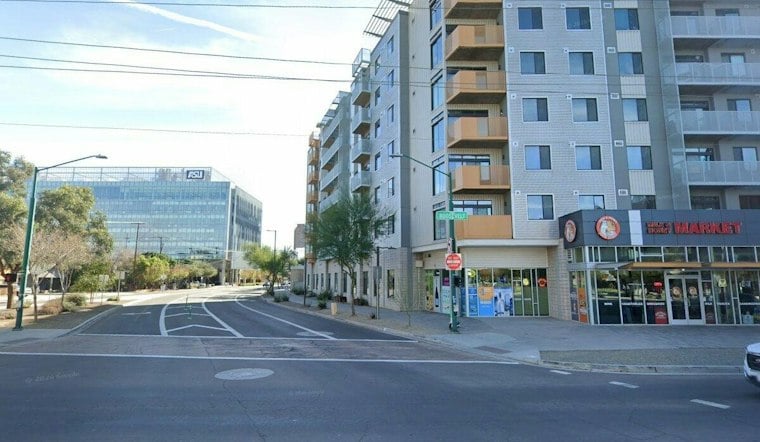
For three decades, First Fridays turned Roosevelt Row into downtown Phoenix's biggest monthly block party, drawing crowds that once topped 20,000 people for a free night of art, food trucks and vendor booths. This fall, that street-party version of the event is gone, replaced by a scaled-back private-property pilot program that drew just one business application for its debut month.
A Street Party Reimagined After Safety Concerns
Phoenix City Council voted 9-0 to approve the Downtown Arts Vending on Private Property Pilot Program, according to KTAR. The one-year pilot lets businesses along Roosevelt Row apply for permits to host vendors on their own parking lots, patios and landscaped areas, as reported by Axios. Street closures, once a defining feature of the monthly art walk, are not part of the new arrangement.
The change follows the suspension of First Fridays' vendor market on a closed section of Roosevelt Street in April, per the same KTAR report. Roosevelt Row CDC and Artlink ended police presence, street closures and street vendors at the event, attributing the shift to what the organization called unacceptable violent acts in or near the art walk, according to the Modesto Bee.
Only One Business Applied for October
When the pilot launched for October's First Friday, only one business had submitted an application, the city told Axios. A second vendor applied in time for December's event. The station reported that limited preparation time likely played a role, since the council had approved the program only about three weeks before the October art walk.
Under the pilot, vendors can sell paintings, jewelry, ceramics, clothing and other locally made art, along with artisanal food and drinks, according to the Modesto Bee. Food trucks require extra permits beyond the standard vendor application. The City of Phoenix says the goal is to restore First Friday within its original downtown footprint while keeping art-related sales on private property.
From 1989 Warehouse Show to 20,000-Person Crowds
First Fridays traces back to artist Pete Petrisko, who opened Gallery X on the 800 block of Madison Street in 1989, then surrounded by roughly two dozen other galleries and performance spaces, per the Modesto Bee. Petrisko and fellow artist John Herman discussed creating a regular downtown arts event, and Petrisko said they wanted a monthly art walk that could sustain the community year-round. Artlink took over First Fridays in 1994.
The event grew alongside downtown Phoenix itself. Arizona State University opened its downtown campus in 2006, contributing to growth in student housing, high-rise apartments, bars and restaurants in the area, the Modesto Bee reported. That growth also brought gentrification that pushed out some of the galleries, artists and musicians who had built the neighborhood's creative identity, and Roosevelt Row evolved into what the Bee described as a spectacle street party where art often served as decoration rather than the focus.
Safety Concerns Split the Arts Community
City Councilmember Anna Hernandez said First Fridays at its peak attracted crowds of more than 20,000 people and required more than 70 police officers each month, according to the Modesto Bee. She said the pilot came out of listening sessions her office held with Vice Mayor Hodge Washington's team in November 2025, gathering input from artists, neighbors and business owners, and that it addresses both safety and strain on the neighborhood. Hernandez said she hopes the program helps artists earn more, benefits businesses and makes the event safer.
Not everyone agrees on what the changes mean. The Bee reported the First Friday community is divided over whether the shift allows for an artist-centered return or simply papers over a larger problem. Greg Centrone, who owns Bud's Glass Joint locations on Roosevelt Row and Grand Avenue, said he does not believe First Friday caused the violent incidents and argued the changes make the event feel like a normal Friday evening rather than an arts gathering or block party. Petrisko, by contrast, said the pilot's decentralized vendor locations preserve the original nature of First Friday and could help it succeed.
Mixed Signals From Downtown Businesses
The effects on nearby businesses appear uneven. Mel Nichols, general manager at The Pemberton, said guest counts at the restaurant have decreased each month, though the causes remain uncertain; The Pemberton still supports First Friday. Phoenix Art Museum, which has participated in First Fridays for two decades, averages roughly 1,500 visitors each month and drew nearly 2,500 for its August event tied to the opening of the Ecstatic Time: The Alchemy of Photography exhibition. The museum offers free general admission and arts programming on First Fridays.
Phoenix plans to collect data over the next 11 First Fridays on safety, local business engagement and whether the event keeps its artistic mission intact, per the Bee's reporting. For now, First Friday continues, with artists and businesses participating despite the reduced police presence and the loss of street vendors. Petrisko said he hopes the event keeps growing as a monthly celebration of local artists across downtown and central Phoenix.
A Separate Event Emerges in Mesa
Roosevelt Row's changes have coincided with a new, unrelated event across the Valley. Cannon Beach Entertainment Center in Mesa hosted its own First Friday event with a soft launch, featuring vendors, artists, live performances and DJ sets, with free admission to the outdoor portion and free parking, according to AZFamily. The station reported that the Mesa event is not affiliated with and is not a relocation of Phoenix's long-running First Friday art walk.
The stakes extend beyond one neighborhood's street party. Arizona's arts sector generates more than $1 billion in annual revenue and supports 113,000 jobs statewide, with $18.4 billion in total economic output, according to a Common Sense Institute study. The same research found the state's core arts value added grew 123% from 2013 to 2023, the fifth-fastest increase in the nation, and that major arts institutions in Phoenix and Tucson together serve more than two million patrons annually.



