

























































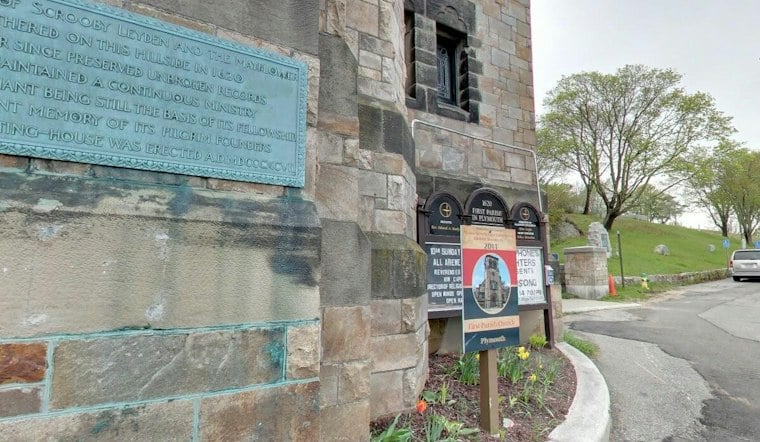
Work has been allowed to resume on converting the historic Mayflower Meetinghouse at Town Square into a museum, after Plymouth officials halted the project last month and only recently cleared the way for it to continue. The building's owners, the Mayflower Society, filed new paperwork seeking a formal change of use from church to museum, and the town's director of inspectional services responded by issuing a new commercial zoning permit allowing the work to resume.
The reversal closes out a monthlong standoff that began when Jason Silva, Plymouth's director of inspectional services, ordered construction stopped at the historic building in October. According to Plymouth Independent, Silva told the project's manager on October 14 that the current work could not continue until a building permit approving the change of use was issued. That followed an earlier complication in July, when Silva said a work permit granted that month was apparently issued in error, forcing an immediate stop to construction.
Per the outlet's reporting, Silva said the Mayflower Society ultimately complied, formally requesting the change of use for the church building so it could operate as a museum. With that paperwork filed, work has been allowed to resume on the site where the Pilgrims built their first church in 1622.
What the Museum Conversion Involves
The Mayflower Society's plan centers on transforming the church basement into a wheelchair-accessible museum space, with the organization saying it intends to bring the building into compliance with the Americans with Disabilities Act. To make that happen, the plan includes removing a pillar, two windows and some façade stonework to add a new doorway and wheelchair ramp, the same report notes.
Those exterior alterations are notable because Town Meeting awarded the Society a $2.6 million historic-preservation grant in 2018 specifically to restore the building's stone façade. Town officials have said no deed restriction was ever filed for the Meetinghouse, which left the Society free to apply for permits altering the same exterior features the grant was meant to preserve.
A Pattern the Town Manager Calls Systemic
Plymouth Town Manager Derek Brindisi has pointed to the Meetinghouse case as one example of a much broader paperwork failure. In August, Brindisi described the missing restriction as symptomatic of a larger systemic problem, and listed the Meetinghouse's failure to file a new deed restriction as part of a pattern he said affected 43 grants across 27 projects, with those affected projects totaling more than $38.9 million, the station's report states.
Historic deed restrictions are intended to protect the historic character of structures in perpetuity, which is why their absence has drawn scrutiny from town leadership.
Separately, South Shore News reported that a Plymouth audit presented to the Select Board on September 1, 2026, cataloged 44 Community Preservation Act projects across multiple sectors lacking recorded deed restrictions. Brindisi told the Select Board that only 10 of the town's 33 historic restrictions — fewer than a third — had ever actually been recorded.
New Safeguards and Other Projects Caught Up in the Review
In response, Plymouth's Community Preservation Committee put a new safeguard in place: no future grant disbursements will be released without prior proof that a deed restriction has been recorded, South Shore News reported. The review has also touched other local landmarks, including Pilgrim Hall Museum's 2023 grant of $3.2 million and four separate First Parish Meetinghouse votes totaling more than $2.97 million, both cited in the outlet's account of projects with active draft restrictions. Select Board member Bill Keohan argued for releasing a withheld $300,000 final payment to Pilgrim Hall while its own paperwork is finalized, according to the same report.
Community Preservation Committee chair Ed Bradley pressed the underlying question in late July, asking why the town would fund restoration of historic features if they could later be removed or substantially altered without preservation review. Mayflower Society executive director Cheryl Soares responded the same day, saying the Society has always been forthcoming about its intentions for the property, per Plymouth Independent.
The Historic District Commission had already weighed in on the exterior changes themselves, unanimously approving the planned alterations to the Meetinghouse on July 15, according to the commission's former chair, Michael Tubin. Community Preservation Act grants, including the one that funded the Meetinghouse façade restoration, are raised through a surcharge on Plymouth property taxes, underscoring why town officials have treated the missing paperwork as a public accountability issue rather than a private dispute.





