

























































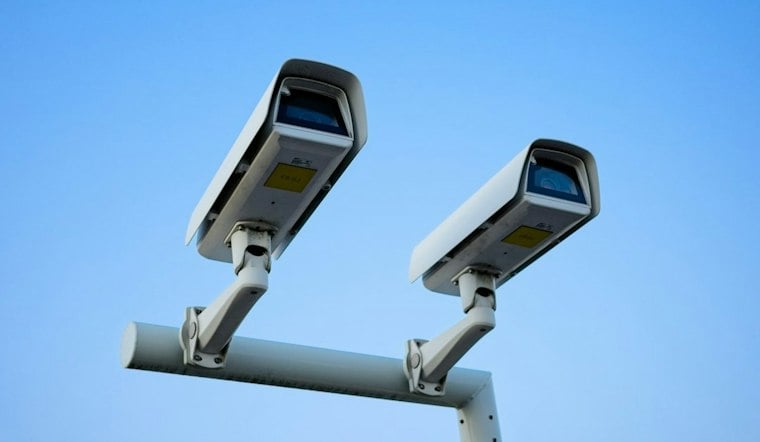
Plymouth, Minnesota’s police chief said he directed staff to physically disconnect the power cords on the city’s surveillance cameras after waiting more than a week for a response from Flock Safety. The Plymouth City Council voted in September to terminate its contract with the license-plate-reading camera company, but the hardware remained bolted up around town until staff disconnected it on October 9, four days after Flock acknowledged the cancellation.
Police suspended use of the system and notified Flock of the cancellation on September 23, according to The Drive. Before Flock acknowledged the cancellation on October 5, the cameras remained mounted and wired. As The Verge put it, “the cameras remained up, and the city had received no acknowledgment from the company.”
That’s when Police Chief Eric Fadden stepped in. “I directed our staff to disconnect the power cords from the cameras,” Fadden said, according to the same Verge report. Staff physically disconnected the cameras on October 9, four days after Flock acknowledged Plymouth’s termination notice, according to KARE 11.
A Program Plymouth Had Run Since 2023
Plymouth’s relationship with Flock dates back to 2023, when the city council first approved automated license plate readers. The Twin Cities suburb had 16 permanent Flock cameras in place, per MPR News. When the council voted in September to pull the plug entirely, members cited data privacy concerns and what the outlet described as “plummeting public trust in the company.”
A Flock spokesperson, Andrew Smith, struck a conciliatory tone once the company did respond. “We respect the city’s decision and are working with the customer to have the cameras removed,” Smith said, per the same Verge report. It’s a line that echoes what Flock has told at least one other Minnesota city stuck in a similar standoff.
Dayton's Cameras Came Back Online Without Permission
Roughly 20 miles up the road, Dayton, Minnesota ran into a stranger version of the same problem. The city had voted in August to end its own Flock contract, and told the company on September 18 that the program was on hold and no work orders should be completed, according to The Drive. Flock reconnected two cameras within city limits anyway, without authorization — a detail the Verge report also confirms.
Dayton administrator Zach Doud said Flock eventually acknowledged the cancellation but indicated the removal process wouldn’t be quick. “Flock has acknowledged our cancellation of the contract and has stated that it will take 60 days to remove the equipment from the City,” Doud said, per The Drive. Nearby, Crystal Police Chief Pete Underthun said, “I personally went to the locations and removed the cameras and poles myself,” according to the same report.
A Pattern Repeating Across Minnesota and Beyond
Plymouth is far from alone. MPR News reports the suburb joins “a growing list of more than a dozen jurisdictions in Minnesota that have paused or ended use of Flock cameras,” with St. Paul and Crystal among the cities that halted their own programs. The relevant council votes occurred in August for St. Paul and September for Crystal. The pattern isn’t confined to Minnesota, either — TechRadar reports that work crews in Henrico County, Virginia, removed more than 120 Flock cameras after the county ended its contract over privacy concerns, part of what the outlet describes as a climate where “public trust wanes, and concerns over privacy continue to grow.”
The scale of Flock’s footprint helps explain why cancellations are drawing national attention. The company says it operates more than 120,000 automated license plate readers across 49 states, according to CNN, which also reports that opposition to the cameras in the Atlanta area has surfaced repeatedly at town halls and city council meetings. A separate count from Yahoo News puts the number of installed Flock cameras nationwide above 300,000. The Verge frames the broader trend bluntly: cities are canceling Flock contracts, but the company isn’t always taking its cameras down.
For now, Plymouth’s cameras sit dark on their poles, cut off from power but not yet removed, as the city waits to see whether Flock follows through on taking them away for good.





