

























































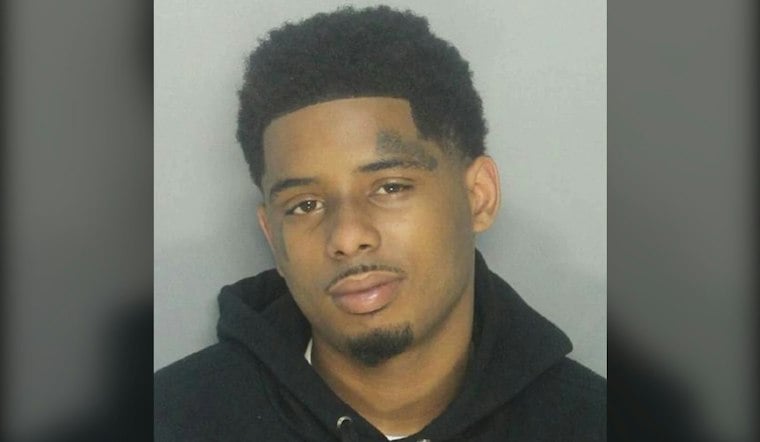
Rapper Pooh Shiesty says he's been locked in his cell for 23 hours a day at a North Texas detention facility, with no clear explanation of why, and that the isolation has wrecked his sleep and fueled his anxiety. The artist, whose legal name is Lontrell D. Williams Jr., raised the allegations in an emergency motion filed Oct. 15 as he awaits trial on robbery and kidnapping charges.
Motion Details Isolation and Cut-Short Family Visits
According to the motion, Williams has been held in what amounts to solitary confinement at the Rolling Plains Regional Detention Center in Haskell, Texas, a claim also reported by Vice. Williams says he was told the isolation was for his own protection but, per the motion, “has not been told who or what poses a threat to him,” according to KERA. The filing reportedly says the confinement “has given him anxiety and affected his sleep.”
The motion also describes a cap of two hours of visitation per month, which Williams's attorneys argued fell short of the four-hour monthly minimum that applies to people serving Bureau of Prisons sentences, per the same KERA account. Family members who had driven several hundred miles to see Williams on Aug. 27 reportedly had to leave after just one hour, and his girlfriend was similarly cut off after an hour during a visit two weeks before that, according to the motion as described by KERA. Williams has asked the court to require at least four hours of visitation per month and to ensure he isn't held in 23-hour-per-day confinement without justification.
Williams's legal team argues in the filing that the facility is neither a federal site nor a Bureau of Prisons facility, but rather a contract facility the U.S. Marshals Service uses to hold federal detainees. The U.S. Marshals Service says it contracts with roughly 1,200 state and local governments for jail space.
Prosecutors Push Back, Point to Tablet Access and Autograph Seekers
Federal prosecutors responded Oct. 20, asking the court to deny the emergency motion outright and arguing the conditions described do not amount to inhumane treatment, according to Billboard. The government said Williams has had “unfettered access” to a tablet for video calls, email, games, music, Netflix and the NFL Channel. Prosecutors also pointed to safety concerns, saying three other inmates had already tried to break into his cell “to get his autograph.”
The government cited Williams's “ability to negatively affect normal facility operations” and stated concerns for his safety as justification for the restrictions, the Billboard report notes. Prosecutors further alleged that Williams admitted to recently ingesting fentanyl and that he had corrupted people at the halfway house assigned to monitor his federal release, according to the government's response described in the filing.
Trial Already Pushed Back to 2027
Williams's robbery and kidnapping trial was originally set to begin in July but has since been reset to 2027. Williams has pleaded not guilty to all charges, per the KERA report. The dispute over his confinement conditions remains unresolved.
The fight over where and how federal pretrial detainees are held isn't unique to Williams's case. A lawsuit filed in federal court in early October alleges that moving detainees from Lovejoy, Georgia, to a facility roughly 200 miles from the federal courthouse in Atlanta cut off their access to counsel and violated their constitutional rights, according to Law360. Those are allegations rather than established findings, but they echo the broader question raised in Williams's motion: how much oversight courts retain once a federal detainee is housed in a contract facility far from where the case is being tried.




