

























































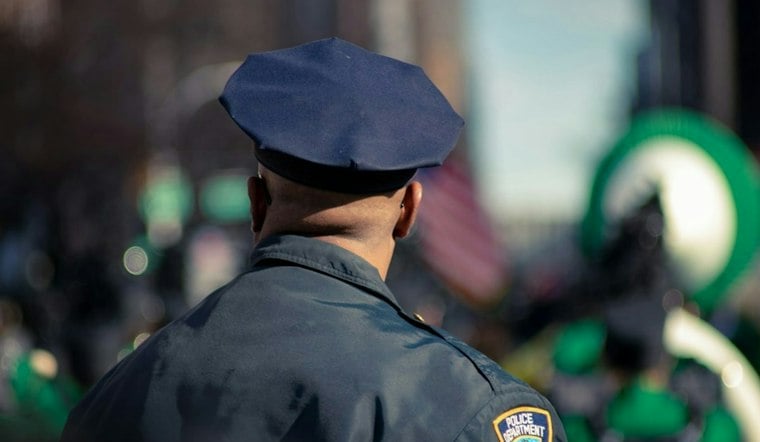
POPPA knows of six retired NYPD officers who have died by suicide in 2026, with the year not yet over. The peer-support group knew of four such deaths in 2025 and three in 2024. Those are the deaths it has heard about, not a department tally.
The count comes as the organization's retiree network, built for officers who have already left the job, keeps growing. POPPA says the Retiree Program began in 2006 with 26 retired NYPD officers and now has more than 100 volunteers in New York and several other states. Thomas Hovagim, a retired detective and the program's director, has said a lot of old baggage is resurfacing, especially 9/11-related PTSD and PTSD from being on the job.
A Count the Department Does Not Keep
Hovagim, who served 25 years as an NYPD officer, says the department does not track suicides among retired members of the service. POPPA learns of those deaths by word of mouth and social media. He believes the number the group knows may be lower than the real one.
That leaves a peculiar kind of record. A death has to reach a volunteer network before it becomes a number anyone is willing to say out loud. Spectrum News NY1 identified Hovagim this May as the director while the program marked 30 years of assisting NYPD officers.
He has also described lasting emotional and physical effects among retired officers who responded to the World Trade Center attacks. Retired first responders, in accounts tied to that work, worry about illnesses linked to toxic air during rescue and recovery. Retirement does not close the file on 2001.
What the Retiree Program Offers
POPPA describes itself as an independent nonprofit that operates separately from the NYPD. Its retiree system is meant to be safe and confidential, and to help identify appropriate local resources. The program addresses stress, depression, substance use and suicidal thoughts, and peers are supposed to connect officers with mental-health and community help rather than replace it.
The point, as the group frames it, is to lower the cost of asking. Retired officers interviewed about the work have described stigma around looking weak, worry about career consequences and mental-health concerns that do not expire with the shield. Some may also face money and family problems after they leave, and some may drink rather than seek clinical care.
Hovagim's practical advice is plainer than a slogan. He tells officers to have a retirement plan. He also suggests staying on the job if possible and finding a niche inside the department, a reminder that the badge is sometimes the last structured day a person has.
Why the Group Exists
amNY has reported that 26 officers took their own lives over two years, in 1994 and 1995, and that POPPA was founded in 1996. Its helpline was described as running 24 hours a day, seven days a week, with callers speaking to off-duty or retired officer volunteers.
A 2019 CNN report described the group the same way: volunteers who are either still on the job or retired, trying to help officers in turmoil. The retiree program came later, in 2006. Its first roster was 26 retired NYPD officers, the same number as the deaths that prompted the organization a decade earlier. The roles are not the same. One figure is a loss. The other is a phone tree.
On its own site, POPPA reports that average annual NYPD suicides fell from 7 before the organization existed to fewer than 5 a year from 1996 through 2021. That is the group's comparison, covering a different question than the retiree deaths it is now counting one by one.
A Wider Pattern, Counted Differently
National figures do not measure the NYPD, and they should not be added to POPPA's list. A First H.E.L.P. and CNA report, described by ABC News, counted 1,287 public safety personnel who died by suicide from 2016 through 2022. The average was just shy of 184 a year. In 2022 the count was 183.
Within that study, depression was identified in 34% of cases and PTSD in 27%. About 23% involved some reported help-seeking before death, including 17% who sought PTSD assistance and 7% who sought mental-health treatment. Retired law-enforcement officers accounted for 17% of the deaths in the report, which the coverage called a significant portion.
The help-seeking share is the uncomfortable part. Most of the people in that count were not recorded as having reached for care. A peer on the other end of a line is not treatment. It is sometimes the only conversation that does not feel like a report.
Peers, and a Line Across the River
A 2020 study in Frontiers in Psychology, based on interviews with nine officers on a police peer-support team, found that peer support can contribute to stigma reduction. Nine people is a small window. It is still one of the few published looks at how officers describe the mechanism: someone who has worn the job, talking to someone who still is.
New Jersey has built a related door. NJ.com reported in August that Cop2Cop pairs officers in crisis with retired officers who have lived the stresses of police work. The service runs around the clock through Rutgers University Behavioral Health Care. It is open to current and retired officers and to their families. Calls are not recorded, and callers can withhold their names and departments.
POPPA's retiree volunteers are the New York version of that bet: confidentiality first, a local resource second, and no claim that a conversation erases what the job left behind. For now, the sharpest local number is still an incomplete one. Six retired NYPD officers this year, known to a nonprofit that says the department is not counting them, and a director who thinks even that list is short.




