

























































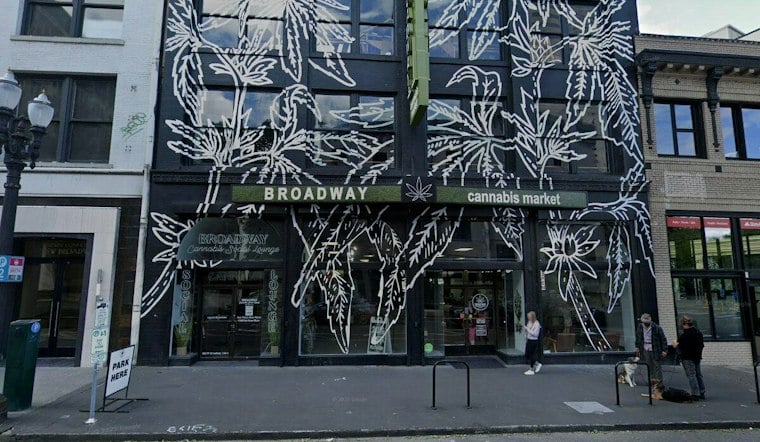
Portland Mayor Keith Wilson has introduced a proposal that would let marijuana retailers sell through drive-through facilities and walk-up windows, reversing a prohibition the city has enforced since 2016. The measure would also update how cannabis businesses pay their annual license fees, folding payment practices already in place into formal city law.
According to a report from The Marijuana Herald, the ordinance would strike code language that currently bars marijuana retailers from selling products through drive-through facilities and walk-up windows. It would not touch existing restrictions on selling marijuana from temporary structures, vendor carts, or satellite locations, according to the same report. Portland's code page on licensed premises requirements states that a licensee must not make marijuana sales through exterior openings, including drive-through facilities or walk-up windows, per the city's municipal code.
The Portland City Council did not vote on the ordinance Thursday, and the council plans to discuss it again at a meeting in December, according to KPTV. The Marijuana Herald reported that the Portland City Life Committee was scheduled to consider the measure during its 2 p.m. meeting Tuesday, November 10.
Why Portland Banned Drive-Thrus in the First Place
Portland's current restriction traces back to March 2016, when the City Council voted unanimously to ban marijuana drive-thrus, according to OPB. That ban took effect immediately after the vote. OPB reported at the time that city officials created their own local restriction because the Oregon Health Authority, which oversaw medical marijuana, had no rule banning drive-thrus of its own.
Oregon's liquor and cannabis regulator has since loosened related rules statewide. The agency began allowing curbside pickup and on-site delivery during the COVID-19 pandemic in March 2020 and made those allowances permanent later that year, the Marijuana Herald report notes. Portland's drive-thru and walk-up window ban, however, has remained on the books even as the state rules shifted.
Advocates Say Window Access Could Widen Access and Help the Industry
Elle Lune said the industry's regulations need modernizing, according to KPTV's report. Lune said window access could help people who are unable to enter stores and could also boost the local economy, and said the hope is that the ordinance will improve accessibility and support future social consumption lounges, per the station's account. KPTV's report also notes that Green Goddess Remedies currently has no drive-thru or walk-up window.
License Fee Changes Would Formalize Practices Already Underway
Beyond the drive-thru language, the proposed ordinance would update city code for marijuana businesses that pay their license fees over time. Portland's businesses used to pay $500 upfront under the old system, but now must pay half of the annual fee, nearly $2,000, with the remaining balance due within six months, according to KPTV's reporting. The Marijuana Herald's report puts more precise figures on that change, noting the annual licensing fee is $3,970 and that deferred-payment participants must pay 50% upfront, or $1,985 at the current rate, with the rest due within six months.
That license-fee payment change is already in effect, and the proposed ordinance would simply make it formal city law, KPTV reported. Roughly 31% of Portland marijuana licensees participate in the Deferred Payment Program, which was established in 2018, according to the Marijuana Herald's report, which also says the city communicated the changes to businesses through newsletters in June and July before implementation began in August.
A speaker at the committee meeting said cannabis businesses may struggle to pay fees because they are not getting paid on time themselves, according to KPTV. Elle Lune separately said increased late fees could be unworkable for businesses with limited cash flow, the station reported.
Industry Pressure Over Costs Extends Beyond This Proposal
The push for relief fits into broader complaints from Portland's cannabis industry about rising costs. Cannabis industry representative Niki Terzieff has said shops rely heavily on cash because most major credit card companies will not process cannabis sales, making them targets for crime, according to KATU. Terzieff has also pointed to the expense of round-the-clock camera coverage at every entrance, exit, and corner of a shop's premises, and industry advocates have called for more relief from local taxes along with better access to city support programs and grants, per KATU's reporting.





