

























































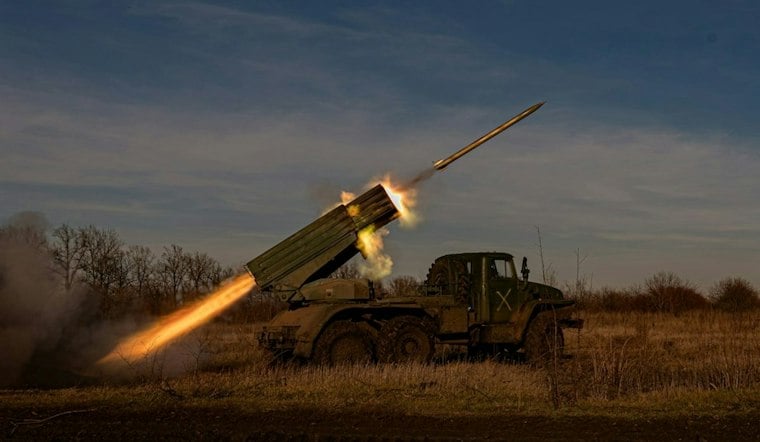
Castelion says it has landed two U.S. Air Force prototype contracts to develop and test ground-launched missiles, adding the Air Force to a client roster that already includes the Navy and Army as the company presses ahead with its planned 1,000-acre campus in Sandoval County. The awards fall under the Air Force’s Counter-Air Missile Program, known as CAMP, and cover Castelion’s ground-launched counter-air missile, a launch pod, and a containerized launcher.
According to the Albuquerque Journal, Castelion will design, build and fly its missile, launch pod and launcher over the course of roughly two years. Castelion itself describes the win similarly, stating plainly that it was “Awarded Two U.S. Air Force Prototype Contracts Under Counter-Air Missile Program,” per the company’s own website. A separate report from ASDNews pegs the award date as September 22, 2026, noting the work will proceed “through several design cycles over approximately two years” and is managed by AFLCMC/EBZ at Eglin Air Force Base.
Castelion has not commented on the value of the Air Force contracts, the Journal reports. A company spokesperson wrote in an email to the paper that contract work will occur at Castelion’s manufacturing facility in Torrance, California, before moving to the company’s Rio Rancho campus.
A Growing List of Military Customers
Founded in 2022 south of Los Angeles, Castelion has built relationships with the Navy, Army and now the Air Force, according to the Journal. The company previously signed a $200 million agreement with the Navy in September for Blackbeard missiles, and it plans to start manufacturing the Blackbeard hypersonic missile by 2027. Castelion’s own materials also describe a Navy production delivery order valued at up to $200 million, and a separate $89,997,162 firm-fixed-price Navy order intended to advance Blackbeard to Early Operational Capability.
Castelion says it aims to produce missiles in mass quantities faster than its competitors, and it advertises a price of less than $500,000 per hypersonic weapon round, per the company’s site. That pricing target lines up with the Air Force’s own ambitions for CAMP: as reported by The War Zone, the program is seeking missile designs that cost no more than $500,000 apiece and can be produced at a rate of at least 1,000 per year. The underlying Air Force solicitation sought between 1,000 and 3,500 supersonic ground-launched missiles annually, according to SOFREP.
Those targets remain aspirational for now. SOFREP notes that CAMP’s $500,000 cost ceiling and its annual production range of 1,000 to 3,500 rounds have not yet been achieved, and that no CAMP missile has been shown in flight. The outlet also reports that the Air Force has not announced a date for the first test shot, and the public announcements so far do not identify how many companies hold missile prototype contracts.
Other Players in the Program
Castelion is not the only company chasing CAMP work. Sierra Nevada Corporation and Specter Aerospace received a $124 million Air Force award to develop a CAMP anti-air missile, per The War Zone, while Anduril said the Air Force selected it to develop the program’s containerized launcher as of November 16.
Financing and the Rio Rancho Buildout
Castelion has raised billions of dollars, including $1 billion in financing from banks, lenders and investors in August, a round in which Andreessen Horowitz participated. That financing valued the company at $13 billion, according to the Journal’s reporting. The sum is part of a broader surge in defense-tech investment: Fortune reports that defense startups raised a record $2.5 billion in the third quarter of 2026 alone, contributing to a total of $67.4 billion in defense technology venture capital across 726 deals during the year.
In Sandoval County, Castelion is building the 1,000-acre campus known as Project Ranger, and the company receives millions of dollars in state and local tax credits and bonds for the project. At a January groundbreaking ceremony, Governor Michelle Lujan Grisham appeared at the ribbon-cutting for the Rio Rancho facility, and her administration hopes the investment will create hundreds of jobs in the area. Castelion co-founder and chief financial officer Andrew Kreitz spoke at that same groundbreaking, which an earlier Albuquerque Journal report says was planned to support 300 full-time employees at an annual average salary of $100,000.





