

























































A visiting judge sentenced a Rock Hill man to 18 years in prison Tuesday after he pleaded guilty to firing six shots into his ex-wife's SUV along West Main Street last year, in a shooting that happened across the street from two schools. Automated license plate cameras helped officers track down his vehicle and arrest him several miles from the scene.
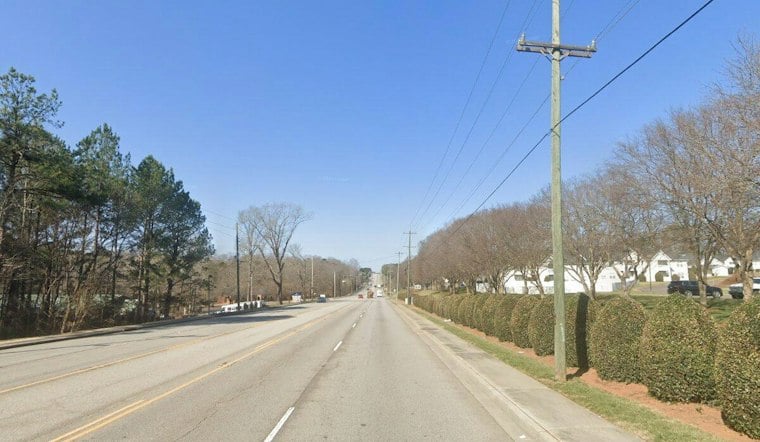
Visiting Judge Eugene Griffith handed down the sentence to 46-year-old Adam Agate after he pleaded guilty to attempted murder and domestic violence of a high and aggravated nature, according to court records and lawyers cited by The Herald. The shooting happened in August 2025 across from Northwestern High School and Rawlinson Road Middle School. Several people reported hearing gunshots from one SUV chasing a second SUV on Main Street near the schools, and prosecutor Daniel Porter said Agate confronted the woman and fired into her vehicle.
Flock Cameras Pointed Police to the Suspect
After the initial reports of gunfire, Flock cameras located Agate's SUV, and Rock Hill police officers took him into custody at a shopping center on Cherry Road, several miles from where the shooting occurred. Agate cooperated with police following his arrest, and he was jailed without bail from the day of the shooting until his guilty plea this week.
Prosecutor Porter sought a 20-year prison sentence for Agate, while his attorney, Devon Nielson of the York County Public Defender's Office, asked the court for a lesser term of 8 to 10 years. Nielson told the court that Agate had no felony record and had never faced a similar charge, noting only a previous municipal violation from more than 15 years earlier. Agate ultimately received 462 days of credit toward his 18-year sentence for time already served.
Prosecutor Points to Judge's Balance of Public Safety
Porter said Judge Griffith weighed both the state's and the victim's concerns in reaching the sentence, adding that the outcome reflected a commitment to public safety. The case adds to a growing list of incidents in York County where Flock's automated license plate readers have played a direct role in investigations, from property crimes to violent felonies.
How Flock Cameras Have Reshaped Policing Locally
The York County Sheriff's Office describes its Flock system as a tool that captures one thing: license plate numbers, rather than broader surveillance footage, according to the agency's own FAQ page. The office says it began using the cameras in May 2021 after York County Council approved the purchase of seven units for around $17,500, then added eight more in 2023 for about the same price — bringing its total to 19 cameras once four additional units potentially deployed by its multi-jurisdictional Drug Enforcement Unit are counted.
Sheriff Tony Breeden has said the cameras have helped solve more than 250 cases, including car break-ins, an armed robbery, and a July 2025 homicide, per the agency's own accounting reported by heraldonline.com. Camera counts for individual departments vary by source: the sheriff's office FAQ states that Fort Mill Police have more than 30 Flock cameras with Rock Hill Police operating about the same number, while a separate Herald report put Rock Hill's total at 26 cameras.
Civil Rights Concerns and a Pending Federal Lawsuit
Not everyone is sold on the technology. Opponents have said Flock cameras are intrusive and infringe on civil rights, concerns that have found traction in at least one ongoing legal fight in York County. A federal lawsuit alleges that York County deputies pulled over a man and held him at gunpoint after an incorrect Flock camera hit, before discovering the error.
That case centers on Steven Melvin, who says his plate was incorrectly read by a Flock camera in 2024, as the same outlet's reporting on the heraldonline.com account details. A separate incident described by The Post and Courier involved a Lake Wylie driver stopped at gunpoint after a Flock camera incorrectly linked his BMW's plate to a stolen-vehicle report; the Sheriff's Office later concluded the car had not actually been stolen. Flock itself places its system's error rate at nine per one million alerts, according to the same Post and Courier report.
The York County Sheriff's Office has moved Melvin's civil-rights lawsuit to federal court, denying the claims and asking a U.S. District Court judge to dismiss the case. No trial date had been set in that federal case as of mid-September. Accounts of how long Flock retains license-plate data also diverge: the Sheriff's Office FAQ states that footage is held for 30 days before deletion, while The Post and Courier reported that Flock had reduced its retention period for stored license-plate data from 30 days down to a week. The Sheriff's Office has said it is working on adding a transparency portal to its website detailing the cameras' use and results.





