

























































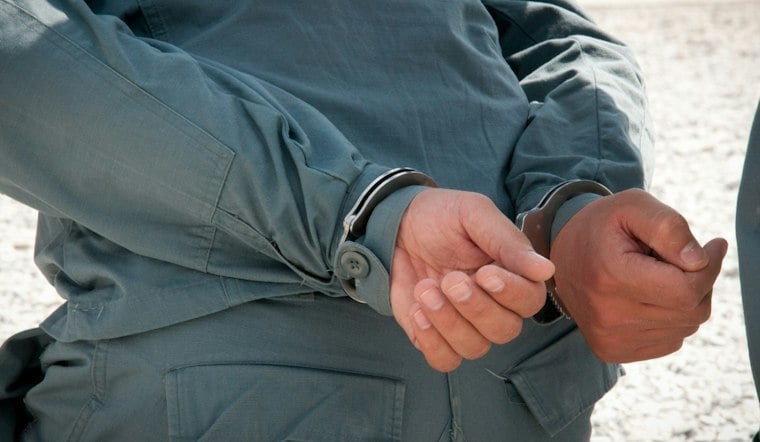
A man who spent years evading Canadian authorities before crossing into the United States has been deported to Rwanda, where prosecutors say he faces charges tied to the 1994 genocide. Jean-Léonard Teganya arrived at Kigali International Airport on the evening of Monday, accompanied by U.S. security officers, and was handed over to Rwandan prosecutors, according to Rwanda's National Public Prosecution Authority.
Teganya's U.S. convictions were not for genocide itself. As reported by Al Jazeera, a federal jury convicted him on five counts — two immigration-fraud counts and three perjury counts — on April 5, 2019, and he was sentenced to 97 months in prison on July 1, 2019. The outlet is explicit that his U.S. convictions were for immigration fraud and perjury, not genocide, even though Rwanda's prosecution authority says it indicted him in 2014 over alleged genocide and crimes against humanity in the former Butare prefecture in southern Rwanda.
According to the Boston Herald, Teganya studied medicine at the National University of Rwanda and belonged to the MRND political party, which the paper describes as dominated by ethnic-majority Hutus — the group that carried out the genocide against minority Tutsis. The Herald reports Teganya admitted his father was president of a local MRND chapter, and that he lied on his U.S. asylum application about his past involvement with the party.
A Winding Path From Rwanda To Maine
Per the Boston Herald's account, Teganya fled Rwanda for Canada in 1999. Canadian authorities determined he was not entitled to refugee status and ordered his removal, and the Herald reports he evaded Canadian authorities for 15 years before Canadian officials finally ordered him out. Teganya then crossed the U.S. border before his deportation from Canada could be carried out, and federal authorities encountered him in August 2014 after he illegally crossed into Houlton, Maine, Al Jazeera reports — a detail corroborated by the Herald's own account of events near the same Maine border crossing.
He went on to receive a final order of removal on March 30, 2026, Herald reporting states, setting the stage for this week's deportation. ICE Boston deported Teganya to Kigali, according to the Herald, and Rwandan authorities took him into custody to face justice. The NPPA confirmed his arrival on Monday, November 9, 2026.
What Prosecutors Allege Happened At The Hospital
The most serious allegations tied to Teganya's case center on a hospital in southern Rwanda. Al Jazeera reports that prosecution evidence presented in his U.S. case linked him to the killing of three Tutsi people at the hospital, and further alleged that he participated in five rapes involving two Tutsi women who had sought shelter there. The Herald's reporting separately describes allegations that he murdered three Tutsis at a hospital, killed four Tutsi students in his dormitory, and led soldiers and Interahamwe militia members — described as the MRND movement's youth militia group — to rape more Tutsi women and murder additional ethnic-minority people in a hospital maternity ward. These accounts are presented as prosecution evidence and allegations, not as the basis of any U.S. genocide conviction.
Homeland Security Investigations New England, which the Herald reports worked with the agency's Human Rights Violators and War Crimes Center on the case, said it uncovered evidence of Teganya's direct participation in mass murders that was used in his federal trial. The Department of State's Diplomatic Security Service in Kigali provided significant assistance to the investigation, according to the paper. Jeffrey Grimming, cited in the Herald's reporting, said Teganya returned to Rwanda after decades of evasion to face justice, while dozens of witnesses testified to atrocities Teganya tried to conceal, the paper reports.
Officials Frame Case As Part Of Broader Crackdown
Joseph Sher said, per the Herald, that Teganya committed human rights abuses and fraudulently deceived the U.S. immigration system to evade justice, and that ICE Boston would work with federal partners to identify, arrest and remove people in the country illegally who are responsible for atrocities abroad. The Herald's reporting also includes a statement that the United States will not be a safe haven for people running from justice.
The case lands amid a related prosecution in the same federal court. Federal prosecutors in Boston secured four convictions in October 2026 against Eric Tabaro Nshimiye, 52, on four counts of perjury and one count of obstruction of justice, the Herald reports, after he lied about his role in the genocide to obtain U.S. citizenship. Chimpreports, covering the same case, reports that Nshimiye — a former medical student — was found guilty on October 27, 2026, of concealing information about his involvement in the genocide, with sentencing scheduled for January 26, 2027. The Herald's account adds that Nshimiye killed Tutsis with a nail-studded club and machete, according to federal prosecutors.
The Chimpreports account notes that the Rwandan genocide killed an estimated 800,000 people, predominantly Tutsi, over roughly 100 days in 1994 — context the outlet uses to frame why Kigali continues pursuing suspects decades later. HSI, according to the Herald, says it has more than 227 active investigations into suspected human rights violators and is pursuing over 1,773 leads and removal cases involving suspects from 95 countries. The agency has issued more than 80,500 individual lookouts since 2003 and has stopped over 423 human rights violators and war crimes suspects from entering the United States in that span, the Herald reports. HSI urges anyone with information about suspected human rights violators to contact its tip line at 866-DHS-2-ICE, email [email protected], or use its online reporting form, according to the paper.
Rwanda's National Public Prosecution Authority did not specify when Teganya would appear in court or detail the individual allegations against him, according to Al Jazeera's reporting, leaving the next steps in his Rwandan case unresolved for now.





