

























































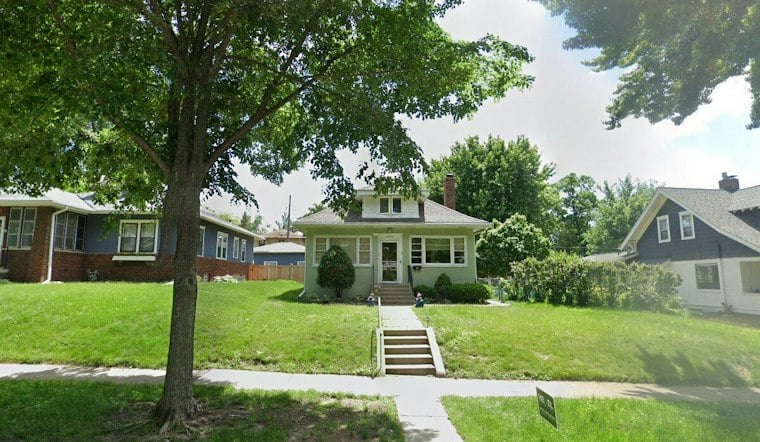
A four-story apartment building rising at 2094 Goodrich Ave. in Saint Paul will move forward as planned after the City Council voted 5-1 to deny neighbors' appeal of its building permit. The project, replacing what had been a two-bedroom single-family home, is designed to house students near the University of St. Thomas with three six-bedroom apartments stacked above a shared fourth-floor gathering space.
The vote capped months of conflict over the project, which according to myvillager.com drew more than 250 written comments supporting the appeal and about 40 residents to the council hearing itself. Fifteen people testified against the project at that hearing, the outlet reported, part of a sustained neighborhood push against what has become a recurring source of friction in the blocks surrounding the private university.
Council member Molly Coleman said she saw no path forward but to deny the appeal, while also signaling the broader issue needed further attention, per the same account. Council member Anika Bowie dissented, arguing that zoning and legal questions raised by the appeal still needed further interpretation before the permit could stand.
What's Actually Being Built
The Goodrich Avenue building will include three apartments, each with six bedrooms, two study rooms, a small kitchen and a great room, the station's report notes. The fourth floor is designed with indoor and outdoor gathering spaces and another kitchen, layered on top of the three residential floors below. The lot between Cleveland Avenue and Finn Street measures 7,980 square feet and carries a residential zoning designation, with the project's total lot coverage reported at 42 percent — under the city's 45 percent maximum, according to an earlier myvillager report on the project.
That earlier reporting also noted the project received nine months of city staff review before reaching the appeal stage. Neighbor Joe Galante, who filed the appeal of the Board of Zoning Appeals' original approval, argued the plans failed to adequately protect adjacent properties from drainage, noise, natural-light and sight-line problems. He went further in his objections, describing the building as effectively a rooming house that would generate excess noise, stormwater runoff and added parking and traffic demands, and alleging that city staff failed to properly apply specific zoning-code provisions when they reviewed the permit application.
Fears Over the Fourth-Floor Gathering Space
Much of the neighborhood pushback centered on that shared fourth-floor recreation area. Neighbors argued the space could hold more than 300 people and questioned how it could be safely evacuated in an emergency, concerns that fed into broader worries about noise and crowding spilling into a residential block.
Those fears echoed arguments made when the Board of Zoning Appeals first considered Galante's challenge, where the panel voted 4-0 to deny his appeal, with chair Jerome Benner recusing himself. Attorney Adam Niblick, representing developer Eric Bostrom, maintained that the Board did not err in its original approval and that the planned triplex meets the zoning code as written.
A Neighborhood Already Reshaped
Drake Lightner told the council that this project and similar developments destabilize the neighborhood and affect property values, while Nelson Rhodes said the area has already changed and is experiencing what he called a mass exodus. Mary Wiens argued the building's impact will remain in the neighborhood for decades to come.
Neighbors had offered to buy the former house on the site to preserve it for single-family use, but the owner turned down that offer, according to information attributed to John Cass. The home that once stood there was a two-bedroom single-family house before it was demolished to make way for the new building.
The Goodrich project is not an isolated case. More than a dozen homes in the neighborhoods surrounding the University of St. Thomas have been replaced in recent years by duplexes and triplexes built with six-bedroom units, the earlier myvillager report found. Saint Paul has had a student rental housing overlay district in place since 2012, which requires at least 150 feet between single-family homes and duplexes rented to students and defines a student rental as housing with three or more undergraduates in at least one unit — but that overlay applies only to houses and duplexes, not buildings with three or more units like the one planned for Goodrich Avenue.
The city's broader zoning landscape shifted further in 2023, when the City Council approved a major package of zoning changes allowing up to six unrelated people to live in a single dwelling unit, up from a previous limit of four. Saint Paul's 2023 “missing middle” zoning rules permit up to four multifamily units per lot in certain districts and up to five in others, according to a summary from Fredrikson & Byron.
Tension between longtime residents and the university's off-campus footprint is not new. A 2017 report from The Mac Weekly found the Macalester-Groveland Community Council viewed most student-rental complaints as behavioral issues rather than problems stemming from the overlay zone itself, citing noise and late-night parties, property maintenance, and lifestyle differences as the recurring friction points between neighbors and student tenants. That same report estimated the University of St. Thomas enrolled 7,489 students at its St. Paul campus in 2017, with roughly 1,750 off-campus students living within a mile of the university — historical figures that predate the current zoning fight but underscore how long the neighborhood has grappled with the pressures of student housing demand.





