

























































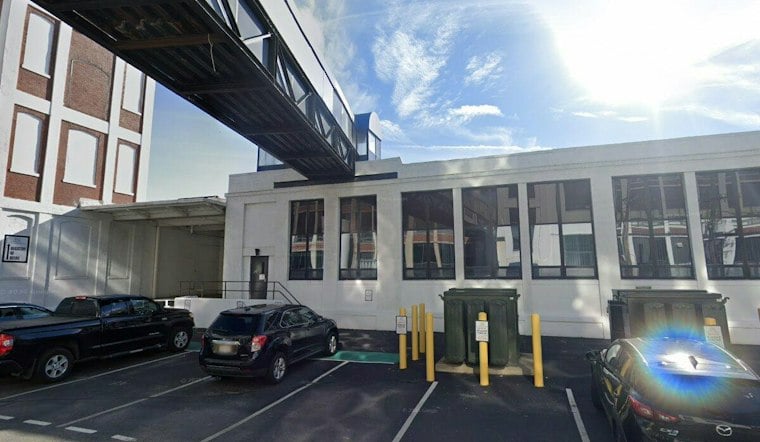
A small IT project at Salem's Shetland Park complex has turned into a zoning fight after the developer, Prime Group Holding, scaled up its plans well beyond what the city first approved. The Salem Zoning Board of Appeals has upheld a decision to revoke the project's building permit, and the dispute is now feeding into a much bigger regional argument over how small is too small when it comes to data centers.
Prime Group owns the 30-acre Shetland Park complex in Salem and originally proposed what it described as a modest, small-scale facility there. According to boston.com, the city issued a building permit on May 18 for an 8,691-square-foot interior fit-out for an IT services company, including 1,861 square feet of IT infrastructure and a single 1,000-kilowatt generator. Developers then submitted revised plans on June 29 that expanded the proposal to 12,690 square feet.
The revised plans expanded the footprint to 12,690 square feet, with 4,014 square feet dedicated to IT infrastructure, and called for generators capable of producing 6 megawatts, per the same outlet's reporting. The project's backers maintained it wasn't really a data center at all, instead describing it as a “low-latency inference point.” Salem city councilor Ty Hapworth took a different view, saying a data center probably doesn't belong in a dense city like Salem.
Zoning Board Sides With the City
The Salem Zoning Board of Appeals canceled Prime Group's building permit in September and, weeks later, unanimously upheld the building commissioner's decision to revoke it, according to boston.com's reporting. The board found the expanded proposal didn't qualify as a business or professional office under existing zoning code and didn't neatly fit any other permitted use. Separately, the revised plans called for three diesel generators for backup power, replacing the single generator in the original design.
The Shetland Park proposal was described as one that would provide artificial intelligence services to local businesses.
Accounts of Salem's broader regulatory response diverge. In Salem, Mayor Dominick Pangallo proposed an ordinance concerning data centers that was before the Planning Board and would return to the City Council. But Patch reports a different procedural picture: the Salem City Council gave only first passage to a zoning ordinance banning data centers with an aggregate energy demand of two megawatts or higher, with the measure returning to committee for further discussion before any final vote.
A Statewide Pattern of Pushback
Salem's fight is part of a much larger wave of resistance to data-center development across Massachusetts and beyond. Hyperscale data centers support the training of powerful artificial intelligence systems for companies including OpenAI, Anthropic, and Meta, and that demand is driving proposals into communities that never expected to host server farms.
Newer, larger proposals have met fiercer resistance. In Sutton, about 10 miles south of Worcester, the Kraft Group has proposed one of the nation's biggest hyperscale facilities, a project that, per the Globe, would draw 900 megawatts of electricity if completed in 2033. Sutton officials estimate the first two buildings alone would generate $10.4 million in annual property taxes starting in fiscal year 2031, climbing to roughly $27.8 million a year across all 10 buildings by 2035.
That scale of investment hasn't quelled public anxiety. Massachusetts residents broadly fear that data centers may strain local water supplies, increase electricity rates, and cause intense noise and air pollution, concerns that have translated into organized opposition at the ballot box. WBUR reports voters favored restrictions in 40 of 41 local ballot contests held on Election Day. WBUR also reported that the Committee to Restrict Data Centers announced a campaign Thursday to put new data-center restrictions before Massachusetts voters in 2028.
Even Smaller Projects Face Scrutiny in New Hampshire
The backlash isn't limited to massive hyperscale campuses. In Concord, New Hampshire, a company called Levitate has run into a slower-moving but similarly contentious fight over a far smaller facility. Levitate proposed a 15-megawatt micro data center on Locke Road in East Concord, located about a quarter mile from Interstate 93. A city planner ruled in June that the project qualified as a permissible industrial-land use, but no building permit had been obtained.
The Concord Planning Board nonetheless deferred final action on the project until November 18, urging the company and its engineers to return with more precise information about electricity use, effects on the regional grid, and potential future growth, according to New Hampshire Public Radio. Levitate CEO Ryan Howard has estimated the facility would draw about 13.5 megawatts for its servers alone, enough to power up to 12,150 homes, and has described the design as compact with intentionally low impact on public resources. Howard has said utility provider Unitil could deliver the needed electricity without raising rates, and has vowed the facility would use a closed-loop cooling system that would not draw from the local water supply.
Public reaction in Concord has run hot. Resident Matt Cessna warned that people would become violent if the data center were built, while Concord Mayor Byron Champlin said media reports about data center hazards have alarmed many citizens. The applicant's attorney has said no city or state moratorium currently exists.
In Massachusetts, public opposition halted a proposed $4 billion data center project in Westfield in October. Elsewhere, American Tower has begun adding small data centers alongside its cellphone towers, but has recently halted at least two such projects in Mount Royal, New Jersey, and Pinellas Park, Florida.



