

























































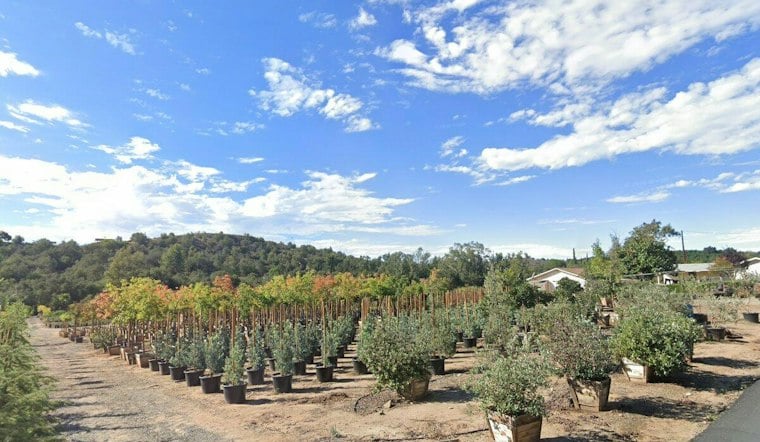
San Diego County supervisors voted unanimously to start drafting an ordinance that would let farmers, ranchers and other rural landowners legally rent out campsites on their private property. The measure, introduced by Supervisor Joel Anderson, directs county staff to evaluate how the county could opt into a new state law and return within 180 days with options for a local framework.
The vote, which took place Wednesday, sets in motion a review of Assembly Bill 518, the Low-Impact Camping Areas Act, according to 10News.com. The proposed ordinance is meant to bolster agricultural tourism and recreation in rural communities, the outlet reports, giving landowners a path to host overnight guests without running afoul of county code. Under the bill, a low-impact camping area is defined as private property offering transient rental of temporary sleeping accommodations for recreational purposes that is not a commercial lodging facility, according to bill text published by the state legislature.
Staff's evaluation will look at several angles at once: supplemental income opportunities for farmers and ranchers, fire-risk reduction coordinated with county fire and other public safety agencies, and ways to reduce unauthorized or unmanaged camping on public and private lands, per the same 10News.com account. The review will also weigh potential permit-fee and transient occupancy tax revenue, along with how the policy could support the county's broader rural economic development and agritourism goals.
Farmers Say Agritourism Could Be a Lifeline
For some growers, the stakes go beyond extra income. Skip Lanfried of Quixote Farm in Pauma Valley, which already sponsors farm stays and agricultural picking events, said the farm could go out of business within two or three years without agritourism options to lean on, the station's report notes. Andy Lyall, a fourth-generation citrus and avocado grower also in Pauma Valley, framed the appeal differently, saying that bringing people onto rural land lets them reconnect with nature.
Anderson's board letter states that Assembly Bill 518 allows counties to establish their own local regulatory framework covering permitting, registration and enforcement, while still maintaining statewide minimum health and safety standards. The supervisor's letter also credits participating properties in San Diego County with drawing more than 13,500 campers over the past year and notes that several other California counties have already adopted similar policies. Assembly Bill 518 was authored by Assemblyman Chris Ward, who has said the law streamlines permitting and is meant to reduce strain on California's state, regional and national parks.
Not Everyone Is Sold on Loosening the Rules
Opposition surfaced too. A caller from the Rainbow community opposed any expansion of camping, citing concerns about code enforcement, while a resident's planning group raised questions about public safety, water hookups, sewage disposal and possible wildlife disturbances, according to the 10News.com account. Lori Saldana, a former state assemblywoman who represented the 76th District, was also among those weighing in during public comment.
Shantel Seoane, who co-founded Alter Experiences in Mount Laguna and says she and her husband have welcomed thousands of guests on their property, pushed back on the idea that camping hosts want a free pass. She told the outlet the permitting process can already be difficult and that regulations are necessary, arguing that responsible outdoor hospitality depends on clear standards and accountable hosts. Seoane said reasonable site limits, reinforcement and strong fire protection are needed as the county moves forward.
Supervisors themselves signaled support with some caveats. Terra Lawson-Remer backed the ordinance and said she favors more unconventional places to stay, while Paloma Aguirre encouraged staff to make sure public safety concerns are addressed as the policy takes shape. Jim Desmond said there seems to be substantial enthusiasm for the ordinance, and Anderson has said he wants broad public input as county staff develop it.
A Statewide Shift Toward Farm Stays
The San Diego proposal fits into a broader trend already playing out across California. An increasing number of the state's agricultural operations have begun hosting overnight campers to diversify their incomes, according to the Daily Democrat. Hipcamp estimates California hosts earn an average of $14,500 per year through their camping offerings, and the platform calculated that guests generated roughly $58 million in statewide spending through its hosts over the past year. Two-thirds of Hipcamp's nearly 1,500 California hosts describe their land as a farm, ranch or similar working property, and 59% of surveyed hosts said they sell goods or services directly to guests. In Mendocino County, Nelson Family Vineyards runs three campsites as part of an agritourism program, while Sunny Cal Farms in Fresno County recently began welcoming overnight guests at a single undeveloped camping area on its organic table-grape operation.
Importantly, AB 518 does not force every county to allow this kind of camping automatically — counties must opt in and can still set their own land-use and safety rules. San Diego County has moved on camping policy before: supervisors voted 4-0 in May 2025 to request a draft of an updated unsafe-camping ordinance, then approved the strengthened measure on a 4-0 consent vote on May 20, 2025, according to KPBS. That ordinance targeted unauthorized encampments on public property that endangered community safety or damaged structures, prohibiting open fires and other ignition sources, with citations limited to violations posing imminent risk of death, serious injury, wildfire spread or communicable disease. The new rural camping ordinance now under development is a separate effort, focused on private land rather than public encampments, with county staff expected to bring the board a range of options within six months.





