

























































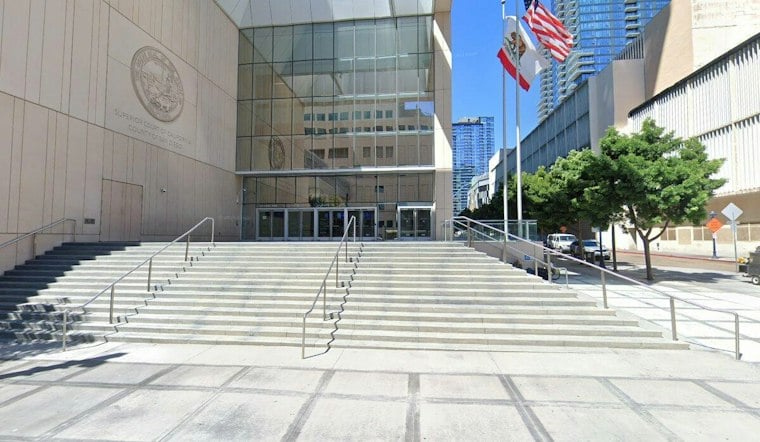
A San Diego developer has sued the San Diego Housing Commission, claiming the agency is illegally charging hefty fees to monitor the income of tenants in a 330-unit apartment project in San Ysidro — fees the developer says amount to double-billing for work the state already does. The lawsuit, filed in San Diego Superior Court on November 13, targets what AMG & Associates calls a redundant and unlawful monitoring charge tied to the Trolley Stop Apartments, a project still under construction.
According to the San Diego Union-Tribune, the Housing Commission charges $163 per unit per year for income-eligibility monitoring, a fee that can run close to $50,000 annually on a 300-unit building. Over the nearly 55-year span that rent restrictions typically remain in effect, the lawsuit says that adds up to more than $7 million in costs for a single project. AMG & Associates, which pays the monitoring fees for Trolley Stop Apartments, argues the commission's stance violates the spirit, if not the letter, of state law, according to the same report.
The dispute centers on Assembly Bill 2430, authored by Assemblymember David Alvarez and enacted in 2024, which prohibits local governments from charging income-eligibility monitoring fees when every unit in a project is rent-restricted. The law was written, per the Union-Tribune, to eliminate what lawmakers called redundant monitoring when projects are already subject to income checks elsewhere. The Housing Commission, however, contends it is exempt from AB 2430 because the law applies to cities and counties, not to separate commissions created by them — a distinction at the heart of the legal fight. The commission, created by the City of San Diego in 1979 to administer city housing programs, has said it cannot comment on pending litigation.
AB 2430’s reach turns on more than whether a project is affordable: the statute addresses qualifying developments using the state Density Bonus Law that are also covered by a regulatory monitoring agreement with designated state agencies. It names cities and counties as the entities barred from charging the fee, and says those agencies have no duty to monitor a project when they do not collect one. That wording leaves the legal question of whether the Housing Commission falls within the law’s terms at the center of the dispute. The text of Government Code Section 65915.3 lays out those conditions.
Developer Says Law Was Meant to Stop Double Billing
Alvarez has pushed back hard on the commission's reading of his bill. He said no project should be charged two times for the same bureaucratic review, and that the law's purpose was to reduce the cost of building subsidized housing by stripping out unusual project fees, according to the Union-Tribune's reporting. Alvarez has said he may introduce new legislation in January to clarify that AB 2430 applies to entities like the Housing Commission, closing the loophole the agency says it falls into.
The Housing Commission has defended its compliance work, saying its monitoring provides added protection and support to lower-income residents and noting that state oversight relies on developers self-certifying tenant income eligibility rather than independent verification. The commission's Compliance Monitoring Department states on its own website that it verifies affordable units are occupied by qualified low- and moderate-income tenants and tracks compliance tied to the city's Inclusionary Housing law, Density Bonus regulations, state and federal housing revenue bond tax credits, and projects that received SDHC financial support. The same page notes the commission does not monitor affordable units that receive no SDHC funding and aren't subject to city program requirements — a carve-out at the center of the exemption argument.
Broader Fallout for San Diego's Housing Pipeline
YIMBY Democrats of San Diego County have criticized the commission's position as an unnecessary tax that undercuts its own mission to create subsidized housing, warning the fee could hinder local projects and push developers toward building elsewhere in California instead. Some estimates cited by the Union-Tribune suggest about one-third of new multifamily projects in San Diego could be affected by the dispute.
The fee dispute sits within a broader struggle over the cost of building affordable housing in California. A RAND analysis of completed projects found San Diego’s municipal impact and development fees averaged more than $30,000 per unit in its sample, representing roughly 13% of total per-unit development costs. Those figures cover a much wider set of fees than SDHC’s annual monitoring charge, but help explain why project sponsors scrutinize recurring obligations alongside the larger costs of getting homes financed and built. The RAND study’s San Diego cost findings provide that wider context.
Gene Broussard, a developer who spoke with the Union-Tribune, said the fee adds between $700,000 and $1 million in higher up-front costs to his project — a figure that underscores why builders are watching this case closely. Under the city's Inclusionary Housing Ordinance, which SDHC says applies to residential developments with 10 or more units or condominium conversions of two or more units, covered rental housing must remain affordable for at least 55 years, the long horizon that makes even a modest per-unit fee balloon into millions.
Trolley Stop is also a large, layered-financing project: state tax-credit paperwork describes 326 rent-restricted apartments and four manager’s units, with rents aimed at households earning 30% to 70% of area median income. The state allocation committee’s staff recommended $7.46 million in annual federal tax credits and $40 million in tax-exempt bond capacity for construction. The same paperwork identifies San Ysidro Pacific Associates LP as the sponsor and Pacific West Communities as the developer, adding detail to the project’s financing and ownership structure as the fee challenge proceeds. The state financing staff report for Trolley Stop lists those terms.
What the Lawsuit Is Asking For
The lawsuit seeks an injunction barring the Housing Commission from continuing to charge the fees, along with a refund of the monitoring fees AMG & Associates has already paid and an award of attorney's fees. The commission will have 30 days to respond once it is formally served, per the Union-Tribune's report. Housing Commission spokesperson Scott Marshall said the agency could not comment on pending litigation.
The case lands amid a broader statewide push to simplify income-monitoring rules. Under California Government Code section 65915.3, cities and counties generally cannot charge monitoring fees on developments meeting specific conditions, though the statute does allow fees under certain circumstances, including when a project uses particular local incentive programs. The law also states that qualifying developments already in service and subject to a monitoring fee stopped being subject to that fee as of January 1, 2025, with the version of the statute amended by AB 1170 taking effect January 1, 2026. Whether San Ysidro's Trolley Stop Apartments or the Housing Commission itself fit within those statutory conditions remains unresolved and is now a question for the court.





