

























































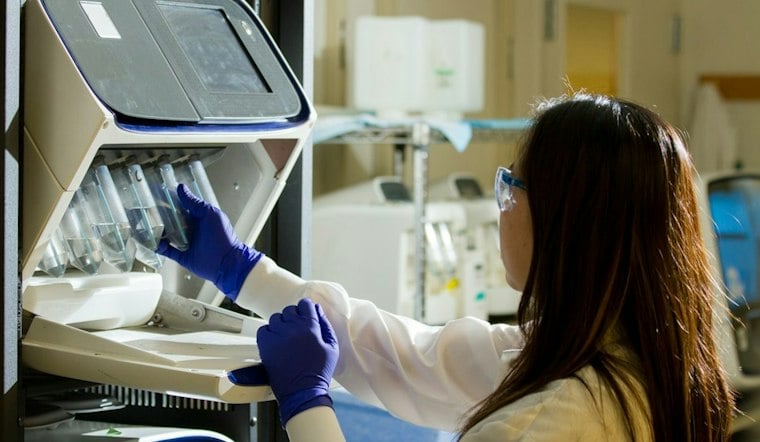
A San Diego biotech company called Seawolf Therapeutics has stepped out of stealth mode with $100 million in funding and a licensing partnership with pharmaceutical giant Sanofi that could eventually be worth up to $1.2 billion. The company says it has built a DNA delivery platform designed to let patients take the same gene-based therapy more than once, something that has been a major hurdle for the broader gene therapy field.
Seawolf's $100 million came together through a seed round led by Versant Ventures followed by a Series A round backed by major names including Eli Lilly, Novartis Venture Fund and CRISPR Therapeutics, according to Fierce Biotech. The San Diego-based company got its start in 2021, and its alliance with Sanofi covers undisclosed therapies for bleeding disorders and other indications, as first reported by BioSpace.
A DNA Platform Built for Repeat Dosing
At the center of Seawolf's pitch is its TRIDENT platform, which the company describes as a redosable lipid nanoparticle-based DNA delivery system, per the BioSpace report. The company says its DNA payloads are designed to last longer in the body than RNA-based LNP therapies, while also being engineered to match those RNA therapies in potency, safety and scalability.
According to Seawolf, animal testing has shown its nucleic acid-based therapies to be potent, durable and to carry a clean safety profile. BioPharma Dive reports the technology worked as intended in both primate and mouse models of metabolic and rare diseases. The company has not disclosed other specifics about its lead drug candidate beyond those animal results.
Metabolic Disease Is the Lead Target
Seawolf's lead program is aimed at metabolic diseases, and the station's report on the deal — relayed through Reuters, republished by 104.9 The Wolf — notes that the Sanofi agreement includes an upfront payment, though the company declined to say how much. Per the same wire account, carried separately by Yahoo Finance, that lead program has been tested only in animals so far, and it aims to build muscle and reduce fat, with potential applications in obesity, muscle loss and osteoporosis.
The same Reuters account indicates Seawolf expects to select a drug candidate by late 2027 and file to begin human trials by the end of 2028. Those timelines mean any therapy to emerge from the metabolic program, or from the Sanofi collaboration on bleeding disorders, remains years away from reaching patients.
CEO Points to a 'New Course' in DNA Medicine
Seawolf's chief executive, Elizabeth Alcamo, framed the company's ambitions in a statement reported by Fierce Biotech, saying Seawolf is charting a new course in patient care through non-virally delivered DNA. Alcamo previously worked as an entrepreneur in residence for Versant Ventures and held senior roles at Coda Biotherapeutics and 4D Molecular Therapeutics before taking the helm at Seawolf.
How the Deal Fits the Broader Biotech Market
The Sanofi partnership's undisclosed upfront payment reflects a broader shift in how pharmaceutical licensing deals are structured. Disclosed upfront cash made up just 6% of total announced licensing-deal value through the third quarter of this year, down from 7% in each of the previous three years and 13% back in 2019, according to Axios. The same report found only 35 disclosed licensing deals included upfront cash payments of at least $100 million through Q3, compared with 46 for all of 2025, even as total announced licensing value climbed to $221.1 billion through Q3, up from $181.5 billion over the same period a year earlier.
Big pharma has shown it will still pay large sums upfront when it wants a deal badly enough — Axios notes AstraZeneca agreed to pay CSPC $1.2 billion upfront in a separate weight-management deal worth up to $18.5 billion including milestones. Seawolf's metabolic-disease ambitions also arrive amid a cooling investment climate for the category: BioPharma Dive reports that 26 of the most prolific biotech venture firms put about $740 million into metabolic-disease startups so far this year, down from nearly $1.3 billion in 2025 and $1.6 billion in 2024.
The Science Behind Redosable DNA Therapy
The redosing problem Seawolf is trying to solve has also drawn attention from academic researchers. Scientists at the Perelman School of Medicine at the University of Pennsylvania developed their own DNA-loaded lipid nanoparticles intended to deliver therapeutic DNA into cells, according to Penn Medicine. In that research, treated cells produced therapeutic proteins for about six months after a single dose, far longer than the few hours typically seen with mRNA therapies, and the Penn team reported that its system could be administered multiple times without losing effectiveness.
Penn researchers also found that adding a protective molecule called nitro-oleic acid to their DNA-carrying particles eliminated fatal reactions in laboratory testing, with all mice receiving the improved formulation surviving. It is not clear from available reporting whether Seawolf's TRIDENT platform uses a similar approach, but the Penn findings underscore why redosable DNA delivery has become a closely watched frontier in gene therapy — one that Seawolf is now betting its first $100 million, and its partnership with Sanofi, on cracking.



