

























































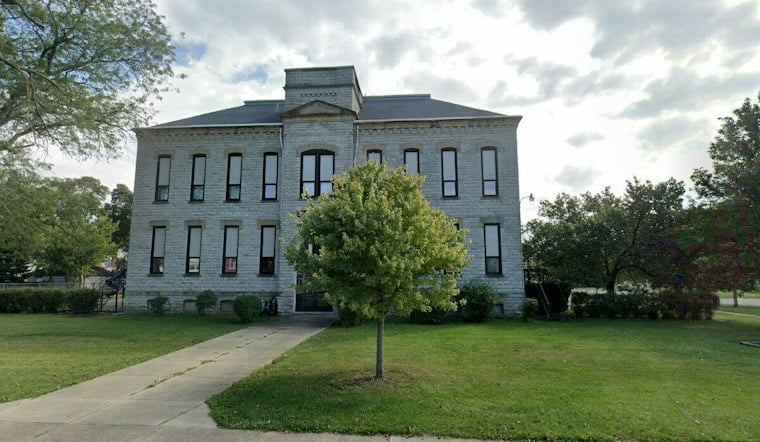
The historic Osborne School in Sandusky is no longer headed toward becoming an apartment building. City commissioners voted this week to back a new plan for 23 affordable condominiums aimed at seniors and homeowners looking to downsize, scrapping the rental model that had anchored the project for years.
The Sandusky City Commission voted unanimously to approve a two-year extension of the development agreement and amend the project's strategy language, according to StayTunedSandusky. The vote clears the way for developer Joe Ritchie and his team to pursue state homeownership grant funding, the outlet reports, a path that was not available under the original rental-focused structure.
Under the revised approach, the project would transform space inside the building into one- and two-bedroom senior housing units for sale rather than for rent, per the same report. The Osborne building itself is described as a 30,000-square-foot limestone landmark that presents unique rehabilitation challenges for whoever carries the renovation through.
How the Deal Got Here
The roots of this project stretch back to late 2023, when the City Commission approved selling Osborne School to Community Building Partners for affordable senior housing and signed off on a grant agreement to help finance the work using federal pandemic relief dollars. According to the City of Sandusky, that agreement commits $750,000 in American Rescue Plan Act money toward the project.
That original 2023 proposal called for a minimum of 20 one- and two-bedroom units restricted to residents aged 55 and older, the city's announcement states. Osborne School was originally built in 1890 and is listed on the National Register of Historic Places, with protections as a city landmark, meaning the purchase agreement requires the developer to follow the proposal submitted to the city and comply with federal historic-preservation standards for the work, per the same city materials.
The city and Community Building Partners had anticipated construction could begin in March 2025 once financing was secured in late 2024, the city's announcement noted at the time. The shift to a for-sale condo model, detailed in the newer development-agreement extension, represents a departure from that earlier rental framework, though the full text of the amended strategy language has not been made public.
Why a Shift to Ownership Matters Locally
The pivot toward homeownership lands against a backdrop of tight housing conditions in the area. A regional housing study found Erie County has a gap of 1,637 rental units between what's needed for area residents and what's actually available, according to a report from The Helm.
A separate housing market assessment from CommunityScale found Sandusky's rental vacancy rate sits at just 3 percent, well under the 5 percent threshold generally considered healthy. The same assessment reports that roughly 60 percent of active homebuyers in Sandusky's market are households earning between $28,650 and $76,400 a year, even as 70 percent of homes built since 2010 and listed between 2023 and 2025 were priced for the highest income tier. CommunityScale also found that Sandusky's inflation-adjusted median income slipped from about $51,300 in 2010 to $50,100 in 2023.
Sandusky has leaned on state housing support before. In the first round of Ohio's Welcome Home Ohio Program, the city was awarded $3.5 million in grants to purchase 14 newly built single-family homes in partnership with NeighborWorks Toledo, along with $90,000 to rehabilitate three homes alongside Firelands Habitat for Humanity, according to state award summaries.
Other Ohio Schools Turned Senior Housing
Converting old school buildings into senior housing isn't a new concept in Ohio. In Cleveland's Clark-Fulton neighborhood, CHN Housing Partners transformed a former Catholic school and an adjacent convent into 46 apartments for low-income seniors, a project known as the Arch at Saint Michael, according to cleveland.com. That nearly $28 million development provides independent living for seniors earning between 31 and 50 percent of the area median income and is now fully leased, per the same report.
Elsewhere, a former Cleveland elementary school was turned into 30 affordable apartments for seniors, with 50 additional units built in a new adjacent building, according to the Ohio History Connection. That project, the Henry W. Longfellow Elementary School conversion, was funded in part by federal and state historic tax credits, the organization notes.
Whether Osborne School's condo pivot will draw on similar financing tools remains to be seen. For now, the unanimous commission vote keeps the project's development agreement alive for two more years while Ritchie's team works to line up the state homeownership grant funding that could help turn the limestone landmark into housing people can actually own.





