

























































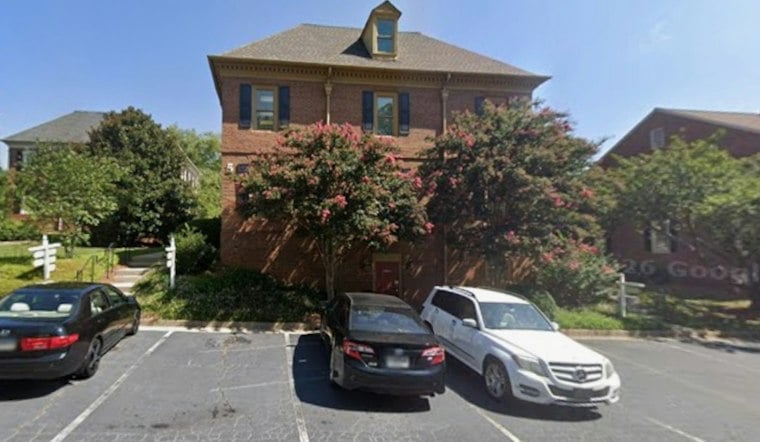
Johnny and Tracy Miguel own a Sandy Springs home worth more than $4 million, and it is less than five years old. Yet the house is dealing with extensive water, mold and wood damage, and the family and their builder cannot agree on how the water got in.
The Miguels hired structural engineer Lauren Wayne, who has more than three decades of experience, to investigate. According to WSB-TV, Wayne said the moisture was coming from the wall rather than the ceilings, and she blamed problems with the home's exterior wall system. She also found installation problems with the stucco, siding and water-resistant barriers behind the exterior materials, and said the materials were improperly installed.
The damage inside the home has been severe. Johnny Miguel said mold covered every wall of his daughter's bedroom, and the family ended up removing her second-floor bedroom down to the studs because of the water damage and mold concerns. The home also has rotting wood above the garage and deterioration in the wood supporting a multi-story deck, and additional beams had to be added beneath portions of the deck for safety.
Family Moved Out While Builder Points to the Roof
The Miguel family spent months living outside their home, eventually moving into an Airbnb because of the damage. “It's devastating,” Johnny Miguel said, according to the same report, adding that he dislikes visiting the property and that the family was left trying to figure out the problem on their own.
Sherwin Loudermilk, founder and president of Loudermilk Homes, disputes the homeowners' engineer's conclusions. He said water entered the house through the roof, and he believes it came in through punctures in the home's flat TPO roofing material, providing photographs he says show those punctures. A building-envelope specialist who inspected the home in February, cited in Loudermilk's written response, said he observed small punctures in the roof above the bedroom with the water damage and believed the roof was the most likely source — though the same specialist also said water could have entered through the side of the house.
Insurance Adjuster Pointed Elsewhere, Then Denied the Claim
At Loudermilk's suggestion, the Miguels filed a homeowners insurance claim, but the insurance company denied it. An insurance adjuster had inspected the property on February 19 and, according to an April 7 legal notice cited by WSB-TV, disagreed that roof entry caused the water damage — instead pointing to the junction of the stucco and wood siding as the likely water source.
The disagreement over where water actually entered the home has never been resolved. Loudermilk and the Miguels agree that water did get into the house; they simply disagree about where. A field guide from the Journal of Light Construction notes more broadly that water will always get behind siding, and that proper rain control depends on a drainage plane, a drainage space under the cladding, integrated flashing, and weep holes — while cautioning that stucco is highly porous and absorbs water, so caulks and sealants should never be relied on as the sole barrier.
Stalled Inspections and a Push for Destructive Testing
The Miguels tried to arrange a joint inspection with the builder and outside experts in the spring of 2026. Loudermilk proposed removing sections of siding and stucco while both sides' engineers were present to identify exactly where the water was getting in.
The Miguels' attorney asked Loudermilk Homes on July 10 whether it wanted to inspect, then followed up on July 15 about whether the builder would send an engineer. On July 20, the attorney notified Loudermilk Homes' lawyer that destructive testing would occur on July 27 and invited builder representatives and engineers to attend. Attorney David Merbaum wrote that no one from Loudermilk showed up at the house, and the Miguels' attorney reported that no builder representative attended on the date of testing.
Loudermilk, for his part, said significant demolition had already occurred by that point, which he said prevented his representatives from determining the original source of the water — he said the evidence had effectively been removed by the demolition. He has offered to repair the damage if it is determined to be a construction problem.
Legal Notice, Arbitration Demand Now Pending
Before any of the inspection back-and-forth, the Miguels sent Loudermilk Homes a formal notice under Georgia's Right to Repair Act on April 7. That law establishes a process allowing contractors to inspect and potentially resolve alleged construction defects before a lawsuit can be filed. According to the Georgia Attorney General's Consumer Protection Division, homeowners must provide written notice at least 90 days before filing suit, and a contractor generally has 30 days to respond in writing and decide whether to inspect the property, offer repairs or payment, or reject the claim. If additional defects surface after notice is served, the agency's guidance says a separate notice process has to begin for those new issues, again giving the contractor 30 days to respond. The notice process itself does not determine whether a construction defect actually exists or which side is responsible for it.
Because the Loudermilk Homes construction contract requires disputes to be resolved through binding arbitration, the Miguels submitted a demand for arbitration on July 31. Their contract separately gives them the right and responsibility to inspect, examine and test the house at reasonable times during construction, and it sets out requirements for private inspectors.
An Engineer's Advice to Future Custom-Home Buyers
Wayne has since recommended that buyers building custom homes consider hiring an independent owner's representative to monitor construction as it happens. Unlike inspectors or engineers brought in after problems surface, an independent owner's representative works for the homeowner rather than the builder throughout the build.
For the Miguels, that advice comes after the fact. Their case now sits in arbitration, with the builder, the homeowners' engineer, an insurance adjuster and a building-envelope specialist all having offered different explanations for where the water got in — and no outcome yet resolving which one, if any, is correct.




