

























































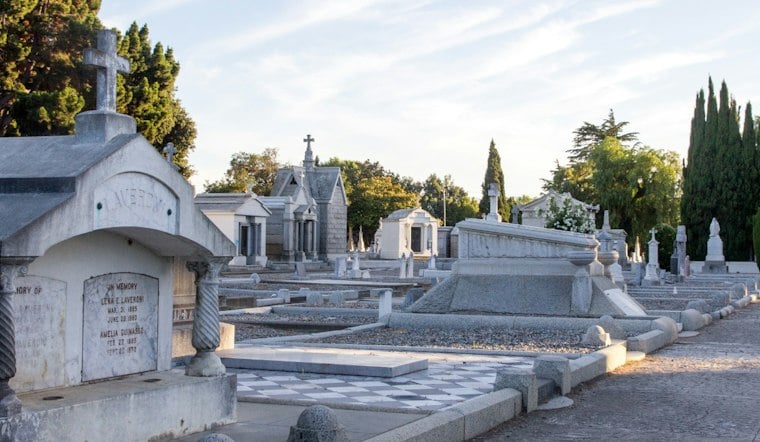
Santa Clara's City Council voted unanimously to designate the gravesite of Tiburcio Vásquez, a 19th-century Californio outlaw sometimes called the Robin Hood Bandit, as a historic landmark. The site sits inside Santa Clara Mission Cemetery, where Vásquez has been buried since his execution in San Jose in 1875.
The designation, reported by San José Spotlight, had been deferred twice before finally landing on the agenda for the city's special council meeting last month. According to a City of Santa Clara meeting agenda, the item had been pushed back from both August 25 and September 15 before coming up for consideration on October 20. A city document tied to the proposal states that the Historical and Landmarks Commission had recommended the council approve the designation.
Santa Clara Mission Cemetery, which says on its website it is owned and operated by the Jesuit Fathers of Santa Clara University, lists Vásquez among those interred there and describes him using the same Robin Hood Bandit nickname. A historical account from BenitoLink notes that the original wooden cross once marking his grave has since been replaced by a large granite monument, and that Vásquez was hanged on March 19, 1875, after being convicted of murdering Leander Davidson.
A Rare Kind of Landmark
Per the report, designating a grave site rather than a surviving building is relatively rare for Santa Clara, where historic landmarks largely consist of homes and other structures. The city's past non-building designations have included the site of an early laundry and the former location of a home belonging to an early state senator. Santa Clara historian Lorie Garcia said cities should recognize that local history predates American settlement, and the city's criteria for such designations require a property to meet standards laid out in the municipal zoning code, according to the City of Santa Clara.
Garcia plans to recommend that the Historical and Landmarks Commission approve a bronze plaque identifying the site, which would include the landmark's number along with information about Vásquez and his ties to the region. She estimates the process of finalizing the plaque's inscription, casting it and arranging installation could take four to five months after approval.
A Commissioner's Discovery Sparked the Push
City landmarks commissioner and council candidate Yvonne Inciarte advocated for the designation after discovering Vásquez was buried at the cemetery, saying Santa Clara should preserve and share this history with future generations. The council's vote came just weeks before Santa Clara's city council election, scheduled for November 3.
The designation is meant to recognize Vásquez's connection to the region and to support preservation of Californio history — the term for people of Spanish and Mexican descent who lived in California before it became part of the United States in 1850. Martin Ucovich said Latino historical figures have received less recognition than popularized outlaws like Black Bart, Jesse James, and Bonnie and Clyde, adding that Hispanic culture has been downplayed more broadly.
Descendants Carry the Family Story Forward
Monica Lacovazzi, a descendant of Vásquez, attended the council meeting with relatives and said she grew up hearing stories about him from her grandfather. She said Vásquez was wrongly hanged and was not a murderer, carrying forward a family history about him across generations. According to the report, Vásquez used to visit relatives' ranches in what is now Cupertino, and family legend holds that he buried a silver saddle on the property.
Vásquez is also linked to the fictional outlaw Zorro. Per PBS SoCal, he was among the real-life figures who inspired Zorro, a character created by Johnston McCulley in 1919. Playwright Luis Valdez has drawn a connection between Vásquez, Zorro, and Batman.





