

























































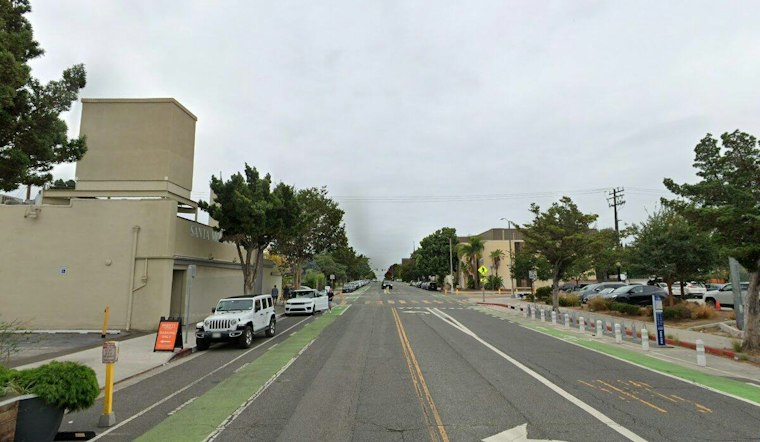
The Santa Monica-Malibu Unified School District board plans to vote November 19 on its first Safe Routes to School policy, formalizing the district’s role in work that depends on city partnerships. At the board’s October 29 meeting, members pressed for better traffic and crash data from the surrounding cities, underscoring how much of the work lies beyond the district’s control.
According to Santa Monica Daily Press, the district has worked on Safe Routes to School with Santa Monica for 15 years. The proposed Board Policy and Administrative Regulation 5142.2 would be the first time that work is written into formal district policy. The draft says walking, biking and other active transportation can reduce vehicle traffic and air pollution near campuses, and calls for the district to develop and encourage safe-routes activities jointly with Santa Monica and Malibu.
The regulation focuses on four areas: safety education, promotion of Santa Monica’s Bike It/Walk It days, partnerships with local law enforcement, and consideration of safe routes in school-facility design. Chief Operations Officer Carey Upton told the board that staff adapted the California School Boards Association model, reducing its eight items to four because some provisions assumed the district had school police or authority it does not hold. Board member Jon Kean confirmed the CSBA model is the district’s template.
A Policy Built Around City Partnerships
Director of student services Frank Dussan said the policy is intended to ensure the district partners with the cities to help keep students safe walking and biking to school. SMMUSD does not own, manage or maintain the streets students cross. It can support city applications for safe-routes grants, but cannot apply for the funding itself; Malibu officials have told the district that its letters of support help advance applications.
Board member Laurie Lieberman called for closer coordination with Santa Monica, including regular updates on crashes near schools, and suggested inviting city officials to explain Vision Zero and its effects on campuses. Santa Monica adopted Vision Zero in 2016, aiming to reduce fatal and severe-injury crashes on city streets to zero by 2026, according to the city. The board discussion did not establish what, if anything, officials have presented about the program’s effects on schools.
How Often Will the Board Get Updates?
Dussan said he understood the policy to call for quarterly reports to the board, describing them as a way to open communication and data-sharing channels. But the draft says updates will be provided as needed, not on a fixed quarterly schedule; the Daily Press report does not resolve the discrepancy. Upton said the district’s ability to report back also depends on what Santa Monica shares. The city’s traffic decisions draw on data the district says it has not yet received but can request.
Crossing Guards Thinned Out Since the Pandemic
The policy discussion also surfaced a staffing gap that predates it. Upton said city-provided crossing guards have been reduced since the COVID-19 pandemic, and that Santa Monica currently has three to four crossing-guard vacancies. Board member Maria Leon-Vazquez urged the city to restore guards on major corridors including Ocean Park, Pico and Wilshire, and Upton said the next guard hired would be assigned near Ocean Park.
Space constraints compound the pressure on some campuses. Upton noted that the Roosevelt and Franklin school sites are about half the recommended size for their enrollment, which has pushed the district to try moving student drop-off and pickup away from the street entirely. The district hopes to add similar drop-off solutions at Rogers within the next couple of years and may do the same at Edison if it can work out the arrangement with the city.
Malibu Coordination Has Been More Informal
Upton described coordination with Malibu as more sporadic than the district's long-running relationship with Santa Monica, and the new policy is meant to make that Malibu relationship more formal going forward. The terrain itself adds complications unique to that side of the district: board member Stacy Rouse noted that Pacific Coast Highway is not controlled by the city of Malibu, and canyon road closures can prevent buses and staff from reaching schools at all. The district has also written letters supporting county public works grants aimed at reducing rockfalls and mudslides in Malibu Canyon.
What's Already on the Ground
The proposed policy would build on infrastructure work that predates it by decades in some cases. Malibu adopted its own Safe Routes to School plan in 2000 and built the first phase of the Morning View Drive walkway from Pacific Coast Highway to Juan Cabrillo Elementary that summer, according to City of Malibu records; a second phase funded through a Caltrans grant was completed in January 2003. In Santa Monica, walk audits at six schools in 2017 led to a 2018 report recommending curb extensions, new crosswalks and signage. Santa Monica Next reported that a Safe Routes project near McKinley Elementary, begun in 2024, was completed in 2025, and that a traffic-calming installation at Santa Monica Boulevard and Chelsea Avenue provides a more protected crossing near the school.
What the Crash Data and School Projects Show
Santa Monica recorded 60 crashes resulting in fatal or severe injuries citywide in 2024, up from 39 in 2023, according to Transportation Department data reported by the Santa Monica Lookout. Those figures do not establish the trend over the full period since the city adopted Vision Zero in 2016, or how many crashes occurred near schools. The City of Santa Monica says its pedestrian-improvement project covers Edison Language Academy, SMASH, John Muir, McKinley Elementary, Grant Elementary and Franklin Elementary. The city’s project information identifies the schools but does not, by itself, establish which improvements have been completed or remain planned.
The district's own transportation programs lean on some of that same groundwork. The SMMUSD Safe Routes to School webpage promotes Car-Free Fridays, encouraging families to leave cars behind and choose alternative transportation once a week, and it hosts route maps for Santa Monica schools. A 2023 Daily Press report also described the district's GoPass program, then entering its third year, giving students unlimited free rides on public buses and rail, alongside the city's use of Leading Pedestrian Intervals that give students a head start crossing intersections.




