

























































Santa Monica’s City Council voted 7-0 to uphold PlayGroup House’s permit to expand at 1029 26th St. from a licensed capacity of 14 children to as many as 40. The approval also sets operating conditions and directs city staff to review street treatments at nearby intersections and track complaints and collision data as the school operates.
The decision allows PlayGroup House to convert from a large family day care licensed for up to 14 children into a child care center, according to the Santa Monica Daily Press. The school plans to begin with 24 children and reach 40 by fall 2027. At the time of the council’s decision, it enrolled 11 children ages 2 to 5.
The Planning Commission unanimously approved the conditional use permit on July 15 after hearing from 18 speakers, eight opposed, the Daily Press reported. Northeast Neighbors appealed, arguing that a larger operation would not fit the single-family neighborhood or the city’s general plan. The group also said officials had not assessed street conditions at the school’s 5 p.m. closing time or during up to four annual evening events that can run until 7:30 p.m.
Traffic Review and Follow-up
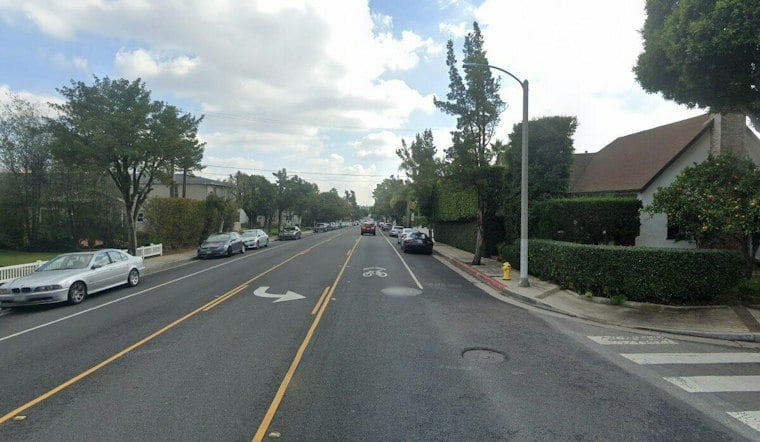
Traffic and safety evidence featured prominently in the appeal. The Daily Press reported that 26th Street carries about 14,700 vehicles a day and that a city Mobility Division review counted six reported collisions near the site from 2021 through August 2026; none involved a pedestrian or caused a serious injury. A separate Nov. 5 review found that drivers on the 25 mph street traveled about 31 mph at the 85th percentile. It also found additional parking on Washington and California avenues when 26th Street fills up.
Representing PlayGroup House, land use consultant Steven Somers of Crest Real Estate told the council the Mobility Division found no pedestrian-related incidents in five years and said the city had approved three prior permits of this type. He said the property had received no complaints in six years of operation. Addressing a state inspection, Somers said it followed a complaint filed the day before the Planning Commission hearing and involved a resident temporarily away for a family matter, not daily operations; he said the matter was resolved. He also said the family-day-care residency requirement would not apply after the site became a preschool.
Neighbors’ Objections and Families’ Support
Northeast Neighbors chair Trisha Crane cited a state finding that the day care had violated a licensing rule requiring family day cares to operate from the licensee’s residence. The North of Montana Association, the Wilshire Montana Neighborhood Coalition and Friends of Sunset Park also supported the appeal. Resident Zara Meyer said parents had double-parked and blocked residents’ cars. Allison Kennedy said neighbors objected to what they viewed as a move from day care to commercial use, not to the existing care itself, and argued that the city’s greatest shortage was in infant care rather than the age group PlayGroup House serves.
Parents and other supporters described the school’s role in their families’ lives. Most said they walk their children there rather than drive; resident Sarah Christian said her family, displaced by the Palisades Fire, found stability at the school. Josh Bakarak said opposition was driven by fear and support by facts and family. Founder and owner Cassidy Bosch said she had contacted every opponent, used no amplified outdoor sound and staggered arrival and dismissal times to reduce congestion.
Council Members Cite Child Care Needs
Council member Lana Negrete acknowledged neighbors’ concerns about increasing capacity from 14 to 40 but supported the permit, urging the school to follow its good-neighbor plan and offer tuition assistance. The operator agreed to discuss accepting children with child care subsidies in partnership with Connections for Children. Council member Ellis Raskin said he found no substantial evidence in the record for the appeal. Mayor Pro Tem Jesse Zwick, a parent of two preschoolers, urged the city to create a by-right approval path for future day care expansions.
The debate also touched on the scale of child care needs. Planning Commission vice chair Jacob Wasserman said the city’s child care shortage ranks close behind its housing crisis. Council member Natalya Zernitskaya argued that child care is infrastructure that allows parents to remain in the workforce, while former Mayor Gleam Davis said parents without care can struggle to hold jobs.
State Rules and Countywide Supply Context
California defines family child care as care provided in the caregiver’s own home, according to the California Department of Social Services’ Family Child Care Homes Title 22 manual. That distinction is relevant to PlayGroup House’s proposed change from a family day care to a child care center. Countywide assessments point to a longstanding supply gap, particularly for younger children, but do not establish current conditions in Santa Monica. A 2017 Los Angeles County Child Care Planning Committee assessment, based on earlier countywide data, said licensed providers had capacity to serve 13% of working parents with infants and toddlers, while the county had 12% more licensed preschool spaces than preschool-age children. Separately, the Los Angeles County Local Child Care Planning Council’s needs assessment reported 442 fewer child care facilities and 9,500 fewer spaces in 2021 than in 2017.
How the Permit Changes the Operation
The approved plan calls for remodeling the 2,426-square-foot house into two classrooms and three learning areas. The center will need six child care staff members plus a director, four more employees than it currently has. Drop-off is scheduled for 8:30 to 9:15 a.m. and pickup for 1 to 2:30 p.m.; families that violate those rules three times may be excluded. The planning director waived a requirement for four passenger-loading spaces, citing a state law that removes parking mandates for sites within a half-mile of a major transit stop.
Council member Dan Hall’s motion removed the Planning Commission’s limit on organized outdoor play between 8 a.m. and 4 p.m., leaving outdoor-play restrictions to the municipal code. It also struck a condition tied to evening events and directed staff to study street treatments at the 26th Street intersections with Washington and California avenues. Staff will review ongoing compliance using 311 complaints and collision data.



