

























































Look up after dark these days and you might count more satellites than stars. A new study finds that satellites now outnumber the stars visible to the naked eye above many towns in the United Kingdom, with roughly 710 satellites hovering above the horizon of a typical U.K. town at any given moment after dark, and about 79 of them high overhead.
The research, which examined more than 15,000 active satellites in low Earth orbit, found that for someone standing in an area with moderate light pollution, the sky may genuinely contain more satellites than visible stars, according to a study detailed by NewsNation Now. Over the course of a single night, the study found, 12,891 different satellites pass over a typical U.K. town. That is not a fixed population circling endlessly overhead; it is a constantly rotating cast of thousands.
The headline comparison needs a distinction: 710 is the estimated number of satellites above the horizon, not the number a person can actually see. The analysis estimated that about 105 were sunlit at a typical moment, with visibility shifting sharply through the night as satellites enter Earth’s shadow. The count drew on U.S. Space Force tracking data for Oct. 12 and 18, 2026, and was published as a non-peer-reviewed study by engineering firm Accu Components. The visibility estimates and study details underscore that “overhead” and “visible to the naked eye” are not interchangeable.
Americans are looking up at similarly crowded skies. The study found around 712 satellites above the U.S. horizon at any given moment after dark, a figure that closely mirrors the U.K. count despite the two nations sitting on opposite sides of the Atlantic.
Starlink Is Driving Most of the Growth
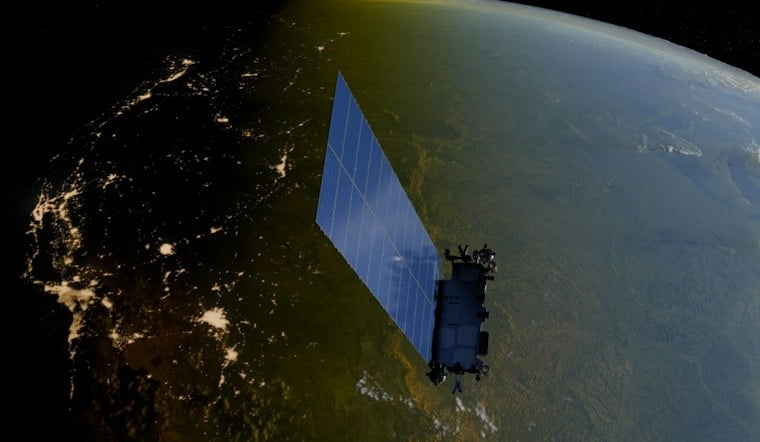
The single biggest reason for the crowding has a name: Starlink. SpaceX's satellite internet constellation now accounts for around 70% of all active satellites in low Earth orbit, per the report detailed by NewsNation Now. The growth curve is startling on its own: there were just 120 Starlink satellites in orbit at the end of 2019, and the study puts that number at 11,131 on November 20, 2026.
The changing sky also matters to observatories, where a satellite crossing a telescope’s field of view can leave a bright streak in an image. A 2020 analysis commissioned by the European Southern Observatory assessed 18 planned satellite constellations totaling more than 26,000 spacecraft. It estimated that up to 3% of long twilight exposures at large telescopes could be ruined, while wide-field surveys at the Vera C. Rubin Observatory could be more heavily affected under some conditions. The ESO analysis said scheduling changes and darker satellites could reduce some impacts, though not all.
Zoom out to every satellite orbiting Earth, working or not, and the numbers tell the same story. The total satellite count, including nonworking craft, has climbed from 5,415 to 20,095 over the period described in the report. Researchers behind the study suggest the night sky above the U.K. has changed more in the past seven years than it did in the previous 60 years combined.
Satellite growth has also prompted a U.S. rule aimed at limiting orbital debris, a separate concern from light pollution. In 2022, the Federal Communications Commission adopted a requirement that satellites in low Earth orbit be disposed of as soon as practicable and no later than five years after their missions end, replacing a longstanding 25-year guideline. The rule applies to spacecraft ending or passing through missions below 2,000 kilometers and was designed to reduce the time defunct satellites remain in orbit, where collisions can create more debris. The FCC’s announcement of the five-year rule described the policy change.
Seattle Leads U.S. Cities for Crowded Skies
Among major U.S. cities studied, Seattle came out on top for satellites high in the sky, with Chicago and New York City following behind, the report notes. The ranking suggests geography and viewing conditions play a role in just how crowded a city's sky appears, even as the underlying satellite population is global.
Researchers expect the number of satellites passing overhead to keep climbing as more mega-constellations get deployed in the years ahead, according to the study. For now, the takeaway is simple: the next time you step outside and try to pick out a shooting star, you may also see steadily moving lights in the sky.



