

























































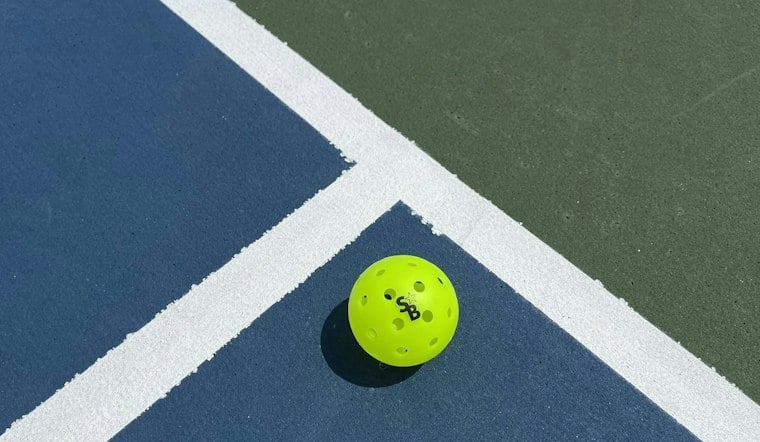
Neighbors near Skypark in Scotts Valley have had enough of the relentless pop-pop-pop of pickleball paddles drifting into their cul-de-sac, and on Wednesday they brought their frustration straight to the City Council. Pickleball courts tucked inside the park's tennis courts have drawn growing crowds and growing complaints over the past dozen years, but despite hours of discussion, the council took no action on any changes.
Skypark sits in a residential neighborhood in the Santa Cruz Mountains, and the city first added temporary pickleball courts there in 2014 within the park's existing tennis courts, according to Local News Matters. The city made the setup more permanent in 2018, restriping the courts and installing some permanent pickleball nets, the outlet reported. As the sport exploded in popularity nationwide, Scotts Valley kept fielding more complaints from residents living near the courts.
Those complaints pushed the city to adjust pickleball court hours earlier this year, and in August it established an 8 p.m. nightly closing time for the courts. The city's court-hours pilot program page states that the Scotts Valley Police Department will patrol the court area near closing time to make sure the hours are followed, and it directs residents who witness a violation to call the department's non-emergency line at 831-440-5670.
Residents Describe Daily Disruption
Traci Waldheim, a resident of the Skypark cul-de-sac, told the council the crowds, traffic and noise generated by the courts have become genuinely difficult for nearby homeowners to live with. She said the area simply was not designed to handle that many people descending on it regularly.
Not everyone at the meeting wanted the courts curtailed, though. Mark Dettle, president of the Santa Cruz Pickleball Club, said the sport brings people together across generations, while resident Carol Hagen argued that pickleball's social and physical appeal is exactly why it draws such large crowds in the first place.
Council Floats Respite Days and Relocation
Councilmember Krista Jett suggested the city consider respite days when pickleball would not be allowed at all, giving neighbors a predictable break from the noise. Fellow councilmember Derek Timm floated a different idea: partnering with a local high school to relocate pickleball play to a site with less impact on residential streets.
Vice Mayor Steve Clark took a different tack, saying pickleball players themselves need to follow parking and traffic laws and do their part to reduce the strain they place on neighbors. Recreation Division Manager Allison Pfefferkorn told the council that pickleball's growing pains have come up frequently at municipal conferences and in conversations with other cities, including Campbell, as communities statewide grapple with the same tension between a booming sport and quiet neighborhoods.
A Statewide Pattern of Complaints
Scotts Valley is far from alone in this fight. A 2026 industry report cited by the Mercury News found that 24.3 million Americans played pickleball in 2025, up from just 4.2 million players in 2020 — a surge that has strained parks never built for that kind of traffic. In Martinez, noise, trash and traffic complaints led the City Council to permanently close eight Hidden Valley Sports Courts this past March, after an earlier attempt to simply reduce the courts' hours and days failed to quiet the backlash.
Brentwood took a hybrid approach, voting in September to immediately close its four Creekside Park pickleball courts — after already cutting hours there to a 7 p.m. close — while standing up six temporary replacement courts at the Sunset Park Athletic Complex. And it's not just a Bay Area suburb problem: neighbors near Cataldi Park in San Jose have separately raised concerns, as reported by NBC Bay Area, over the constant pop of paddles hitting the ball near their homes.
What Happens Next
For now, Scotts Valley isn't rushing toward a Martinez- or Brentwood-style decision. The city is running a survey of residents and Skypark court users about the recent changes through Nov. 30, and the results are set to go before the Parks and Recreation Commission in December, which will consider whether to recommend further changes to the city's pickleball policies. Whether that means respite days, a relocation partnership, sound barriers or something else entirely remains an open question the council has yet to answer.





