

























































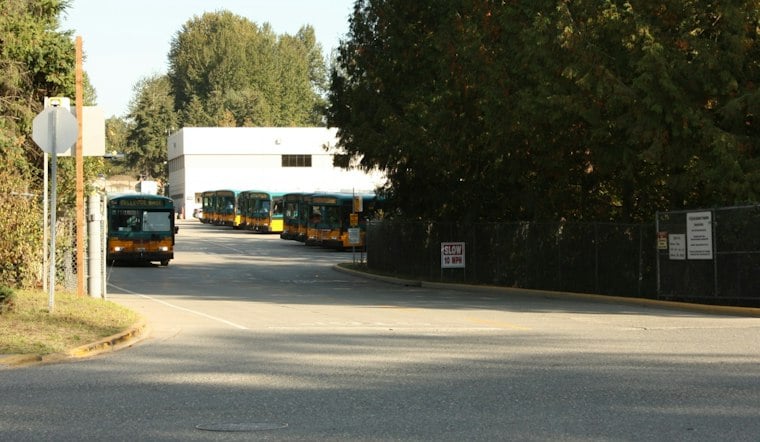
Seattle voters gave a strong green light to a sales tax increase meant to keep city buses running, with Proposition 1 capturing 73% in Tuesday night's count, according to the Seattle Times. The measure doubles the city's transit sales tax from 0.15% to 0.3%, pushing Seattle's overall sales tax rate closer to 11% and marking the third consecutive time voters have agreed to raise this particular tax.
What Proposition 1 Actually Pays For
The tax hike replaces an existing levy approved in 2020 that was set to expire in 2027, and it is expected to raise more than twice the revenue of that earlier measure, according to The Seattle Times. At the new 0.3% rate, the tax amounts to roughly 30 cents on a $100 purchase, and it is projected to generate an average of $138 million annually over the next decade — a figure that matches what Axios and the city's own transit-measure page both cite. About $95 million of that per year is earmarked simply for maintaining current bus service levels, with the rest going toward expansion.
Most of the new money is destined for King County Metro, buying an estimated 275,000 bus trips annually in total — about 95,000 more than the current city-funded program supports, per Axios's reporting. KNKX Public Radio had previously reported the expansion at roughly 100,000 additional annual bus trips, with an emphasis on late-night, midday and weekend service. The measure also directs funding toward more frequent trips in lower-income and more diverse neighborhoods, the Seattle streetcar, transit access programs and education, and infrastructure projects meant to keep buses on schedule and improve travel times, including some planning tied to Sound Transit 3 light rail projects.
Free Passes and Household Costs
Beyond bus hours, the measure expands free ORCA passes from 10,000 to 22,000, and it includes 12,000 annual passes specifically for people living in Seattle Housing Authority units. The median two-person Seattle household's estimated annual sales-tax increase is $58 total, or $29 more per person, according to The Seattle Times.
Had the measure failed, the city estimated roughly 180,000 annual bus trips could have disappeared by next fall, according to Axios's reporting. The Urbanist similarly noted that without a sustainable funding source like additional sales tax revenue, Metro service cuts would likely have been on the horizon.
Supporters Point to Climate and Equity Goals
Supporters argued that the people most affected by the higher sales tax are also the ones who rely most heavily on transit, and they said robust bus service is central to Seattle's climate and traffic safety goals. The Seattle Times reported the measure had no organized opposition campaign. Census data cited in that reporting shows people earning below $50,000 a year in the metro area still commute by car at a rate of about 70%.
Transportation Choices Coalition's executive director, Hovenkotter, made a related point to KNKX Public Radio ahead of the vote, noting that Seattle has gained 80,000 new residents since 2017 while adding only about 3,000 cars — evidence, in that framing, that the city's growth is already leaning on transit rather than driving.
Critics Cite Fare Evasion and Rising Costs
Not everyone was on board. A representative from the Washington Policy Center argued the money would be better spent on street improvements, pointing to Metro's rising operating costs and high fare-evasion rates as evidence the agency has struggled to deliver, according to KNKX. Critics more broadly questioned why consumers should pay more in sales tax while, by Metro's own estimate, about a third of bus riders board without paying.
The Urbanist's reporting on fare enforcement offers context for that complaint: Metro issued just eight citations for nonpayment between May and December 2025 across King County, and all eight were later voided for incomplete information. The outlet also noted that Metro's broader fare enforcement push was credited with shaving systemwide fare noncompliance by just 1% over the second half of 2025 compared with the year before, while fares overall are expected to bring in $94 million in 2026 — only 58% of what they generated in 2019. Some critics have also pointed to a regressive sales tax weighing more heavily on lower-income residents as a separate concern with how the measure raises money, even as it directs some of that revenue back toward low-income transit riders.
A Pattern of Seattle Transit Votes
Tuesday's result continues a string of city transit votes that have consistently passed by wide margins. Seattle voters approved a 2014 city transit measure with 62% support, and the 2020 renewal passed with four out of five voters — about 80% — in favor, according to KNKX. That contrasts with county-level efforts: in 2014, King County Metro asked voters countywide to fund a roads-and-transit measure through a sales tax increase, and county voters rejected it, even as the narrower city measure that same year succeeded. A King County Elections description of an earlier ballot measure notes that revenue from such levies has gone toward Metro service hours on routes largely within Seattle, regional transit service connecting to the city, and programs supporting transit access for low-income riders.
Seattle bus ridership plummeted in the city and across the country in the early months of the pandemic in 2020, a collapse that shaped the funding debates that followed. The Seattle Times' report on Tuesday's returns noted that global economic pressures — inflation, tariffs and war — formed part of the backdrop against which voters weighed the tax increase this time around. With Proposition 1's passage, Seattle voters have now signed off on increasing the transit sales tax for a third consecutive time.


