

























































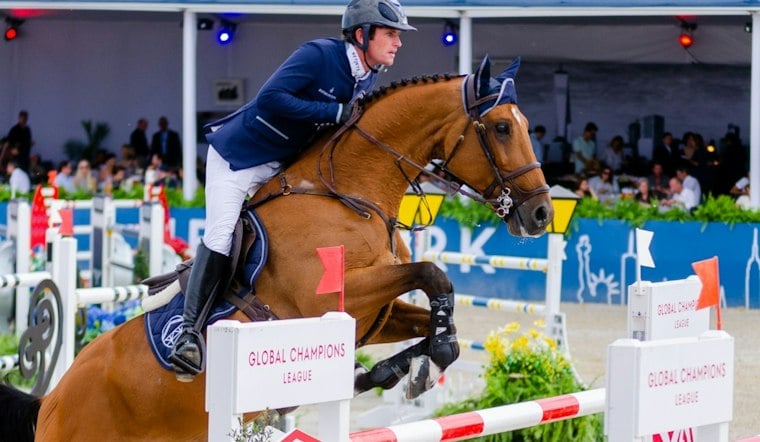
A 44.6-acre former horse farm near Heathrow could become the next home for Seminole County's growing business incubator network, with county officials exploring whether the old barn and surrounding land could house shared laboratories for life sciences startups and a commercial kitchen for food entrepreneurs. The property, once known as WB Equestrian, sits just two miles west of where Interstate 4, State Road 417 and State Road 429 converge, and includes a barn with 50 stalls and 25,000 square feet of space.
The idea surfaced after a November 10 presentation to the Seminole County Board of County Commissioners laid out the performance of the county's existing partnership with UCF, as reported by GrowthSpotter. That partnership reported 23 active companies and an estimated $200 million in economic output for fiscal year 2025-26, according to the same report. Gui Cunha said the partnership's strong performance prompted officials to start asking what opportunities could come next, and that the county-owned farm space has potential for adaptive reuse, calling it a very good site, per GrowthSpotter's account of his November 10 interview.
From Show Horses to Startups
Seminole County acquired the WB Equestrian property in 2025, paying about $9.6 million to buy it from PSM LLC in April of that year, with Maury L. Carter & Associates representing the seller, the outlet reports. The parcels sit between Sylvan Lake Park and the Seminole Soccer Complex, with frontage along Lake Markham Road and South Sylvan Lake Drive, and carry a land-use designation allowing up to one residential unit per acre. Seller Daryl Carter told GrowthSpotter in 2023 that he had received three offers for the property and that developable land of decent size is hard to find in the area.
The county has already begun converting part of the site for other uses. Commissioners approved $540,000 in April 2026 for design, preconstruction and maintenance work toward turning a portion of the property into parks department offices and storage, a project with an estimated total cost of $5 million and D.E. Scorpio Corp. serving as construction manager, according to GrowthSpotter. The incubator concepts under study would be separate from that parks conversion.
Why UCF's Heathrow Office Matters
The incubator discussion builds on an existing UCF foothold in Seminole County. The Seminole County Incubator, established in July 2025 as a partnership between UCF and the county, operates out of Seminole State College's Heathrow campus and supports local startups as well as companies looking to expand into Central Florida, according to UCF's Business Incubation Program. By October 2025, the new office had only two companies, including Costa Rican software firm InnovaSoft, though its soft-landing program had already drawn interest from companies in Germany, Poland and Hungary, Spectrum News 13 reported.
To evaluate what might come next, the county engaged the University of West Florida's Haas Center to examine potential returns from two additional incubator concepts, GrowthSpotter reports. The Haas Center, which also evaluates UCF's incubator program, is recognized by the U.S. Economic Development Administration as one of just two EDA University Centers in Florida and supports the region through workforce research, economic impact modeling and industrial innovation work, per the Haas Center's own description.
Food Incubator Study Projects Modest Early Returns
The Haas Center completed its assessment of a potential food incubator on May 1, 2026, according to GrowthSpotter's reporting, recommending a shared commercial kitchen capable of serving 10 to 20 businesses in its first year. Such a facility would offer shared kitchen equipment, storage, food safety instruction and business coaching, with participants able to test products, develop their businesses and earn credentials such as ServSafe certification, the outlet notes.
Researchers estimated roughly $168,000 for initial equipment and facility buildout, and projected about $742,000 in first-year economic output along with roughly three jobs when supplier and household-spending effects are included — though the study excluded any later growth among participating businesses, per the same report. Revenue could come from memberships, hourly fees, storage rentals, workshops and coaching, with researchers recommending that earned income eventually cover most operating costs while public and philanthropic support fund scholarships and reduced-fee access, GrowthSpotter reports. For context, shared-use commercial kitchens have become increasingly common in Florida and nationwide, letting food entrepreneurs access licensed facilities without the steep upfront cost of building their own, according to the University of Florida's IFAS Extension, which notes that comparable operations typically rent space by the hour, day or month and that outfitting a commercial kitchen in existing space can run $100 to $300 per square foot.
Life Sciences Concept Still Taking Shape
The life sciences incubator idea grew out of conversations between UCF's Esteban Saldarriaga and Rafael Caamano, interim executive director of UCF's Innovation Districts and Business Incubation Program, about demand for wet labs and shared scientific equipment in Central Florida, GrowthSpotter reports. Saldarriaga said WB Equestrian offered a physical space comparable to other regional incubators for modeling an operation. He also said that accounts of UCF officials turning away life sciences businesses for lack of suitable space and equipment were anecdotal, and that the forthcoming study would examine that opportunity directly rather than assume it, according to the outlet.
UCF already operates a 10,000-square-foot life sciences incubator at the Guidewell Innovation Center in Lake Nona's Medical City, which includes private wet labs and offices alongside a communal laboratory and shared research equipment, per UCF's incubator program page. That facility launched in May 2018 as Central Florida's first life-sciences incubator, built with seven labs, five private offices and two conference rooms through a partnership among UCF, the City of Orlando, the Tavistock Group, the State of Florida and the Florida High Tech Corridor Council, the Orlando Sentinel reported at the time, noting the project's total cost ran to $4 million, with Florida Hospital covering $2.5 million of that sum.
Preliminary Numbers, No Timeline Yet
Seminole County's preliminary assumptions for the Heathrow-area site allocate $4.6 million to $7.6 million for building conversion and another $500,000 to $1 million for scientific equipment, with modeled spending placed in 2028 and 2029, according to GrowthSpotter. The outlet reports that these figures are not an announced construction schedule and remain subject to adjustment. Saldarriaga wrote in a November 10 email that the Haas Center would evaluate the concept's potential benefits and recommend size and capacity only after staff complete a fuller cost review, a timeline that points to a life sciences feasibility study the Haas Center expects to finish in January 2027.
Cunha said the county is also considering a possible revenue-sharing arrangement for its incubator programs, though no structure has been finalized, GrowthSpotter reports. For now, the old equestrian barn remains just that — a barn — while officials wait on the numbers that will determine whether Seminole County's next economic development bet grows out of lab benches or stockpots.




