

























































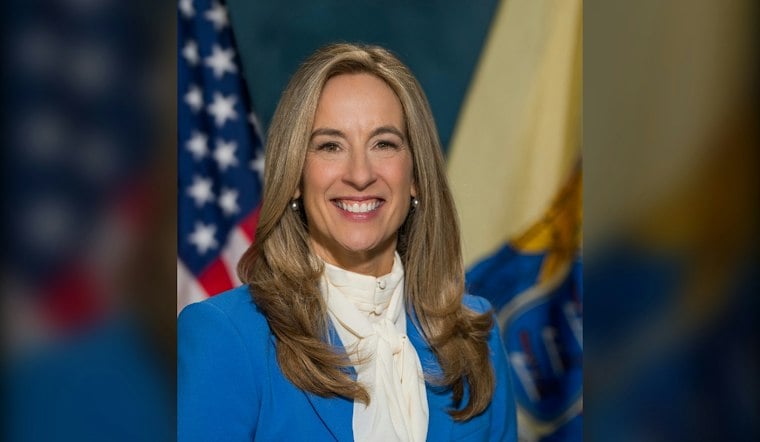
Gov. Mikie Sherrill signed an executive order intended to reduce barriers for Black business owners and other people of color competing for state contracts, delivering the pledge at St. James AME Church in Atlantic City as part of an event marking the first anniversary of the New Jersey Statewide Black Agenda. State contracts total hundreds of millions of dollars, and Black leaders in the room said the move is welcome but only a beginning.
Sherrill signed Executive Order 29 Wednesday at the event, according to New Jersey Globe. The order directs the state Treasury Department and the Governor's Office to examine three years of contracting activity, including minority-business participation and subcontractor payments, and it establishes regional forums to connect entrepreneurs with procurement officials while calling for upgrades to state contracting technology. The first regional forum must be held within 120 days, with at least three scheduled within 180 days, per the same report. The order does not immediately establish new contracting preferences or quotas — instead, it directs agencies to identify barriers and recommend improvements, the outlet reports.
The governor's office, in its own description of the signing, said Executive Order No. 29 directs a statewide effort to expand access to state contracting opportunities for small and diverse businesses, according to the Office of the New Jersey Governor. At the event, Sherrill told the audience she was ready to work in partnership with them, according to the Philadelphia Inquirer.
A Disparity Study Behind the Push
The order follows a 2024 state disparity study that found significant inequities in government contracting between 2015 and 2020, the New Jersey Globe reported. That study, as detailed by the Inquirer, found people of color own 28% of New Jersey construction businesses but received less than 4% of the state's construction contracts. The same study also examined state contracts for goods and services.
Separately, state lawmakers have floated their own fix. New Jersey Senate Bill S2932 would require state agencies to make a good-faith effort toward certain goals for using certified minority- and women-owned businesses as prime contractors and subcontractors, according to bill text posted by the New Jersey Legislature. The bill's current status was not addressed in that text.
Black Leaders Call It a Start, Not an Ending
Newark Mayor Ras Baraka and other Black leaders described Sherrill's offer as a meaningful start, the Inquirer reported. Baraka, who lost to Sherrill in a crowded Democratic primary in June 2025, asked at the event what people should do when a state is blue and still deeply racist, according to the same report. The New Jersey Statewide Black Agenda was organized by Baraka, Salvation and Social Justice, and the New Jersey Institute for Social Justice.
Verlina Reynolds Jackson, who leads the New Jersey Black Legislative Caucus, called for more passion and urgency in demanding more from the state, per the Inquirer. She said the state should no longer dismiss demands by saying they are not in the budget. Black leaders intend to use the political influence gained from electing Democrats to seek more for their communities in partnership with Sherrill, the paper reported, noting that Black women voted for Democrats at 94% per the article's reporting.
Other Priorities on the Statewide Black Agenda
The Statewide Black Agenda also includes strategies to improve economic equity and generational wealth through homeownership, reduce homelessness, and prevent companies from polluting urban neighborhoods, according to the Inquirer. The event took place in Atlantic City alongside a conference of local officials.
Henal Patel, interim president and CEO of the New Jersey Institute for Social Justice, described a voting rights law as one of the strongest in the country, saying it resulted from four years of advocacy by Reynolds Jackson, communities, and activists. But Patel said the progress only scratches the surface, according to the same report. Sherrill signed the John Lewis New Jersey Voter Empowerment Act in July 2026, which prohibits politicians from redrawing legislative districts to minimize minority votes.
The Inquirer's reporting also noted other recent state actions cited by Black leaders as context, including Gov. Phil Murphy's January 2026 signing of a Survivor's Justice Law requiring courts to recognize domestic abuse as a mitigating factor when people retaliate against their abusers. Leaders at the event also pointed to New Jersey's ongoing defense against a lawsuit seeking school desegregation, with the state's schools described as among the nation's most racially disparate, and to increased state spending to recruit midwives and doulas addressing high maternal mortality among Black mothers.





