

























































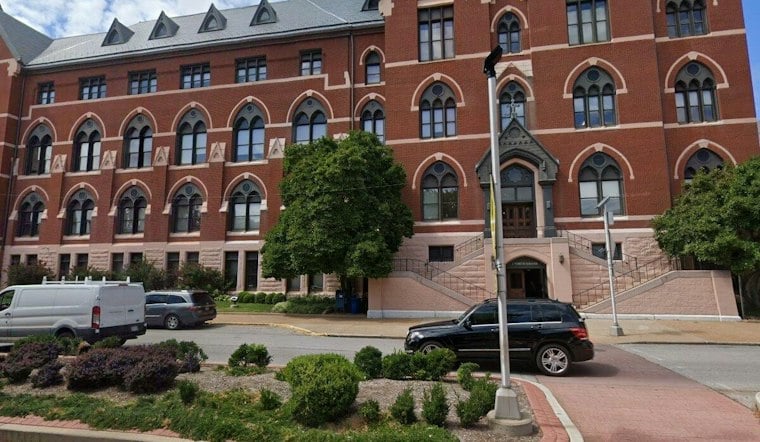
Saint Louis University is ending its main-campus custodian jobs and turning the work over to HES Facilities Management, a contractor already cleaning South Campus.
The transition affects long-serving employees as well as campus coverage. Bertha Hollins, 70, has worked as a SLU custodian for 15 years. She was due a raise and paid time off between Christmas and New Year's, and called the layoffs a slap in the face. St. Louis Public Radio reported that workers may continue cleaning through HES, but not at university wages and benefits.
One Vendor, Two Campus Counts
SLU's explanation, reported by St. Louis Public Radio, is that high turnover has made North Campus coverage difficult to maintain. The university says one provider across its campuses could keep positions filled, make coverage more consistent and adjust staffing as demand changes.
HES is not a stranger to the grounds. Facilities vice president Mike Lucido told The University News that the company has been part of South Campus operations since 2024. The main-campus move extends a contractor the university already uses, rather than inventing a new facilities model from scratch.
The reported number of affected employees differs by outlet. St. Louis Public Radio said SLU is laying off all 67 main-campus custodians. The University News reported that SLU planned to terminate all 82 custodians it employs, following a 60-day transition that began Oct. 12. It also reported that HES agreed to make conditional job offers to all 82 and that SLU planned financial assistance during the transition.
A Dollar Less, and the Benefits Behind It
Mia King, St. Louis coordinator for SEIU Local 1, said custodians who move to HES would lose $1 to $1.50 an hour. She said they would also miss a 65-cent raise due in December and would be ineligible for future SLU benefits.
The benefit gap is concrete. University-employed custodians received free healthcare through a wellness program. HES jobs come with a monthly insurance premium. Tuition waivers for workers, or for dependents enrolling at SLU, go away with the move, as reported by St. Louis Public Radio.
Clayton Berry said employees who already meet retirement-eligibility rules will keep tuition benefits for themselves and their dependents. People who do not qualify, he said, can seek financial and merit-based aid, as noted by St. Louis Public Radio. King said two long-term employees are keeping tuition benefits so their dependents can finish school, while one employee enrolled at SLU will lose his.
University custodians and HES employees are both unionized through SEIU Local 1, so the contractor change is not an exit from the union. King said the average custodian has about 10 years on the job, and that workers thought negotiations had produced living wages and decent benefits, then lost them overnight. She and Hollins said the cuts land on some of SLU's lowest-paid employees. Hollins said some of them cannot simply go find other work.
Five Minutes, Then the Contract
The union and SLU gave different accounts of how custodians were notified. King said the university provided the minimum 60-day termination notice required by the contract, but that SEIU was not properly notified of the meeting announcing the layoffs and had a right to attend. Her layoff email arrived at 6:25, five minutes before the 6:30 employee meeting, according to St. Louis Public Radio.
Berry's account of the notice is different. He said SEIU was notified at the same time as the employees. He also said the university later met with the union, and that the union agreed to SLU's enhanced transition package.
The notice language has a paper trail from 2024. In May of that year, SEIU Local 1 said custodians, groundskeepers and distribution workers ratified a four-year contract after months of talks. On the union's account, management must give 60 days' notice before subcontracting, and during that period must offer open university jobs to displaced employees who meet the minimum requirements.
Contract Notice and Federal WARN Rules
The 60-day notice period described in the union contract is distinct from federal WARN requirements. According to the U.S. Department of Labor, WARN generally covers employers with 100 or more employees and requires 60 days' notice for covered plant closings and mass layoffs. The available facts do not establish whether WARN applies to SLU.
Local 1 asked SLU to retain the custodians for at least a year, giving them time to adjust and allowing HES hires to work alongside them. The university declined. The available accounts do not establish that the union has filed a grievance; the parties' accounts of notice remain in dispute.
The Vacancies They Were Already Covering
King said custodians have been covering 35 vacancies by taking on extra work. Hollins said that work came without extra pay, and that people did it hoping to prevent layoffs. She said SLU closed custodian jobs instead of replacing people who left.
That is the university's turnover problem, described from the other side of the mop bucket. SLU's reason for outsourcing is that high turnover made North Campus coverage unreliable. Hollins's account is that the remaining custodians absorbed the holes, and the holes were then treated as a reason to stop employing them.
Federal labor law does not make every subcontracting decision automatically off the bargaining table. The National Labor Relations Board says it can be difficult to separate a non-bargainable change in an employer's scope and direction from a subject that must be bargained. It also says subcontracting that merely substitutes workers to do the same work under similar conditions is not that kind of scope-and-direction change. That is general guidance. It does not decide whether this decision met the contract or the statute.
Who Still Knows the Hallways
Margaret Smith, a SLU alumna, said a custodian is part of a department's social fabric: someone who knows people by name and stops to talk. She said the cuts show a divide in how the university treats faculty and hourly workers.
The custodial shift is not the only facilities clock running. The University News reported that residential staff were told on Oct. 23 that their jobs would end after a 60-day transition concluding Dec. 11.
The pattern is familiar on the other side of the city. The St. Louis Post-Dispatch reported that the University of Missouri–St. Louis laid off about 40 facilities staff and planned to outsource custodial, maintenance and groundskeeping work. Those employees were invited to apply with the Tennessee-based contractor taking over. At SLU, the path King described is narrower than a fresh application: conditional HES jobs, at lower hourly pay, without the university benefits that came with the 2024 contract.
Conditional offers are not the same thing as accepted jobs, and the December raise King described does not travel with the workers who move. Hollins's paid holiday stretch, between Christmas and New Year's, sits on the other side of a transition that began Oct. 12.



