

























































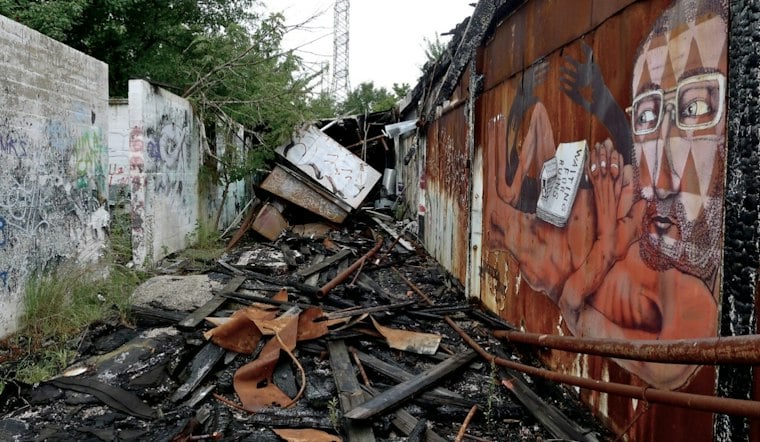
A sprawling, overgrown property in south Atlanta that housed convict laborers in the early 1900s and has sat largely off-limits to the public for decades could become a park and memorial under a newly revealed city concept. The site includes abandoned prison buildings, a wild forest, a zoo-animal cemetery and scattered graffiti, remnants of a place most Atlantans have never been allowed to walk through. The Department of Parks and Recreation says the goal is to commemorate forced convict labor while reopening the land to the neighbors who live around it.
A Vision Years in the Making
The plan, called the Restoration Memorial & Preserve, is being led by the city's Department of Parks and Recreation alongside HGOR, an Atlanta-based design studio, and a multidisciplinary team of archaeologists, historians, ecologists, arborists, architects and engineers, according to the City of Atlanta. As reported by WABE, the concept includes walking trails, a museum, a nature center, spaces for reflection and preserved old building structures, with the design growing less developed the farther it moves from the entrance toward the wooded interior of the property.
Matthew Cartledge, a landscape architect with HGOR serving as a project contractor, said the site represents a forgotten period of history that falls between the Civil War and the Civil Rights era, per WABE. He said the project connects Atlanta's history through green space and connectivity, intended to encourage reflection about the city's future.
A Complicated, Contested Piece of Land
The property is owned by the City of Atlanta but sits in unincorporated DeKalb County, a jurisdictional wrinkle that Parks and Recreation staff have flagged as needing to be resolved, according to WABE's reporting. The land has a long and layered past: it once belonged to the Muscogee Creek Nation, and the Atlanta History Center's report found the city purchased the property, totaling 248.7 acres, on November 17, 1911. That history center research also found the farm was already operating with the labor of incarcerated individuals by late 1925, and that it ran from the mid-1920s to the mid-1990s, though the center notes the exact closure date is difficult to pin down.
Complicating any reuse plan further, a portion of the property is currently used by the City of Atlanta as a long-range sniper training space, while the FBI and other agencies use the same land as a bomb detonation range, WABE reports. The city and those federal agencies would need to relocate their operations before the site could open, and the land also needs remediation before it could function as a park. Part of the broader property was also used to build the Atlanta Public Safety Training Center. The city has said there is no timeline yet for next steps, though planners hope to begin guided tours in the near future, per WABE.
Sizing Up the Site
Separate reporting from Urbanize Atlanta describes a scenic greenspace spanning more than 125 acres under the master plan, while an HGOR project manager told the outlet that the remaining vacant portions of the former prison farm, after construction of the training center, total roughly 138 acres. The dossier does not reconcile how those two figures map onto each other, but the master plan calls for connections between existing pond trails and the main planned site, the outlet reported. Professional archaeologists who surveyed the property reported finding no cemeteries or unmarked graves there, according to Urbanize Atlanta's coverage of a final presentation on the project. Discussions about turning at least some of the acreage into parkland date back to at least 2002, the same outlet noted.
Part of a Broader Reckoning
The Prison Farm plan is one piece of a larger city effort to commemorate the history of forced convict labor, alongside ongoing commemoration projects at the Chattahoochee Brick Site and Bellwood Quarry, per WABE. The Chattahoochee Brick project offers a template of sorts: Atlanta bought that 77-acre riverside site in 2022 with The Conservation Fund, following years of advocacy from neighbors and local groups, according to WABE's earlier reporting. That project envisions a park connected to the Chattahoochee Riverlands trail network along with a memorial to the incarcerated Black Atlantans forced to work at the brick company throughout the 19th century.
To help shape that companion project, the city formed an 11-member Chattahoochee Brick Company Memorial, Greenspace, and Park Board, Urbanize Atlanta has reported, describing the 75-acre site as more than three times the size of Centennial Olympic Park. Project contractors there sought public input on where trails should run, which environmental features to avoid, and how to connect the site to streets with sidewalks, WABE reported. Whether the Prison Farm process will follow a similar public-input path has not been detailed, but the two efforts together suggest a citywide push to turn sites tied to forced labor into public green space and places of memory.




