

























































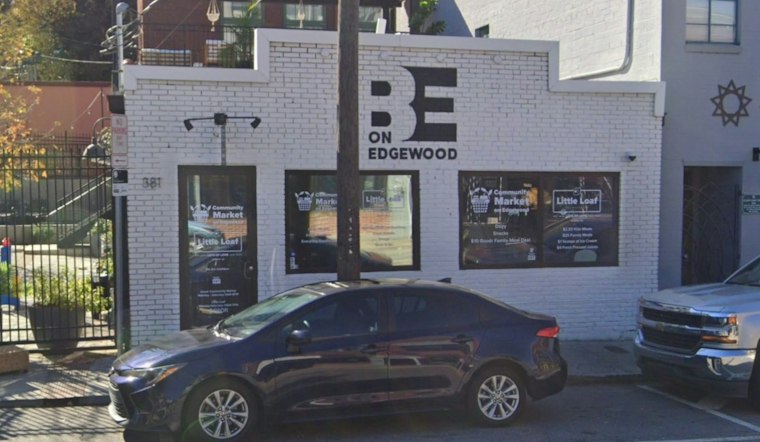
At Goodr Community Market and Little Loaf Deli in southwest Atlanta, a $54 grocery trip can fill several bags, a $3 purchase can help cover someone else's sandwich, and a token program lets shoppers buy food without cash changing hands at the register. For 71-year-old Vanessa Turner, who lives on a fixed income, that kind of pricing is not a nice-to-have. It is what keeps her kitchen stocked.
Turner told WSB-TV that she lost her job and her home when she was 61, and now relies on the market to make her grocery budget stretch. On a recent trip she spent $54 and walked out with several bags, groceries she says would have cost far more elsewhere. “This is a lifesaver for me,” Turner said, according to the station's report.
A Market Built Around the King Center Neighborhood
The store, located near the historic King Center, was designed with its neighbors in mind. About 1,500 seniors live within walking distance, according to the same account, meaning the market functions less like a typical grocery stop and more like a lifeline for people who may not have easy transportation to larger chains. Beyond groceries, it offers inexpensive lunches and even free meals, and it serves both seniors and families who need affordable options.
Owner Jasmine Crowe-Houston runs the store on minimal markups, a model meant to keep shelf prices within reach for people on tight budgets. But that approach has a cost. Crowe-Houston says grants and other funding that once supported the operation have run out, leaving her to personally cover the store's operating expenses, per the station's report.
Owner Looks for Partners to Keep Prices Low
“We are trying to find funders and partners to help us cover our operations so we can keep our pricing low,” Crowe-Houston said, per the same account. She has described the work as a continuation of the fight for social justice through food justice, framing the market not just as a business but as part of a broader mission. Customers can pitch in directly through purchases, including the $3 option that helps provide a sandwich, or through donations to the Goodr Foundation.
The funding gap at this location sits against a backdrop of layered, sometimes inconsistent public investment in Goodr's broader footprint. Invest Atlanta said in October 2024 that it approved a $330,000 Atlanta Food Access Catalyst Grant for Goodr to open a grocery store at Be on Edgewood serving seniors and unhoused residents. A separate page from the same agency describes a $300,000 Atlanta Food Access Catalyst Grant tied to the Goodr Community Market on Edgewood, a discrepancy the two sources do not reconcile.
A Wider Push for Food Access Across Atlanta
Goodr's first Community Market opened on Edgewood Avenue in Sweet Auburn at the end of July 2025, according to Atlanta Magazine. That store marks up wholesale groceries by about 15 percent, compared with a cited 60 percent markup at a traditional grocery store, and offers two-for-one products to SNAP participants. Invest Atlanta separately approved a $50,000 Eastside TAD Small Business Improvement Grant to help Goodr cover build-out costs that exceeded initial estimates, intended in part to support exterior patio space for community events.
The city has also backed other grocery efforts aimed at closing access gaps. Invest Atlanta approved up to $8,174,991 toward establishing two grocery stores near Campbellton Plaza and in Downtown, projects expected to create 80 jobs and generate an estimated $21 million in economic impact, with plans to accept SNAP benefits and offer discounts. Those stores were expected to open in the second half of 2025, per Invest Atlanta's announcement. Separately, the agency approved $2.5 million in October 2024 for projects meant to expand healthy, affordable food access for more than 11,000 residents in low-income areas.
Why Food Access Remains a Citywide Struggle
Nearly 14 percent of Fulton County residents are food insecure, according to Bon Appétit. The outlet also highlighted Azalea Fresh Market, a store operated by private company Savi Provisions that stocks a full range of grocery items and offers 50 to 60 essential staples like eggs and bread at what it calls the lowest price possible. That market serves 600 to 700 customers daily with an average basket cost of $13, and it runs on $8 million in city tax credits, grants and loans alongside $1 million of Savi's own equity; Atlanta's mayor has said the city is willing to back it for three to five years while it works toward self-sustainability.
Nonprofit food distribution also plays a major role in the region. The Atlanta Community Food Bank works with more than 700 nonprofit partners across 29 counties in metro Atlanta and north Georgia, according to the Atlanta Community Food Bank. In its most recent fiscal year, the food bank distributed enough food for 113 million meals, with fresh produce making up 27 percent of distributed items and more than half of all food distributed classified as perishable, supported by a record 46,166 volunteer visits and 154,692 donated hours.
For now, Goodr Community Market and Little Loaf Deli continues operating on Crowe-Houston's own dime while she searches for new funders and partners. Every grocery run, sandwich purchase, or donation through the Goodr Foundation's website helps keep the shelves stocked for neighbors like Turner, who says the market has made it possible to get by on a fixed income in a neighborhood where walking to a grocery store is often the only option.





