

























































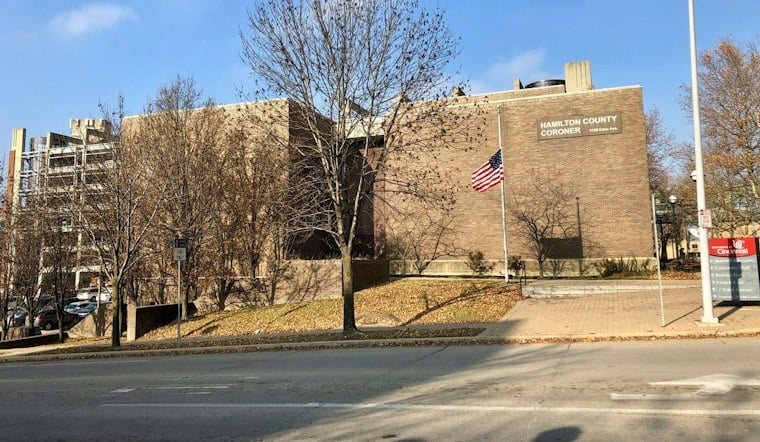
Three Southwest Ohio coroners are sounding the alarm over kratom, saying there have been 14 suspected overdoses involving kratom or kratom alkaloids in the past several months. The warning comes from Hamilton County Coroner Lakshmi Sammarco, Butler County Coroner Lisa Mannix and Warren County Coroner Russell Uptegrove, even as the region's broader overdose numbers have been trending downward.
The coroners shared concerns about an increase in suspected overdoses from mitragynine or kratom, according to WLWT. In Butler County specifically, Mannix said there have been two confirmed deaths due to kratom or mitragynine and one suspected death, per the same report. Warren County's Uptegrove added that while fentanyl and meth overdoses have been going down, this emerging compound appears to be spiking.
A Legal Substance With a Complicated Status
Kratom itself is legal in Ohio, though Sammarco has said only the leaf form of the plant is legal under current rules. The coroners noted that kratom is not new to the region — it is commonly used to boost energy, mood, or to help combat opioid addiction — but they suggested the way it is being marketed to the public could be contributing to the rise in suspected overdoses, according to WLWT.
That legal gray area has been building for years. In 2019, the Ohio Board of Pharmacy considered regulating kratom but delayed its decision after many supporters appeared to favor continued access to the substance. More recently, Gov. Mike DeWine asked the Ohio Board of Pharmacy to designate kratom as an illegal drug, a request made in December, as reported by the Cincinnati Enquirer. DeWine has previously described kratom herbal extract as an imminent public health risk.
Synthetic Versions Banned, Natural Leaf Still Legal
The resulting state rule does not ban kratom in its vegetative form, including natural kratom leaf and ground natural kratom leaf, according to the Enquirer's earlier reporting. Lawmakers now have a bill to regulate the natural form moving through the legislative process, while states around the country have taken varied approaches to kratom, ranging from total bans to regulation to no rules at all.
The stakes behind that patchwork became starkly visible in one recent Ohio investigation detailed by the Scioto Valley Guardian. Officials said the state has confirmed multiple cases in which products labeled as the herb cat's claw instead contained synthetic kratom. In one fatal-overdose case, forensic analysis by the state's Bureau of Criminal Investigation determined that a package labeled Happy Daze Botanical Mango actually contained synthetic kratom, though toxicology results in that death remained pending.
Statewide Numbers Show a Sharp Rise
Ohio Department of Health data cited by the Enquirer shows more than 200 people died from unintentional overdoses involving kratom between 2019 and 2024. Health Policy Ohio's analysis found that while less than 1% of all accidental drug overdose deaths in Ohio from 2019 to 2024 involved kratom, the number of such deaths increased by 180% over that span.
The warning lands against a backdrop of otherwise improving numbers in Hamilton County. The Enquirer reports 195 overdose deaths countywide in 2025, calling it the lowest number since at least 2014, while WVXU reported a separate figure of 194 deaths in 2025, a 30% decrease from 277 deaths in 2024. A Hamilton County government announcement said overdose deaths have declined for a fourth consecutive year.
The long-term decline looks even steeper when measured against the county's worst year. The Enquirer put Hamilton County's overdose-death peak at 567 in 2017, representing a 66% reduction through 2025, while WVXU cited a peak figure of 570 deaths that same year. Despite the overall downward trend, Local 12 has reported that drug overdoses still accounted for nearly 40% of accidental deaths in Hamilton County in 2025.
A Death Outside the Region Underscores the Risk
The warning from the three coroners echoes a case reported earlier this year by WKBN in Youngstown. A medical examiner said 20-year-old K'Vaughn Royal died from an overdose involving kratom-related compounds after his mother, Jesica Farrier, found him unconscious in his bedroom on July 23. Angel Barrett of First Step Recovery told the station that kratom-related substances can mimic both opioid use and opioid withdrawal, complicating efforts to recognize when someone is in danger.
Ohio's administrative code already lays some legal groundwork for addressing the issue. Rule 4729:9-1-01.1, published by the Ohio Administrative Code, describes mitragynine-related compounds, including naturally occurring or synthetic substances contained in kratom or its resinous extracts, along with other specified related compounds, though the rule's full scope and how it applies to specific products on store shelves remains a separate question from the coroners' overdose warning.





