

























































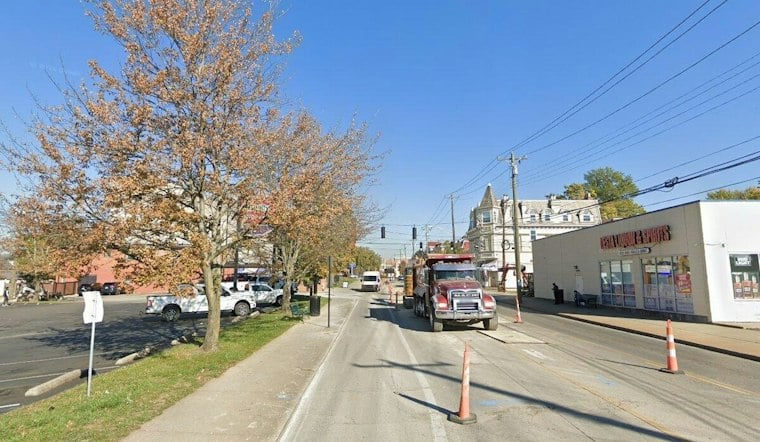
Springdale is preparing a $960,000 overhaul of every traffic signal in the city, which would replace them with new LED bulbs, cameras and battery backup systems at all 33 intersections. The project, funded through a grant from the OKI Regional Council of Governments, is designed to let signals react to real traffic conditions instead of running on fixed timers, with completion expected by early 2028.
According to WKRC, the cameras and radar units being installed will be able to detect when vehicles are sitting at an intersection and adjust signal timing accordingly. Springdale identified the upgrade as a need and began the process early in 2026, said Kevin McKinney, the city's director of public works. McKinney said the goal was to improve safety, travel and reliability, including by replacing aging battery backups that keep signals running if the power goes out.
McKinney said the new technology should especially help during peak traffic periods, improving movement during the morning rush and cutting down on backups that spill onto the interstates. Springdale works with engineers from TEC Engineering, based in Mason, Ohio, which operates a traffic control center housing software that reads traffic conditions in real time. TEC relays that information back to the city, and the two sides coordinate on what action should or should not be taken at any given intersection.
How the System Learns Intersections Over Time
Robert Koehler, OKI's regional council of governments deputy executive director, said the broader goal is to optimize how existing roads function. The traffic signal technology is designed to learn how intersections perform over time, evaluate itself and adjust timing accordingly, per the same WKRC report. Koehler pointed to case studies showing that optimized signals can reduce travel times anywhere from 10% to 50%, and he noted that OKI has handed out $25 million in grants for 17 similar projects across Northern Kentucky and Ohio over the past decade. He added that the funding is federal money that requires municipalities to provide a 20% match.
Koehler also said the push toward smarter signals is partly a stopgap. He said future autonomous and connected vehicles could eventually make traditional traffic signals unnecessary altogether, but until that technology becomes widespread, OKI's aim is to squeeze more efficiency out of the roadway systems already in place. NKyTribune reports the signal upgrades are intended to improve safety, reduce fuel consumption and keep traffic moving smoothly, since vehicles idling at signals burn fuel and produce emissions. The outlet also cites a joint study by U.S. and Romanian researchers finding that smart traffic lights can cut rush-hour wait times by more than 28% and reduce CO₂ emissions by up to 6.5%.
Addressing Security Concerns Around the Cameras
The new cameras can see a vehicle's license plate and identify categories such as small trucks, large trucks, automobiles and buses, but Koehler said they do not store detailed vehicle information the way Flock Safety cameras do. Instead, he said the cameras gather traffic-volume data used for planning purposes. “What we're talking about here are closed systems. They require passwords from the host,” Koehler said, adding that the networks are not open to outside systems when proper safeguards are in place.
McKinney acknowledged that no system is completely immune from threats, but said the city is confident in the safeguards it has put in place. “Will I ever say it's hack-proof? No, but we feel pretty confident that the system has high security and will stay safe for us and for the users,” McKinney said. The NKyTribune report likewise frames the modernized signals as a response to real-time conditions, with McKinney noting that modern signals respond to actual traffic as it happens rather than running on a fixed schedule.
How Springdale's Project Compares Regionally
Springdale's project follows a string of similar signal upgrades across the region. Hamilton replaced 97 traffic signals with smart technology back in 2020 using a $4.2 million grant, and Covington upgraded 13 signals along Madison Avenue in October 2022 with a $935,000 grant. Butler County, meanwhile, used nearly $1 million in OKI funding to modernize 45 signals in high-traffic areas, according to the same NKyTribune report.





