

























































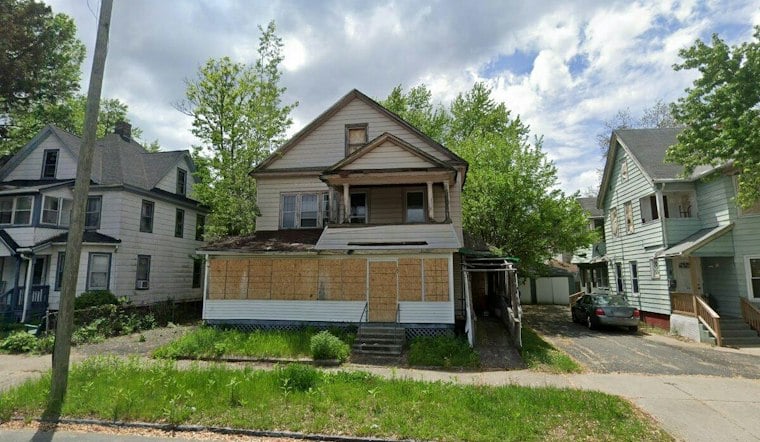
Unresolved ownership can leave vacant homes stalled, making repairs or sales difficult to pursue.
A Local Problem, With Limits to the Count
Gerry McCafferty, who works on Springfield's housing policy, said unresolved ownership issues are complicating the Maynard Street property's path forward, according to MassLive. Dina Fein, a former Massachusetts Housing Court judge who began helping nonprofits and municipalities redevelop vacant homes in 2021, described a recurring connection between vacancy, deterioration, and complicated ownership. “There seems to be overlap between vacant, abandoned, deteriorated properties” and homes tied up in probate, informal family ownership, or poorly documented transfers, Fein said, per the same report.
When no one has clear legal authority over a property, Fein said, routine steps can become difficult or impossible. She said that a tangled title “can hobble people's efforts to make changes to the property,” including mortgage modifications, tax abatement applications, and home repair programs, according to MassLive. That legal uncertainty can leave needed work undone.
What the Estimate Measures
Elise Rapoza estimated that 1.9% to 3.5% of Springfield homes—about 1,128 houses—have owners who are dead, MassLive reported. The figure is an estimate of properties with deceased owners; it does not establish that every one has a tangled title or is vacant. In Rapoza's survey, the median property had an owner who died five years earlier, while a quarter had owners who died more than 12 years ago.
Rapoza said properties with deceased owners are twice as likely to sit vacant and are more likely to have health code violations and unpaid taxes. She also said tangled titles tied to a death appear in about a third of the blighted properties acted on by the state Attorney General's abandoned-housing division.
Tax Foreclosures Provide Another Local Measure
A separate review by McCafferty found that 38% of the 114 municipal tax foreclosures Springfield processed between 2014 and 2020 involved an owner who had died or entered a nursing home, MassLive reported. McCafferty noted that those foreclosures had mostly involved investor-owned property.
McCafferty said long-vacant properties tend to cluster in neighborhoods already affected by decades of disinvestment, and can erode confidence across a block. Springfield is developing a neighborhood revitalization strategy in response. Rather than acquiring and rehabbing properties opportunistically, McCafferty said, the city plans to focus on one neighborhood at a time and address every property there.
Foreclosure Fights That Start With a Death
The connection between a family death and foreclosure also appears in Springfield No One Leaves' casework. Katie Talbot, the organization's organizing director, said all but one of the homeowners the group is currently helping faced foreclosure after a family member died. She said education and access to legal help could help prevent title problems, but low-income residents who work during probate court's operating hours may struggle to navigate the process.
Talbot suggested door-knocking campaigns in working-class neighborhoods to educate residents before a death creates a crisis, as well as free legal assistance. “We need some pro bono lawyers that will help people through the process,” she said.
A Stalled Bill and a National Model
Rapoza has also argued that restoring vacant properties could contribute to the state's housing supply: at a conference, she said they could potentially meet 25% of Massachusetts' housing production needs. The state is seeking to add more than 220,000 homes in the coming years. The conference on tangled home titles was hosted by Western New England University School of Law and the CATIC Foundation on October 30.
Boston College law professor Thomas Mitchell delivered the conference keynote. His model legislation on heirs' property—property passed down after an owner dies without estate planning—has been adopted by 27 states, MassLive reported. Massachusetts has considered the model but has not passed it. State records show Representatives Jeffrey N. Roy and Christopher J. Worrell filed a related petition, House No. 1964, concerning uniform partition of heirs property.
The legal effort builds on a broader movement: a 2019 paper on the Uniform Partition of Heirs Property Act describes its enactment in several states since 2011, including five Southern states. Boston College's Initiative on Land, Housing & Property Rights also supports estate-planning legal services and community legal education.
Other Western Massachusetts Fixes in Motion
Springfield has also pursued redevelopment tools for distressed properties. A pilot called City of Homes, a partnership between Way Finders and the city reported last year, aimed to build or repair 10 dwellings on a $6 million budget. The program and a similar effort in Greenfield use a special attorney receivership process to transfer properties with persistent code violations to nonprofits, which then sell them to families planning to live there. The process was formalized in state law as part of the $6.5 billion state housing bond bill passed in June 2024.
Redevelopment Is Not the Same as Clearing a Title
The available record documents work underway, not a completed tally of homes returned to use: Way Finders says City of Homes broke ground in October 2024 and development work is ongoing. Way Finders describes Special Attorney Receivership as an offshoot of traditional receivership, used to enforce the sanitary code against distressed properties. These tools can support redevelopment, but their use does not establish a general process for resolving inherited-title problems.
The housing squeeze driving all this attention isn't unique to Springfield. A 2025 analysis from MassINC described many of the state's Gateway Cities as “ownership deserts” — places where renting is common but chances to actually buy a home are scarce. For now, potential solutions on the table in Springfield include legal clinics for wills, special loans for homeowners stuck with tangled titles, and new legislation — while houses like the one on Maynard Street continue to sit empty, waiting for someone with the legal standing to act.




