

























































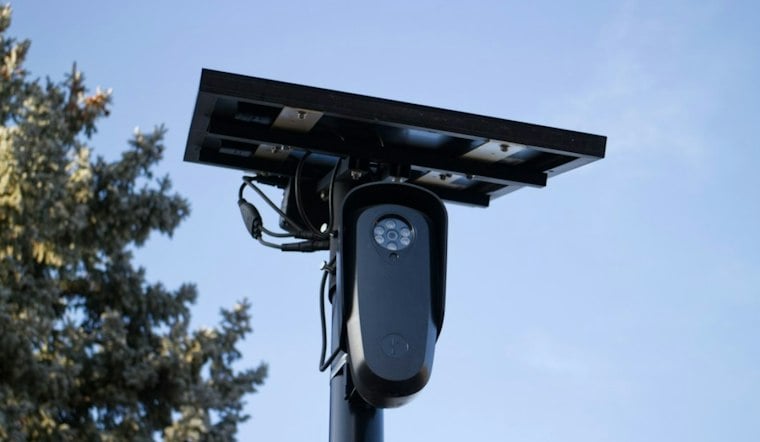
Springfield Police Chief Paul Williams stood before reporters Wednesday and laid out a sweeping set of updates to how his department uses its network of license plate reading cameras, including monthly audits, tighter limits on sharing data with outside agencies, and a public portal where residents can see exactly how the system is being used. The announcement comes after months of public scrutiny over the technology, including a Springfield City Council resolution calling for a review of the city's camera contracts and policies.
According to Springfield Daily Citizen, the department now operates 41 Flock automated license plate reader cameras around the city. The cameras photograph passing plates and vehicle details, convert the images to text, and check them against law enforcement databases for open criminal investigations, notifying officers when a match turns up. Williams told reporters the safeguards built into the updated policy were deliberate. “The safeguards in this policy are intentional and very important,” he said, according to the Springfield Daily Citizen. “They protect against misuse and ensure the technology is used only for legitimate law enforcement purposes.”
Residents can now view camera locations, system usage statistics and policy documents through the department's newly updated Flock Transparency Portal, according to Yahoo News. The portal also includes audit information, giving the public a window into how often the system is searched and what those searches turn up. The department says only trained and authorized personnel can run searches, and every search must be tied to a specific case, incident or warrant number.
A 2014 Case That Still Shapes Policy
The Springfield Daily Citizen reports that Williams tied the updates back to the 2014 kidnapping, rape and murder of 10-year-old Hailey Owens, who was abducted in broad daylight in a Springfield neighborhood. A witness gave police the license plate number of the truck belonging to Craig Wood, who was later convicted in her death, but the vehicle was registered to Wood's parents, complicating the search. At the time, Springfield police lacked the widespread ALPR technology the department uses today. Williams said modern license plate reader technology might have helped officers quickly locate Wood's truck and could have changed the outcome, per the Springfield Daily Citizen.
The department says it has used the technology more recently to recover stolen vehicles, locate missing children and identify crime suspects. In one example cited by the Springfield Daily Citizen, investigators used security footage to identify a suspect vehicle after a robbery at the Papa John's on West Kearney in 2023, then matched the vehicle's description to a license plate using Flock data. The suspect was identified and arrested the same day, according to the outlet.
Monthly Audits and a Flagged Batch of Searches
Springfield's Internal Affairs Unit now audits ALPR searches every month, the Springfield Daily Citizen reports. The most recent audit, conducted in October, flagged 33 entries for additional review; all 33 were ultimately found to be valid and appropriate searches, both the Springfield Daily Citizen and Yahoo News reported. The department says it has never had a confirmed case of ALPR misuse since adopting the technology.
The policy also spells out limits on what the cameras cannot be used for. Department policy prohibits using ALPR technology to track individuals at protests, religious services, political activities, clinics or other constitutionally protected activity, and bars searches based on race, ethnicity, religion, political activity or other protected characteristics, per the Springfield Daily Citizen. SPD does not share ALPR data with federal agencies, and the system possesses no facial recognition capabilities, Yahoo News reported.
Data Retention and Sharing Rules Tightened
Data collected by the cameras is retained for 30 days and automatically deleted unless it is tagged as part of an active criminal investigation, according to both the Springfield Daily Citizen and Yahoo News. Williams said the department has tightened who it shares that information with. “Tightened that up to just those agencies that reciprocate,” he said, per KY3, meaning Springfield now shares ALPR data only with agencies in Missouri or adjacent states that share their own data in return.
The department says it owns the data it collects, which is stored through Amazon Web Services GovCloud, and that third-party vendors cannot access, sell or analyze it. If an audit turns up credible evidence of misuse, an investigation will follow, according to a Springfield Police Department FAQ posted on the city's website. Williams told KY3 that consequences for confirmed misuse would be swift, including discipline and potentially criminal charges.
Numbers Behind the System
Yahoo News reported that between Sept. 26 and Oct. 26, the ALPR system performed 1,992 searches, generating 55 new investigative leads, recovering 17 stolen vehicles and 19 license plates, and leading to two arrests. Williams also said reports of stolen vehicles in Springfield have dropped by approximately 50% over the past four years, per the same report. The Missouri Department of Public Safety's ALPR best-practices guide cautions that an alert from the system should never be treated as self-authenticating evidence of a crime; officers are instructed to visually compare a captured plate with the alert and confirm jurisdiction before acting, a standard reflected in Springfield's own policy that treats each alert as one lead requiring verification and further police work.
A Cautionary Case Next Door
A former Greene County Sheriff's Office deputy has been charged after allegedly using Flock data to track a Springfield woman's movements for non-police purposes, according to the Springfield Daily Citizen. Investigators found more than 230 queries tied to the former lieutenant's account involving the same license plate number between July 1 and Oct. 16, 2025. The Greene County Sheriff's Office did not renew its own Flock contract when it expired in late September, the outlet reported.
Such cases are not unique to the Springfield area. The Institute for Justice says it has identified well over 100 incidents of ALPR abuse nationwide, including stalking, wrongful stops and use for purposes unrelated to law enforcement. The organization cites one case in which a police chief in Georgia tracked his ex-girlfriend and her teenage daughter roughly 600 times.
Springfield City Council member Brandon Jenson sponsored the resolution referred to committee in September calling for a review of the city's ALPR contracts, guidelines and policies, according to the Springfield Daily Citizen. Jenson attended the Wednesday news conference where Williams detailed the updated rules. The department has invited residents to contact the department directly, attend community events, reach out to city council, or request public records where permitted by law if they have further questions about the program.




