

























































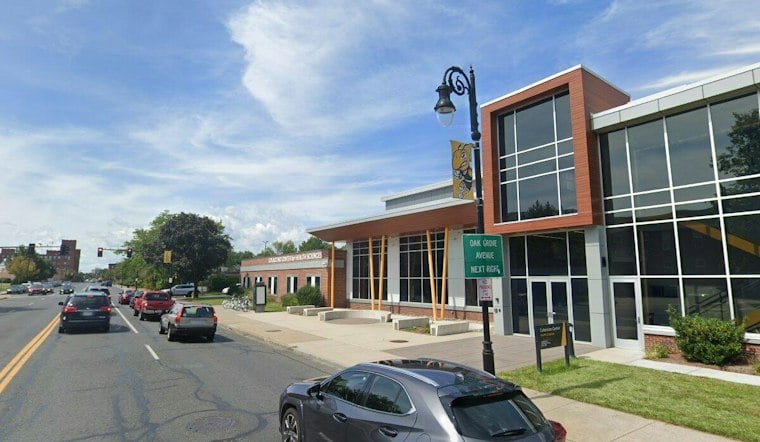
American International College’s audited financial statements show a sharp contraction in its finances during fiscal year 2025. By June 30, the Springfield school had $841,244 in endowment funds without donor restrictions, after withdrawing $9.2 million from that account during the year. The figures come as AIC works to stabilize its finances ahead of a January 2027 accreditation hearing.
The audited figures, reviewed by Hoodline, show AIC withdrew $6.2 million from the same unrestricted endowment pool in the prior year. The Boston Globe has reported a different year-end balance for AIC’s unrestricted endowment funds — about $70,255, compared with $5.9 million at the close of fiscal 2024 and more than $10.9 million the year before that — a discrepancy with the audited statement’s $841,244 figure that the available records do not reconcile. Both accounts, however, show a steep decline from balances in the millions. As MassLive first reported, AIC and its accreditor, the New England Commission of Higher Education, have flagged serious concerns about the school’s financial trajectory.
A College Under Accreditation Scrutiny
AIC and NECHE announced that the college must show cause in January 2027 for why its accreditation should not be revoked or placed on probation, according to MassLive. The accreditor cited projected operating losses of $17.1 million through fiscal year 2028 and said cash shortages had forced the college to fully tap its $8 million line of credit. AIC’s audited statements show that the credit line was repaid in full in September 2025, according to American International College, though the broader financial picture remained strained.
How NECHE’s show-cause process works
NECHE’s published process says an institution must submit evidence that it meets the relevant standards or show it has plans and access to resources to achieve compliance within a period not exceeding two years, according to the New England Commission of Higher Education. Past cases offer context, but do not determine AIC’s outcome. The Chronicle of Higher Education reported that NECHE invoked show-cause status for Bay State College in Boston in 2021; the college later shuttered.
The college’s net assets without donor restrictions fell to roughly $32 million at the end of fiscal 2025, down from a restated $39.99 million the year before, per the audited statements. Operating activities alone produced a drop of more than $1 million in net assets for the year, and cash on hand declined from about $8.7 million at the start of the fiscal year to roughly $4.6 million by its close. The audit received an unmodified opinion overall, but the outside auditor flagged a material weakness in internal controls tied to how the college classified its net assets, and management restated prior figures after identifying misclassified endowment-disclosure balances.
College Points to Enrollment and Fundraising Gains
AIC president Nicolle Cestero told MassLive that Fall 2026 enrollment had grown from the previous year, that student retention was approaching record highs, that net tuition had increased by $4 million, and that expenses had been reduced. On its own website, the college said total Fall 2026 enrollment was up nearly 13 percent over the prior year and that total giving had climbed 25 percent year over year, as noted by American International College. AIC has said its accreditation remains in place and will not change before the January hearing, and that it is weighing options including the potential sale of unused real estate or other assets.
Still, the accreditation threat lands amid a wave of closures that have rattled Massachusetts higher education. Hampshire College in Amherst received a similar show-cause notice in March 2026 and announced the following month that it would close, a MassLive report noted; New England Public Media has described that closure as the result of years of declining enrollment, debt, and stalled land development. Anna Maria College announced its own closure in April and filed for bankruptcy in June with less than $55,000 in available funds, according to the Boston Globe.
State Tightens Oversight After Recent Closures
Massachusetts requires an annual financial-monitoring process, known as Financial Assessment and Risk Monitoring, that assesses private colleges’ finances to identify institutions at risk of imminent closure, according to the state’s Department of Higher Education. Following the Hampshire and Anna Maria closures, the state Board of Higher Education announced it would begin identifying and publicizing colleges’ financial issues earlier and add additional oversight, MassLive reported. Under the announced changes, financial issues would be made public no later than Dec. 31 each year, and the state plans to hire accounting and financial consultants to help analyze struggling institutions’ books.
Between 2014 and 2022, 24 colleges and universities in Massachusetts closed, merged, or began winding down operations, according to the Department of Higher Education’s own accounting. The department’s process also allows for institutions lacking sufficient risk-mitigation plans to be required to develop contingency closure plans, guarantee refunds of student deposits, preserve student records, and notify the public — though the agency describes these as possible requirements rather than automatic outcomes. Separately, the department has proposed regulatory revisions that would require colleges to post audited financial statements within six months of their fiscal year’s end and keep three years of statements publicly available online, though it remains unclear whether those proposed provisions have been adopted.
For now, AIC says its federal financial aid eligibility remains intact and that it is working to secure its footing before accreditors weigh in early next year. The college’s financial strain adds another chapter to a broader reckoning facing small private colleges across the Commonwealth, many of which have faced declining enrollment and tightening margins over the past decade.




