

























































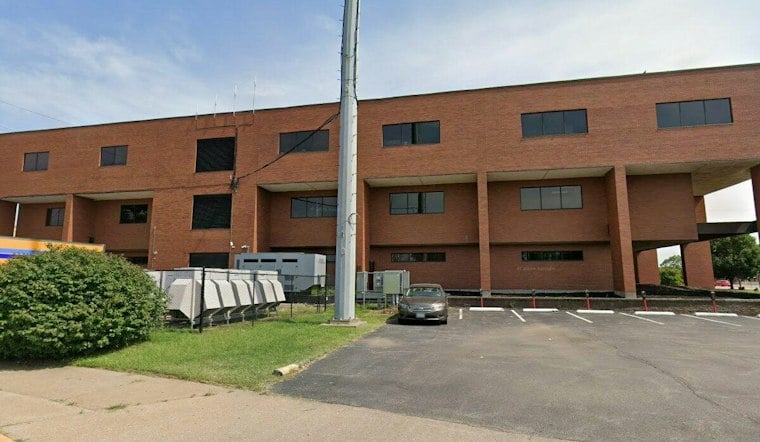
St. Clair County is sending drones ahead of police officers to certain 911 calls starting Wednesday, launching a drone-first response program with three aircraft and plans to add three more early next year. Officials demonstrated the technology Tuesday at the St. Clair County CENCOM West 911 emergency dispatch center, based at the Emerson Park MetroLink station in East St. Louis, Illinois.
The program, according to FOX 2, is being funded for its first year through a partnership with Motorola. Future funding is expected to come from federal grants through the U.S. Attorney's Office, local funding sources, and asset forfeiture proceeds. Fairview Heights Police Chief Steve Johnson said seized drug money is already helping cover costs in his city, telling the station, “we took their money and it's funding this for the city of Fairview Heights.”
Herb Simmons, St. Clair County's 911 director and executive director of the Emergency Telephone System Board, said the drone cameras will be pointed forward while en route to incidents and will not point downward until they reach their destination. Simmons also pushed back on privacy worries, saying such concerns should not stand in the way of giving first responders tools they need.
Faster Eyes on Scene for Serious Crimes
Cahokia Heights Police Chief Thomas Trice said drones could help officers respond more effectively to crimes where suspects flee before police arrive. He said the technology could quickly identify suspects and their locations, helping build cases and make arrests in serious crime investigations.
St. Clair County Board Chairman Mark Kern praised the regional cooperation that brought the program together. Kendall Perry said the drones would help lower crime and make citizens safer, while Cheryl Pruett noted that police simply cannot be everywhere at once.
Not every resident is sold. Keith Stone said his biggest worry is mechanical, not surveillance: “My biggest concern would be it falling out of the sky and hitting me on the head.” Donna Ward offered a different take, saying a past encounter involving a drone left her feeling more protected.
A Growing Pattern Across the Region
St. Clair County is not alone in turning to aerial units for faster response. The St. Louis Metropolitan Police Department's Aerial Response Unit responded to its first 911 call hours after the city's Board of Police Commissioners approved the program, according to First Alert 4. St. Louis police said drone footage can be stored for up to 30 days unless it becomes part of a longer investigation.
St. Louis has since gone further, launching a Drone as First Responder Transparency Portal that lets residents review flights and flight paths as well as calls resolved without an officer being dispatched, the station reported separately. A regional task force in Southern Illinois has also built out its own aerial capacity, with seven drones total and the ability to send three or four to a single scene, per FOX 2's coverage of that effort.
Research into similar programs suggests the approach can change how quickly calls get handled. A short report on a mid-size California police agency's drone-as-first-responder program, which launched in 2023 with a fleet of 12 drones deployed from boxes on 11 buildings, found that over a 3.5-month study period drones frequently arrived before any ground units and sometimes cleared calls without officers needing to show up at all, according to the study published in Criminal Justice and Behavior journal's parent platform. A separate 2026 preprint examining Philadelphia's program, which randomized 1,546 calls, reported a 14.5-minute reduction in receipt-to-closure service time when drones were assigned first — a 16.6 percent improvement; that paper describes itself as a preprint that had not yet been peer-reviewed, per crimrxiv.com.
State Numbers Show Drones on the Rise
The expansion in St. Clair County tracks a broader statewide trend. The number of drones reported by Illinois law enforcement agencies rose 30.9 percent in state fiscal year 2025 compared with the year before, according to the Illinois Criminal Justice Information Authority's annual drone surveillance report. That same report found agencies most often cited public events as their top reason for drone use, followed by photographing crime or traffic accident scenes.
FOX 2 also noted that similar drone-first programs elsewhere have drawn mixed reactions, with residents citing both public safety benefits and concerns about privacy and potential misuse — a tension that echoed in the differing views offered by St. Clair County residents this week. Officials have said the program will coordinate its flights through the Federal Aviation Administration, which requires that all public-safety drones comply with Title 14 of the Code of Federal Regulations, according to the agency's public safety toolkit.





