

























































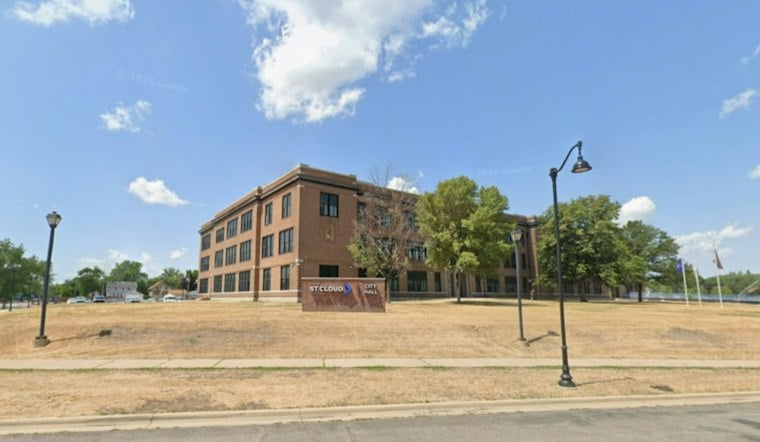
St. Cloud homeowners will find out Monday whether next year's property tax increase ends up smaller than the 11.9% figure floated earlier this year, as Mayor Jake Anderson gives the city council a budget update at 6 p.m. at City Hall. The same meeting also includes a public hearing and vote on a new round of utility rate changes, covering everything from water bills to ice time at the Municipal Athletic Complex.
The city council set the maximum amount St. Cloud can collect in property taxes back in August, and that ceiling cannot rise between now and the final vote, though it can still come down, according to KNSI. Under the August plan, the city would collect about $6.25 million more in property taxes, a total levy increase of 11.9%. For a median-value St. Cloud home, assessed at $252,700, that works out to roughly $146 more per year, or about $12 a month.
Anderson has said he wants to bring that number down before the council's final property tax vote on December 7. Smaller homes would see smaller dollar increases under the August figures — a $100,000 home was estimated at $40 more a year, a $200,000 home at $110, a $300,000 home at $182, a $400,000 home at $252, and a $500,000 home at $320.
Where the Money Is Going
About 40% of the proposed increase traces back to the city's fire referendum, which is paying off a $43.5 million bond. The rest of the increase funds core city services including police, fire, snow plowing and parks, with rising wages cited as a major driver of those rising costs.
Those property tax figures are separate from the city's utility rate proposals, since utility services like water, sewer and parking are paid for by the people who use them rather than through property taxes. Utility services make up about $68 million of the city's overall budget, according to the same report.
Water Bills Tied to Usage
The proposed water-rate structure for 2027 is tiered, meaning what a household pays depends on how much water it uses. “If you use more water, you're going to pay more. If you use less water, your rates shouldn't change,” the report explains. Households using four units of water or less per billing period — about 2,800 gallons — would see no change at all.
An average household, using roughly 4,200 gallons per billing period, would pay about $1.45 more on each bill, or roughly 70 cents extra a month. That's a notably smaller jump than what the city initially floated for 2026, when it proposed raising the fixed water rate by 50 cents a month plus $1 per unit on the first usage tier, a change projected to add $4 a month to the average residential water bill, per city budget documents. Enterprise funds overall — the pool covering utilities — total about $68 million, with water and wastewater making up roughly 62% of that amount.
Smaller Fee Changes Across the Board
Several other utility fees are also set to tick up. The streetlight utility fee would rise 25 cents a month to help pay for replacing old streetlights. The blue-cart garbage fee would go up $1 a month, and the stormwater fee would rise $1 as well — both increases that were already approved in prior years rather than new proposals. The city's public utilities fee schedule shows the stormwater monthly fixed charge climbing from $9.80 in 2026 to $10.80 in 2027.
Ice time at the Municipal Athletic Complex would cost $10 more per hour under the proposal, and the city plans to scrap its tiered pricing system in favor of a single flat rate. Parking rates, meanwhile, aren't changing next year — a contrast to 2026, when the city had proposed raising surface-lot parking to $1.50 an hour while adding free nights and weekends, along with a 10% increase to parking permits.
Two Votes, Two Timelines
The utility rate hearing and expected adoption vote happens Monday night, with the public invited to speak before the council acts. The property tax decision follows a different calendar, with the council's final vote not set until December 7.
The gap between the two processes traces back to how St. Cloud's budget separates core government functions from fee-funded enterprise operations. The city's own enterprise funds documentation describes those operations as supported by user fees, customer charges and special taxes, without drawing on general property tax levies. That distinction is why Monday's utility vote won't move the needle on the property tax number homeowners are watching heading into December.
The property tax debate itself has shifted some since summer. Mayor Anderson originally floated an 11.9% total levy increase paired with a 6.44% total tax rate increase, according to St. Cloud Live, but said he'd lower those figures to 7.9% and 3.75% respectively if the council approved higher building permit fees. The council ultimately approved those permit fee increases in a 4-2 vote late in August, a move expected to net the city around $800,000, and separately set 12.6% as the overall maximum tax levy for 2027, totaling a little more than $58 million, the outlet reported.



